
A Short History of Savannah, Georgia
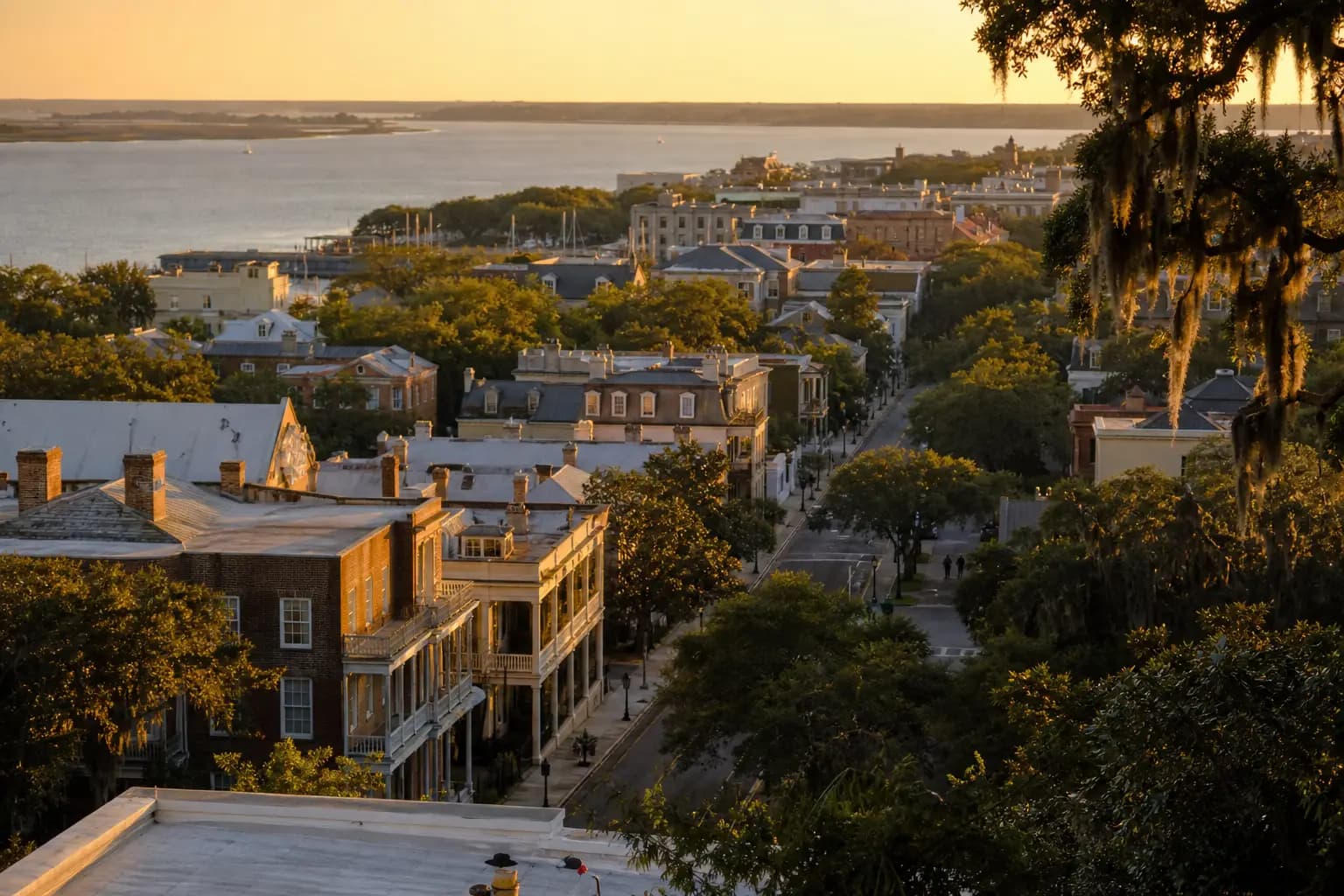
Savannah history starts on Yamacraw Bluff in 1733, when colonists led by James Edward Oglethorpe founded Georgia's oldest city. Chief Tomochichi and Mary Musgrove belong to that founding story. The city's plan, squares, port economy, Civil War era, preservation movement and civil rights organizing all remain part of what visitors encounter in its historic district, museums, churches and state historic sites.
Key facts
- Savannah was founded in 1733 by colonists led by James Edward Oglethorpe.
- Oglethorpe landed with 114 colonists at Yamacraw Bluff on February 12, 1733.
- Savannah had 24 original squares, and 22 still exist.
- British forces captured Savannah in 1778.
- Savannah State University was established in 1890 as the first public historically black college and university.
Own a house in Savannah you are thinking of selling? See how our cash offer works.
Founding on Yamacraw Bluff
Savannah's colonial story begins at Yamacraw Bluff. On February 12, 1733, James Edward Oglethorpe landed with 114 colonists at the foot of the bluff, and colonists led by him founded Savannah that year. The New Georgia Encyclopedia calls Savannah "the oldest city in Georgia." British forces captured Savannah in 1778.
The founding story also includes Chief Tomochichi and Mary Musgrove. Their names are part of how Savannah remembers its beginning, alongside Oglethorpe and the bluff. For visitors, the founding is tied to a real place: Yamacraw Bluff and the marker area named with Bay and Bull Streets in Savannah.
The Oglethorpe Plan and the Squares
Savannah's plan is as important as its founding date. Oglethorpe led the effort to lay it out as a grid pattern with a series of squares. Noble Jones was the first surveyor, and Oglethorpe also worked with Colonel William Bull of Charleston.
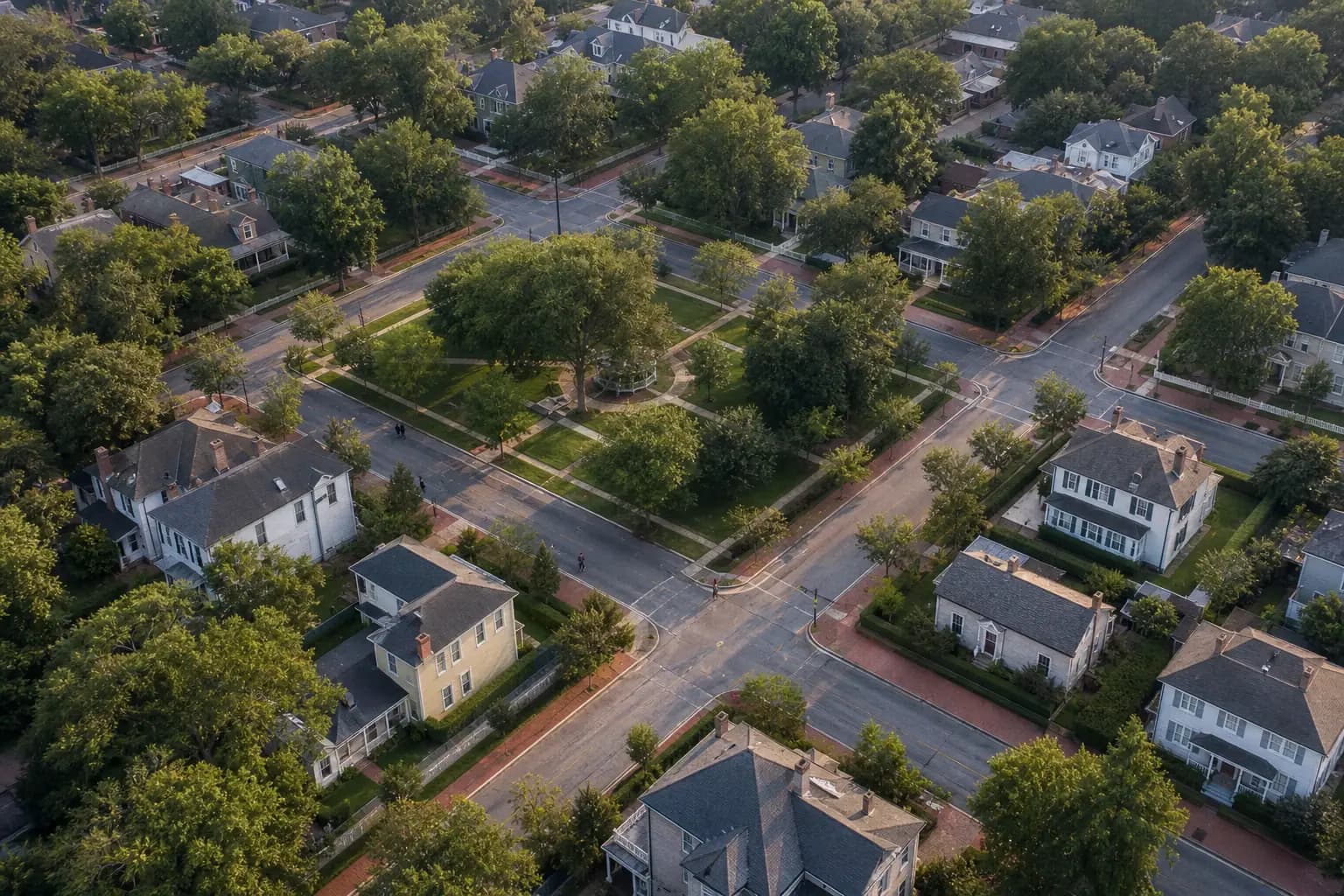
Early land distribution connected the town to surrounding acreage. Settlers received 50 acres of land and a house lot in the city of Savannah. The plan took more than 100 years to complete, Savannah had 24 original squares, and 22 still exist today.
Cotton and the Built City
Cotton remained Savannah's principal export until the Civil War. The Savannah Cotton Exchange mattered beyond the city because many of the world's cotton prices were set there. That port economy is one reason the city's nineteenth century buildings carry stories of commerce, labor and power.
Wormsloe State Historic Site brings the story back to the colonial generation. It was the colonial estate of Noble Jones, who arrived in Georgia in 1733, and the site includes Tabby Ruins. Wormsloe also has a museum with artifacts unearthed there, and the state of Georgia acquired most of the property in 1973.
Civil War, Parks and Preservation
By the nineteenth century, Savannah's public places were gaining features still tied to the city today. Forsyth Park got its ornate fountain in 1858. The Civil War forms another dividing line in the economic story, because cotton remained the principal export until that war.
The modern historic city also owes much to preservation. Savannah has architecture spanning over three centuries, and a large scale preservation movement helped shape how the old city is seen today.
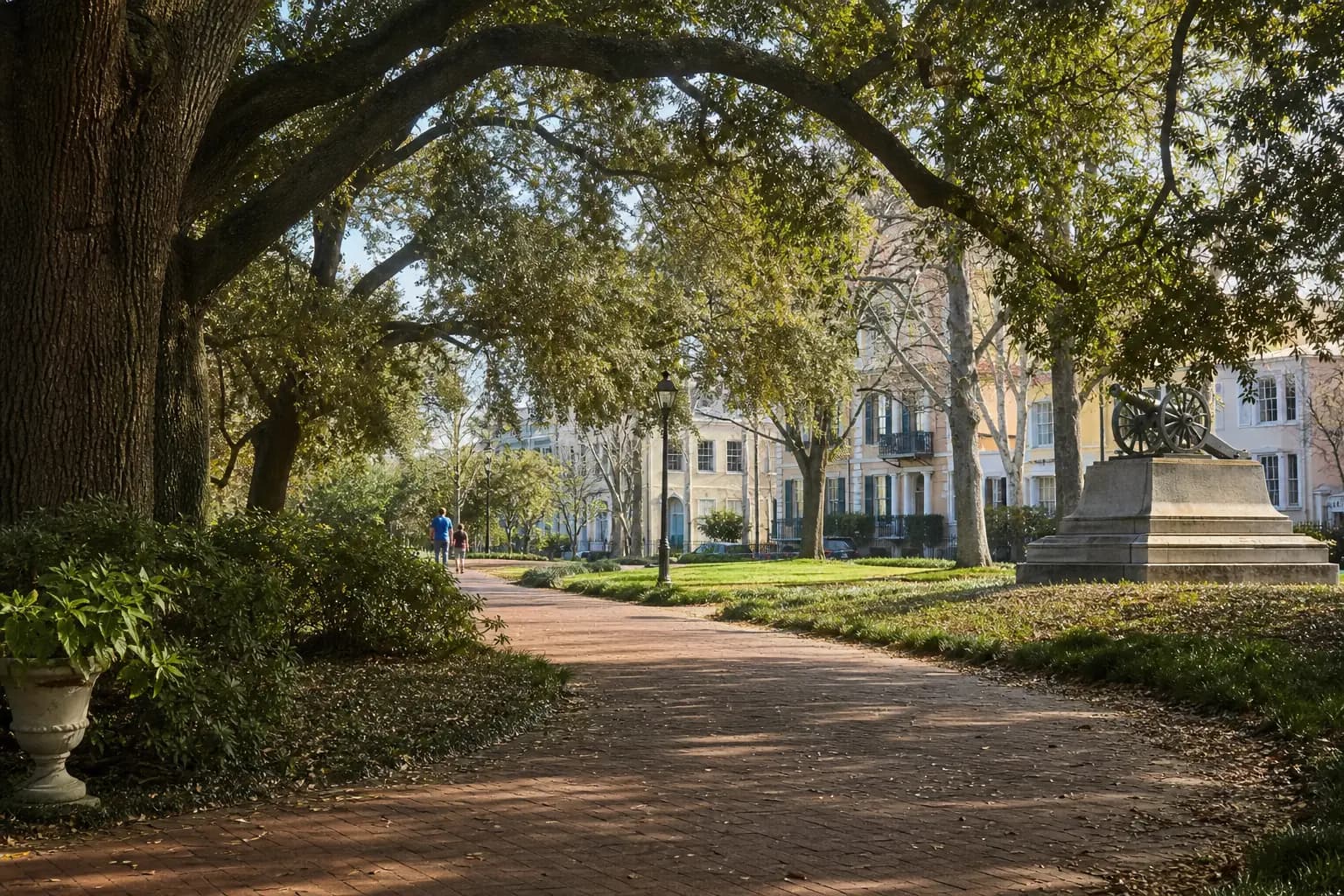
Tourism has become the city's leading industry. That fact belongs in a short history because it shows how the preserved city plan, architecture, museums and parks became part of Savannah's modern identity. Visitors see that turn most clearly in the historic district, where 22 original squares still exist.
Black Education and Civil Rights
Black history is part of Savannah history from churches to education to civil rights. The First African Baptist Church is part of the city's historic record. Savannah State University describes its founding in 1890 as the "first public historically black college and university" and the "first institution of higher learning in the city of Savannah."
The university began as Georgia State Industrial College for Colored Youths under the Second Morrill Land Grant Act and moved to Savannah in October 1891. Its early history includes Richard R. Wright Sr., five faculty members and eight students. Those details give Savannah's education history a very specific starting point.
Civil rights organizing added another chapter. Community leaders in Savannah and Atlanta protested the segregation of public transport and the appointment of Black police. Under the Reverend Ralph Mark Gilbert from Savannah, the NAACP grew to more than fifty branches by 1946, and Savannah's later campaign was led by W. W. Law and tied to October 1, 1963, ahead of federal civil rights legislation.
Where Visitors Can See Savannah History Today
Start with the squares of the historic district, because 22 of the original squares still exist. Forsyth Park adds a nineteenth century layer with its ornate fountain from 1858. Wormsloe State Historic Site preserves Noble Jones's estate, Tabby Ruins, live oaks and Spanish moss, and a museum with artifacts unearthed there. Savannah State University adds a later chapter, beginning with its 1890 establishment and its move to Savannah in October 1891.
Frequently asked questions
When was Savannah founded?
Savannah was founded in 1733 by colonists led by James Edward Oglethorpe. Oglethorpe landed with 114 colonists at Yamacraw Bluff on February 12, 1733.
Why does Savannah have so many squares?
Oglethorpe's city plan used a grid pattern with a series of squares. Savannah had 24 original squares, and 22 still exist today.
What happened in Savannah during the American Revolution?
British forces captured Savannah in 1778.
What is Savannah's civil rights history?
Savannah civil rights organizing included protests against the segregation of public transport and the appointment of Black police. Under the Reverend Ralph Mark Gilbert from Savannah, the NAACP grew to more than fifty branches by 1946, and a Savannah campaign led by W. W. Law was tied to October 1, 1963, ahead of federal civil rights legislation.
What are good places to connect with Savannah history?
The historic district squares, Forsyth Park, Wormsloe State Historic Site and Savannah State University each show a different chapter. Savannah State University adds the history of Black higher education beginning in 1890.
Sources
Checked against each source on November 20, 2026. Opening hours, prices and event dates change, so check with the venue before you go. The illustrations are AI generated and do not show real places.
- Savannah (New Georgia Encyclopedia / Georgia Humanities)
- Landing of Oglethorpe and the Colonists (Georgia Historical Society)
- Oglethorpe and Savannah's City Plan (Georgia Historical Society)
- Savannah (National Park Service, Fort Pulaski National Monument)
- Wormsloe State Historic Site (Georgia State Parks & Historic Sites / Georgia Department of Natural Resources)
- History (Savannah State University)
- Civil Rights Movement (New Georgia Encyclopedia / Georgia Humanities)
More guides in Georgia
Food Georgia
What Food Is Georgia Known For?Explore Georgia foods from peaches, peanuts and Vidalia onions to Brunswick stew, coastal shrimp, farmers markets and peach festivals.
Sightseeing Augusta
What to See in Augusta, GeorgiaPlan Augusta sightseeing with riverfront walks, the canal, historic neighborhoods, museums, house museums, art spaces and nature trails.
Sightseeing Macon
Things to Do in Macon, GeorgiaExplore things to do in Macon GA, from Ocmulgee Mounds and downtown streets to house museums, river parks and historic walks.
Sightseeing Georgia
What Is Georgia Known For?Learn what Georgia is known for: Atlanta landmarks, Savannah history, state parks, Okefenokee wetlands and Cumberland Island.