
What is Georgia known for in sightseeing?
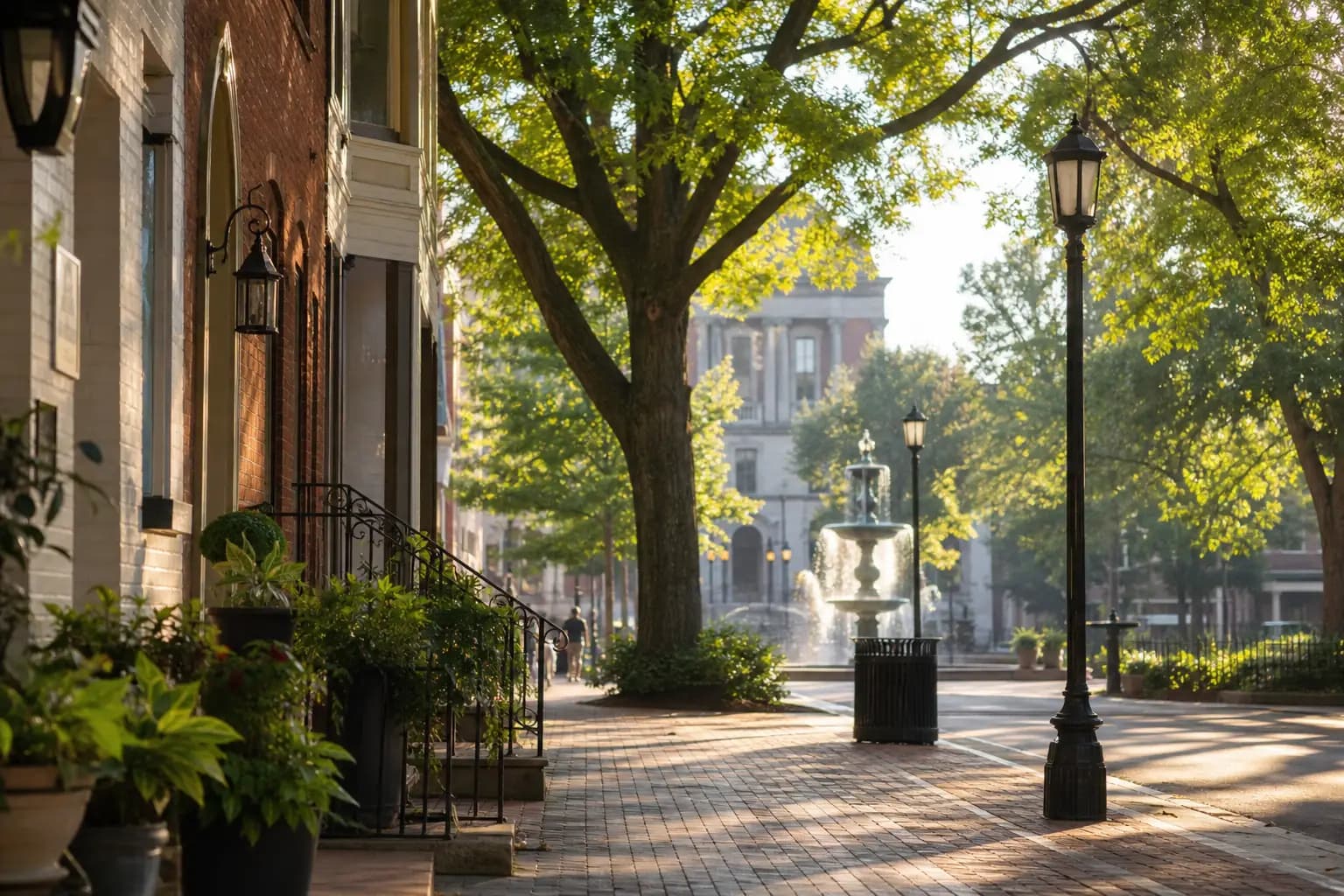
A Georgia sightseeing trip can move from civil rights landmarks in Atlanta to Savannah’s historic streets, then on to Amicalola Falls, Okefenokee National Wildlife Refuge and Cumberland Island. The state’s places also trace Indigenous, Cherokee, military and presidential history. For a broader statewide overview, see the main Georgia guide.
Key facts
- The Martin Luther King, Jr. National Historical Park in Atlanta preserves places where Dr. King was born, lived, worked, worshiped and is buried.
- Savannah was founded in 1733 by colonists led by James Edward Oglethorpe and is the oldest city in Georgia.
- Georgia State Parks offers more than 600 miles of hiking trails.
- Okefenokee National Wildlife Refuge protects about 407,000 acres, or about 93 percent of the Okefenokee Swamp.
- Cumberland Island has 17 miles of uninterrupted beach.
Own a house in Georgia you are thinking of selling? See how our cash offer works.
Atlanta icons and civil rights landmarks
Atlanta has sightseeing stops tied to museums, attractions and civil rights history. Explore Georgia describes the Georgia Aquarium as "the largest aquarium in the Western Hemisphere." Nearby, the World of Coca-Cola and the National Center for Civil and Human Rights are part of the city’s attraction circuit.
The city’s deeper national story is in the historic Sweet Auburn neighborhood. Martin Luther King, Jr. National Historical Park preserves places connected to Dr. King’s birth, home life, work, worship and burial. Key stops include the King Center and Freedom Hall, Historic Ebenezer Baptist Church, the tombs of Dr. King and Coretta Scott King, the Birth Home, Historic Fire Station No. 6 and the National Park Service Visitor Center.
Atlanta is also home to the National Center for Civil and Human Rights, which fits naturally with a visit to the King park. Together, these places make Georgia known for civil rights sightseeing that is rooted in actual streets, churches, homes and public memory.
Savannah’s historic district and River Street
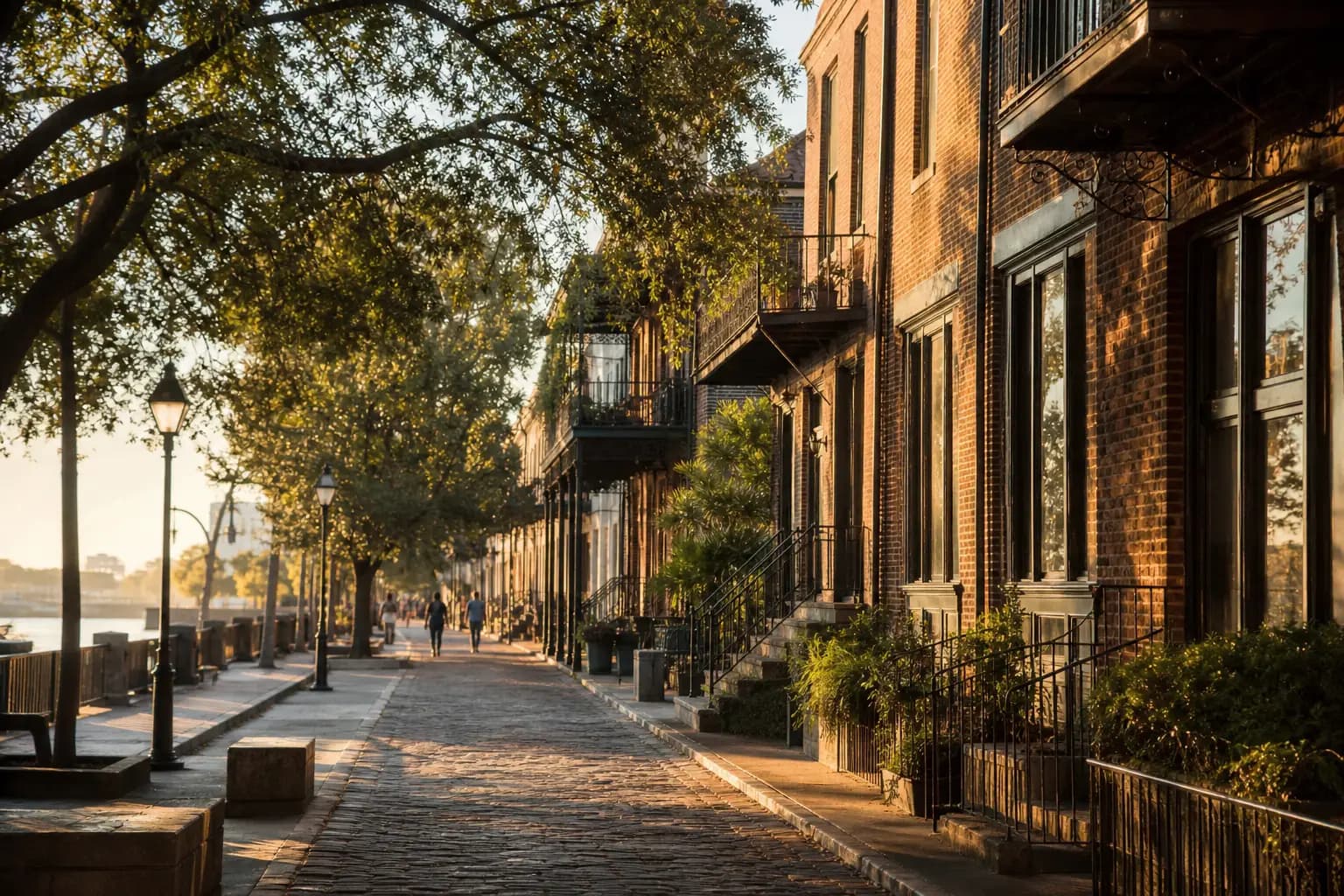
Savannah is one of Georgia’s signature walking cities because its history is built into the street plan, architecture and riverfront. Founded in 1733 by colonists led by James Edward Oglethorpe, Savannah is the oldest city in Georgia, according to the New Georgia Encyclopedia. The same account calls it one of the outstanding examples of 18th century town planning in North America.
The Savannah Historic District was designated a National Historic Landmark in 1966, and present day visitors see elegant architecture and historic ironwork throughout the district. Notable stops include the birthplace of Juliette Gordon Low, founder of the Girl Scouts of the United States of America, Telfair Museums, First African Baptist Church, Congregation Mickve Israel and the Central of Georgia Railway roundhouse complex. The district also draws travelers who want to walk beneath moss draped oaks and visit historic homes.
River Street adds a working waterfront edge to the historic district. Visitors also see large container ships passing by on the river, which keeps the waterfront from feeling like a preserved stage set.
State parks, waterfalls and canyons
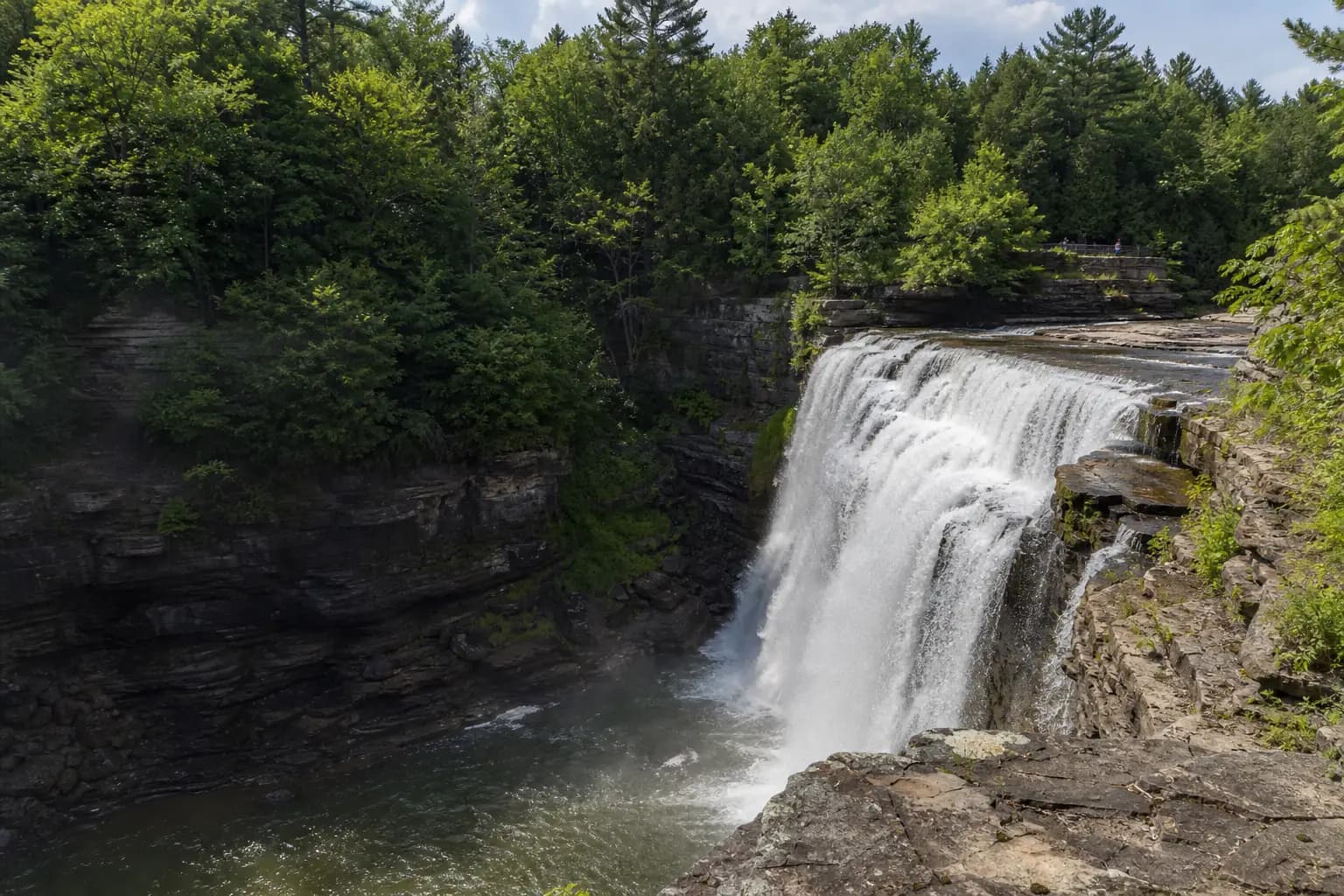
Georgia outdoor sightseeing changes quickly from trails to waterfall overlooks. Georgia State Parks offers more than 600 miles of hiking trails, with routes at parks and historic sites across the state. A sightseeing route can include Amicalola Falls and Cloudland Canyon.
Georgia State Parks calls Amicalola Falls, at 729 feet, "the tallest cascading waterfall in the Southeast." Cloudland Canyon is known for two waterfalls that tumble over layers of sandstone and shale into pools below.
Okefenokee, Cumberland Island and the wild coast
South Georgia and the coast show another side of the state. Okefenokee National Wildlife Refuge was established by Executive Order on March 30, 1937, to provide refuge and breeding ground for migratory birds and other wildlife. It protects about 407,000 acres, or about 93 percent, of the 438,000 acre Okefenokee Swamp.
The refuge is a mosaic of open water prairies, cypress forests, blackwater channels, floating vegetation, pine islands and upland forests. It is also the headwaters of the Suwannee and St. Marys rivers. Visitors experience the swamp through canoeing, kayaking, boating, hiking, camping, fishing, hunting, wildlife observation and photography, with miles of water trails and designated recreation areas.
Cumberland Island National Seashore is known for beach, dunes and ruins. The island has 17 miles of uninterrupted beach, with no docks, houses or other structures along that stretch. Visitors can also walk the grounds around the ruins of Dungeness, a mansion first built in 1884 as a winter home for Thomas Carnegie, Lucy Carnegie and their nine children.
Indigenous, Cherokee, military and presidential history
Georgia’s sightseeing story reaches far before its modern cities. Etowah Mounds State Historic Site, on the Etowah River about three miles south of Cartersville in Bartow County, contains one of the largest Indian mounds in North America. The ancient town covered 54 acres, and its most visible features are three large earthen mounds, with at least six mounds at the site altogether.
The largest mound at Etowah is a temple mound that rises a little more than 60 feet. The mounds were built as four sided, flat topped pyramids and originally served as platforms. The town was settled by the 12th century, and occupation continued, with brief abandonments, into the 17th century.
Other state historic sites widen the timeline. Georgia State Parks points visitors to Etowah or Kolomoki for mound sites, New Echota for the first Cherokee capital, Jarrell Plantation or Hofwyl-Broadfield Plantation for farm buildings, Pickett’s Mill or Fort McAllister for Civil War history, Fort Morris for Revolutionary War history and Fort King George for Colonial Georgia. State park road trips also trace places connected with presidents and soldiers, including FDR, Jimmy Carter and Jefferson Davis.
Museums and cultural stops worth adding
Georgia’s sightseeing is not only outdoors or in historic districts. Atlanta’s museum and attraction circuit includes the Georgia Aquarium, the World of Coca-Cola and the National Center for Civil and Human Rights. Those stops sit close to the civil rights landmarks of Sweet Auburn, so visitors can pair large attractions with places tied to Dr. King’s life and legacy.
Savannah adds a different museum rhythm. Telfair Museums are identified by the New Georgia Encyclopedia as one of the South’s first public museums, and the city’s historic architecture and ironwork make the district itself part of the cultural experience. The Central of Georgia Railway roundhouse complex also gives visitors a rail history landmark within the broader historic city.
Several state historic sites function like outdoor museums. New Echota, Etowah, Kolomoki, Jarrell Plantation, Hofwyl-Broadfield Plantation, Pickett’s Mill, Fort McAllister, Fort Morris and Fort King George all appear in Georgia State Parks’ hiking and road trip materials as places where trails and preserved settings carry the story. For travelers comparing nearby states, related sightseeing guides include what Ohio is known for and what Indiana is known for.
Frequently asked questions
What is Georgia known for overall?
A sightseeing trip through Georgia often includes civil rights sites, Savannah’s historic district and riverfront, Amicalola Falls, Cloudland Canyon, Okefenokee National Wildlife Refuge and Cumberland Island. The state also has Indigenous mound sites, Cherokee history, military sites and museums.
Where should I go in Georgia for civil rights history?
Start with Martin Luther King, Jr. National Historical Park in Atlanta’s Sweet Auburn neighborhood. The park includes the King Center, Historic Ebenezer Baptist Church, the King tombs, the Birth Home, Historic Fire Station No. 6 and a National Park Service Visitor Center.
Is Savannah one of the main things Georgia is known for?
Yes. Savannah was founded in 1733 and is the oldest city in Georgia. Visitors know it for the Savannah Historic District, historic homes, architecture, ironwork, moss draped oaks and River Street.
What natural sights is Georgia known for?
Georgia is known for Amicalola Falls, Cloudland Canyon, Okefenokee National Wildlife Refuge and Cumberland Island. The state park system includes more than 600 miles of hiking trails.
What Georgia sites show Indigenous and Cherokee history?
Etowah Mounds State Historic Site preserves an ancient 54 acre town with large earthen mounds along the Etowah River. Georgia State Parks also points visitors to Kolomoki for mound history and New Echota for the first Cherokee capital.
Sources
Checked against each source on November 19, 2026. Opening hours, prices and event dates change, so check with the venue before you go. The illustrations are AI generated and do not show real places.
- Hiking in Georgia State Parks (Georgia Department of Natural Resources, Georgia State Parks & Historic Sites)
- Martin Luther King, Jr. National Historical Park (National Park Service)
- Savannah (New Georgia Encyclopedia)
- About Us of Okefenokee National Wildlife Refuge (U.S. Fish & Wildlife Service)
- On Island, Cumberland Island National Seashore (National Park Service)
- Etowah Mounds (New Georgia Encyclopedia)