What to Expect at the Indiana State Fair
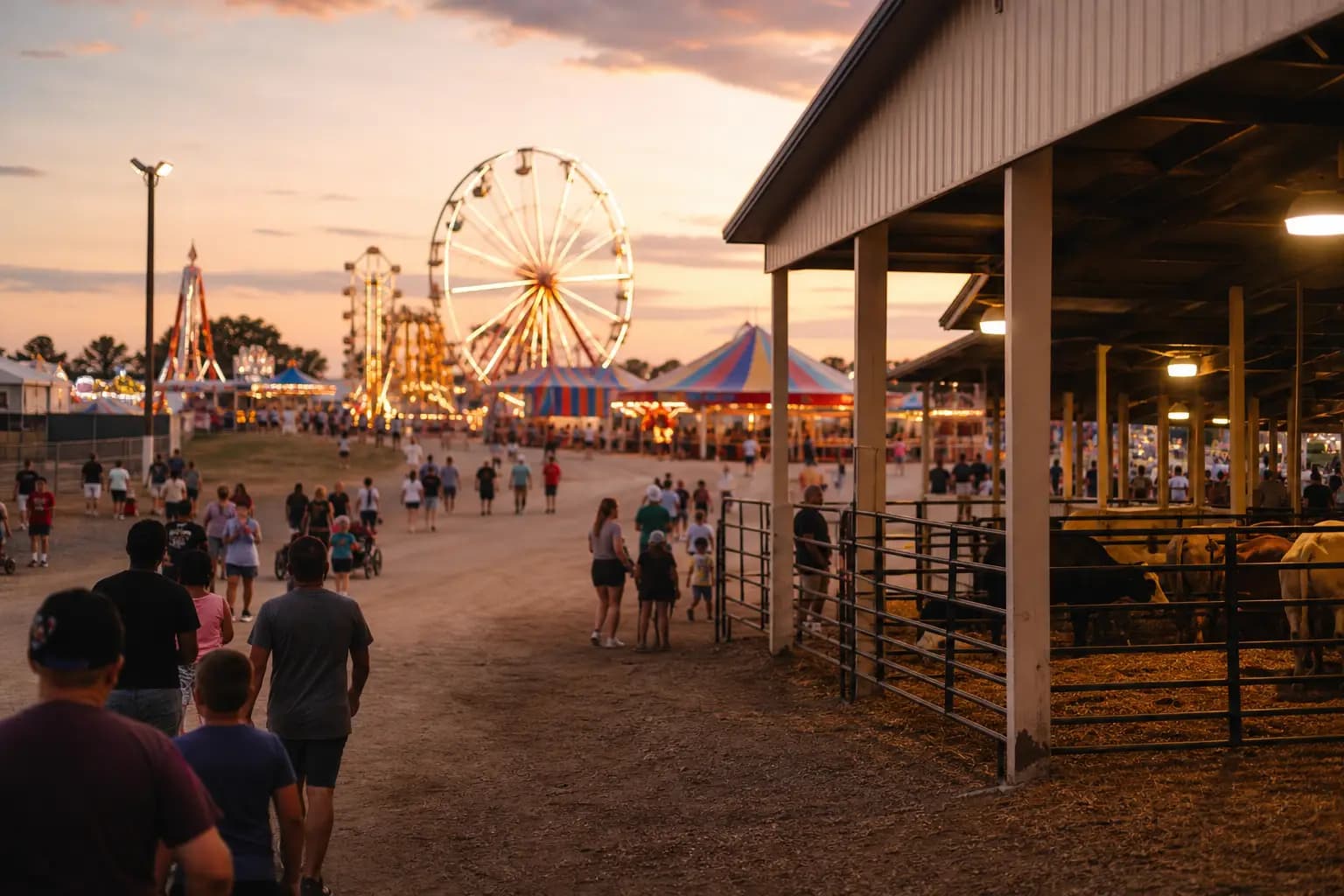
The Indiana State Fair is Indiana's annual celebration of agriculture, food, animals and fairground fun at the Indiana State Fairgrounds & Event Center in Indianapolis. Its roots go back to an 1851 agricultural act and a first fair in 1852 at what is now Military Park. Today, visitors come for agricultural displays, Indiana Grown products, Taste of the Fair entries, midway rides and a 38th Street fairgrounds with more than a century of history.
Key facts
- The first fair was held in 1852 at what is now Military Park in downtown Indianapolis.
- The current 38th Street fairgrounds has been the fair's home since 1892.
- The Indiana State Fairgrounds & Event Center covers 250 acres and has more than 1,000,000 square feet of event space.
- Visitors can expect agricultural displays, food vendors, Indiana Grown products and midway rides.
Own a house in Indianapolis you are thinking of selling? See how our cash offer works.
What the Indiana State Fair is today
The Indiana State Fair is the state's annual fair at the Indiana State Fairgrounds & Event Center in Indianapolis. Agriculture remains at the center, with animals, Indiana Grown products, agricultural displays and fair competitions all having a place. The modern fair also folds in food, shopping and midway rides, so a visit can include exhibit spaces, food stands and rides on the same fairgrounds.
The scale feels big because the fair spreads across a large campus and gathers many fair activities in one place. During the fair, the same campus holds the Ag Hort Building, midway areas, food zones and exhibit spaces. That mix gives the event a strong agricultural base along with the familiar pleasures of a day at the fair.
How the Indiana State Fair began
The fair grew from an 1851 act of the Indiana General Assembly "to encourage agriculture," which created the State Board of Agriculture. One of the board's first jobs was to create a state agricultural fair, and Indiana held its first in 1852. That first fair took place in what is now Military Park in downtown Indianapolis.
The early purpose still shapes the way the fair feels today. It began as a public gathering tied to farming, useful knowledge and statewide participation. That older purpose still shows up in animals, food demonstrations, agricultural displays and judging.
How the fair found its Indianapolis home
For several decades, the Indiana State Fair moved among Indiana communities. Early host cities included Lafayette in 1853, Madison in 1854, New Albany in 1859, Fort Wayne in 1865 and Terre Haute in 1867. Indianapolis hosted for the majority of years, and the fair settled at its current 38th Street site in 1892. Since then, the 38th Street site has anchored the fair in one Indianapolis location while the event itself has kept its statewide identity.
The fairgrounds as a place
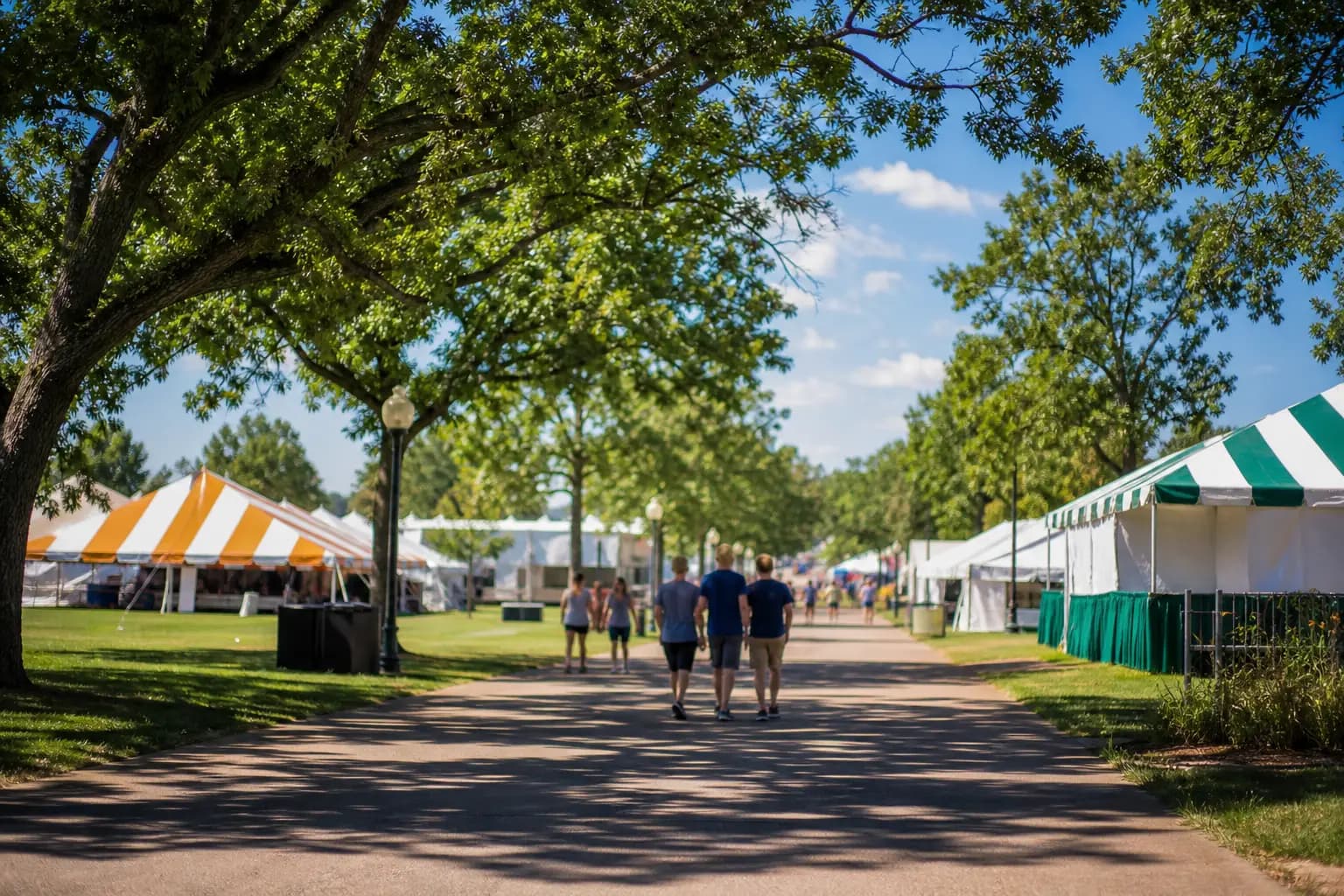
The fair's home base is the Indiana State Fairgrounds & Event Center at 1202 E 38th St, Indianapolis IN 46205. The campus covers 250 acres and has more than 1,000,000 square feet of event space. It is large enough to hold barns, arenas, exhibit halls, midway areas and food zones while keeping the fair in one recognizable Indianapolis setting.
The grounds also function beyond fair season. In 1990, the Indiana State Fairgrounds & Event Center began its present existence as a year round events center for conventions, consumer shows, conferences, sports, concerts, fairs, exhibitions, meetings, weddings, banquets and retreats. That year round role helps explain why some buildings feel historic while many visitor facilities have modern event uses.
During the annual fair, historic preservation is part of the story on the grounds. The Indiana Department of Natural Resources Division of Historic Preservation & Archaeology participates through architectural history trolley tours. The tours underline that the fairgrounds are a working event campus and a collection of buildings with their own past.
Food, animals and fair traditions
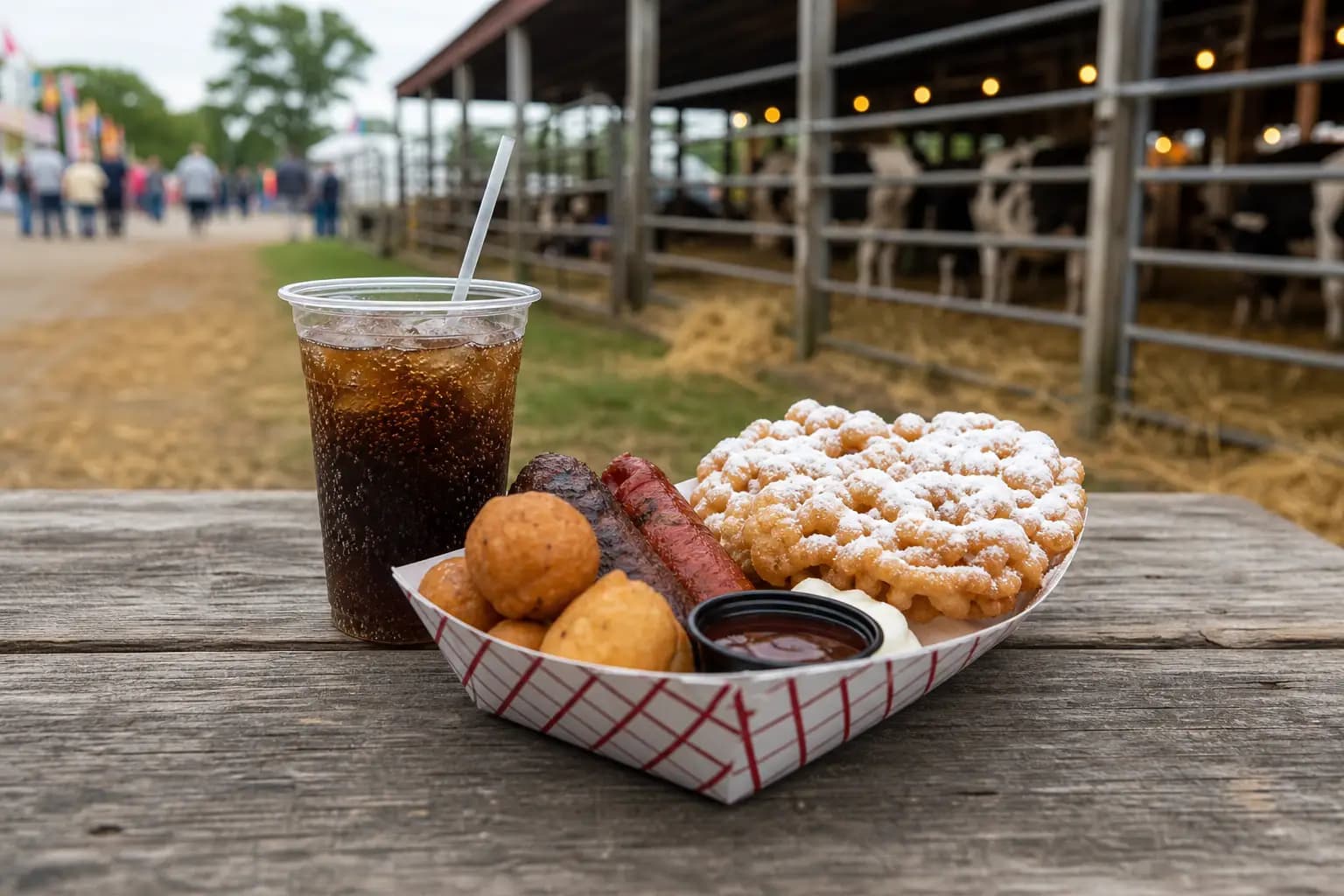
Food is part of the Indiana State Fair experience, from familiar fair food to newer entries. The fair's Taste of the Fair program adds new food and beverage items. Visitors can try entries and vote for a favorite.
Animals are part of the fair's agricultural side, and the guest safety guidance treats animal contact as a normal part of the visit. Visitors are told to wash their hands after touching animals, especially young children. That simple routine matters at a fair where food, farm displays and family activities can sit close together on the same day.
The Ag Hort Building adds another Indiana focused layer. Fairgoers can shop the Indiana Grown Marketplace, watch cooking demonstrations that use Indiana Grown products, sample products from members and find kids' activities about food and agriculture in the creation station area. For families with small children, the Kiddie Midway is an area of rides built for kids under 36 inches to ride with an adult.
Planning a fair day
Plan for a big campus and a lot of walking. Guests who drive onto the grounds use Gates 1, 5 or 6, and IndyGo Routes 4 and 39, plus the Purple Line, bring riders just steps from the main entrance at Gate 1 on 38th Street. Fairgrounds and vendors accept both cards and cash, and ATM machines are available across the fairgrounds.
Pack with the entry rules in mind. Bags must be 9 inches by 10 inches by 12 inches or smaller, and all bags are subject to search before entry. Larger bags have to be returned to a vehicle or home before entering the fairgrounds.
A few safety habits make the day easier. Wash hands after contact with any animal, especially for young children. During severe weather such as lightning, hail, high winds, tornados or severe thunderstorms, the fairgrounds closes gates and asks guests and staff to seek shelter in a building.
Frequently asked questions
Where is the Indiana State Fair held?
The fair is held at the Indiana State Fairgrounds & Event Center, 1202 E 38th St, Indianapolis IN 46205. The current 38th Street fairgrounds has been the fair's home since 1892.
What is the history of the Indiana State Fair?
The fair began after an 1851 Indiana General Assembly act to encourage agriculture and create the State Board of Agriculture. The first fair was held in 1852 at what is now Military Park in downtown Indianapolis.
What should visitors expect at the fair?
Expect agricultural exhibits, Indiana Grown products, fair food, midway rides and competitions. The Taste of the Fair program adds new food and beverage items and invites visitors to vote for a favorite.
Is the Indiana State Fair good for families with young children?
The fair includes kids' activities about food and agriculture in the Ag Hort Building's creation station area. The Kiddie Midway has rides built for kids under 36 inches to ride with an adult.
How can visitors get to the Indiana State Fair without driving?
IndyGo Routes 4 and 39, plus the Purple Line, bring riders just steps from the Indiana State Fair's main entrance at Gate 1 on 38th Street. The fairgrounds is also set up for drivers, with guests entering the grounds through Gates 1, 5 or 6.
Sources
Checked against each source on November 19, 2026. Opening hours, prices and event dates change, so check with the venue before you go. The illustrations are AI generated and do not show real places.
- ISDA: State Fair (Indiana State Department of Agriculture / IN.gov)
- Historic Preservation & Archaeology: State Fairgrounds Architectural Tour (Indiana Department of Natural Resources, Division of Historic Preservation & Archaeology)
- Indiana State Library: State Agency Spotlight (Indiana State Library / IN.gov)
- Indiana State Fair Frequently Asked Questions (Indiana State Fairgrounds & Event Center)
- Guest Services (Indiana State Fairgrounds & Event Center)
- Taste of the Fair (Indiana State Fairgrounds & Event Center)