
Devil's Lake State Park Wisconsin
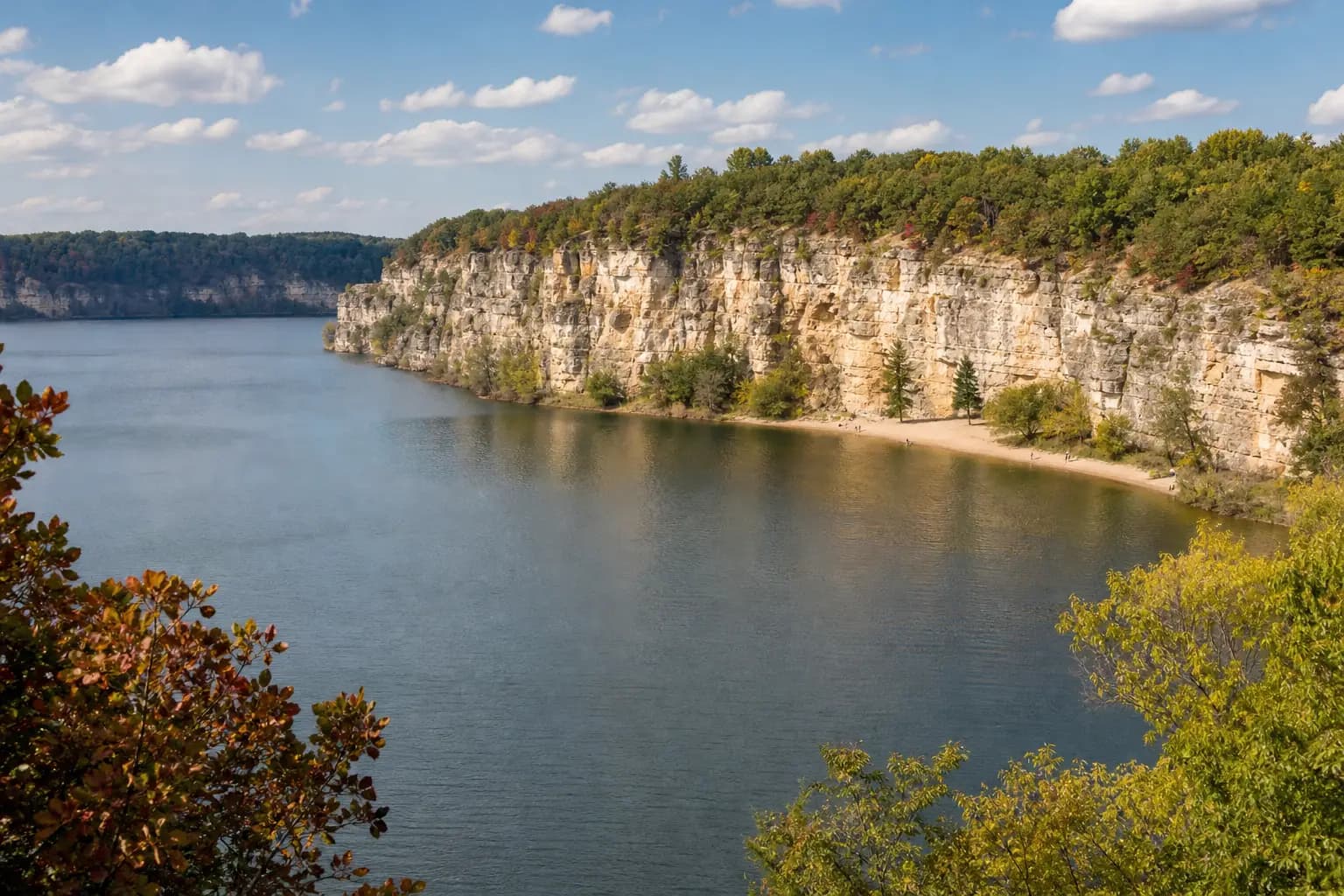
Devil's Lake State Park Wisconsin is defined by 500 foot quartzite bluffs, a 360 acre lake, swimming beaches, paddling and 29 miles of trails. The lake is spring fed and sits between two glacial plugs, while the rock around it is quartzite formed 1.6 billion years ago. It is also a climbing destination, with routes on the east and west sides, but water, cliff and winter conditions call for careful planning.
Key facts
- The park has 500 foot quartzite bluffs and a 360 acre lake.
- The lake is spring fed and lies between two glacial plugs.
- The hiking network includes 29 miles of trails.
- There are two beaches, two no fee boat landings and paddling opportunities.
- Rock climbing is at your own risk, and park climbing areas are not maintained for climbing.
Own a house in Wisconsin you are thinking of selling? See how our cash offer works.
Quartzite Bluffs And The Lake Basin
Devil's Lake begins with its 500 foot quartzite bluffs and 360 acre lake. The geology page describes the bluff rock as quartzite formed 1.6 billion years ago, made of grains of sand tightly cemented together. That old rock gives the park its strong visual identity without requiring a long itinerary to understand what people come to see.
The lake is spring fed and lies between two glacial plugs. Around the bluffs, broken rock is identified as talus, a useful word to know when reading maps or climbing guidance. The result is a park experience where geology, water access, hiking and climbing all shape the same visit.
Lake Access, Beaches And Paddling
The water side is centered on swimming beaches and paddling opportunities on the 360 acre lake. There are two beaches, and lifeguards are not provided, so swimmers need to treat beach time as self supervised. The park also lists two no fee boat landings, which keeps boat access simple in concept even if a busy day takes more patience.
Boating has a clear limit: only electric motors are allowed. Life preservers are required, a basic rule that matters on any lake outing.
Hiking Trails To Know
Hiking is one of the easiest ways to connect the lake and the bluffs, and the park lists 29 miles of trails. The named routes include Balanced Rock trail, Tumbled Rocks trail, East Bluff trail and West Bluff trail. A visitor can choose a named route or make hiking the main focus of the day.
Trail names at Devil's Lake matter because several sound like geology lessons. Tumbled Rocks is another named route to notice when matching a hike to the park.
Rock Climbing Areas And Limits
Rock climbing is a major part of how many people know Devil's Lake. Travel Wisconsin describes 1,600 established climbing routes, 1,500 bouldering climbs and climbing areas on the east and west sides. It also notes that rock can be slick in spots and mentions large boulder fields for talus scrambling.
The safety tone from the park is direct. Climbing areas are not maintained for rock climbing, climbing is done at your own risk, no permits are issued, and climbers may encounter loose rocks. The park also warns that most accidents involve inexperienced people, so inexperience should be treated as a serious safety factor.
State Natural Areas rules add another boundary: rock climbing and rappelling are prohibited except at East Bluff SNA within Devil's Lake State Park. That makes it especially important to use park maps and posted signs rather than assuming every rock face is open to climbing. Dogs must be kept on a leash under the State Natural Areas visitor guidelines.
Crowds, Parking And The Busy Season
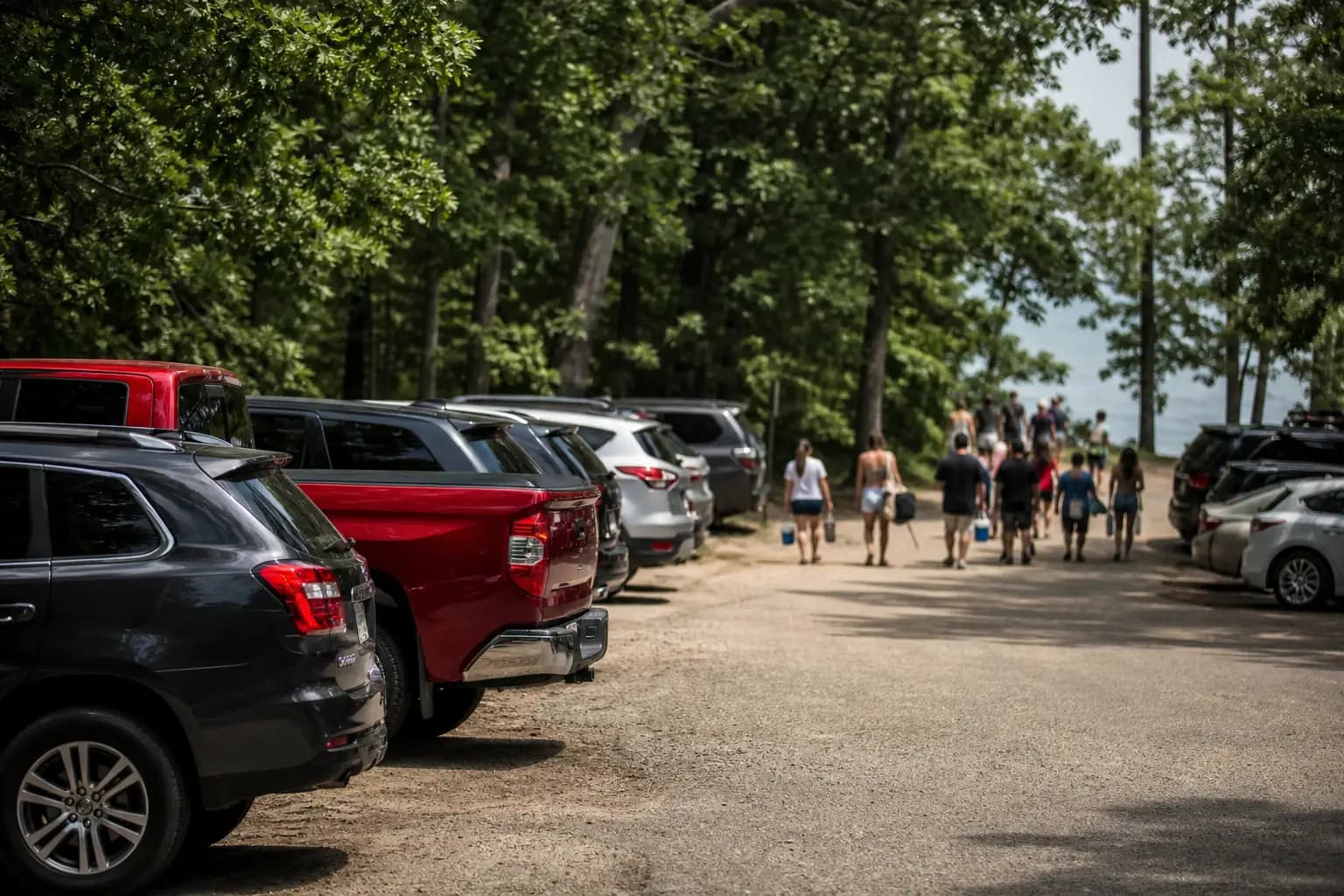
Devil's Lake draws heavy use for a state park. The Wisconsin DNR describes it as the most visited state park in Wisconsin and says it receives over 2.5 million visitors annually. The visitor pressure is concentrated enough that crowd planning belongs beside trail and lake planning.
The busy stretch is May through October. During that period, parking lots often fill before 9 a.m., and visitors can run into long lines and crowded trails. A calmer plan usually means choosing a shorter list of activities, knowing the map in advance and having another day use area in mind if one lot is full.
Winter And Slippery Conditions
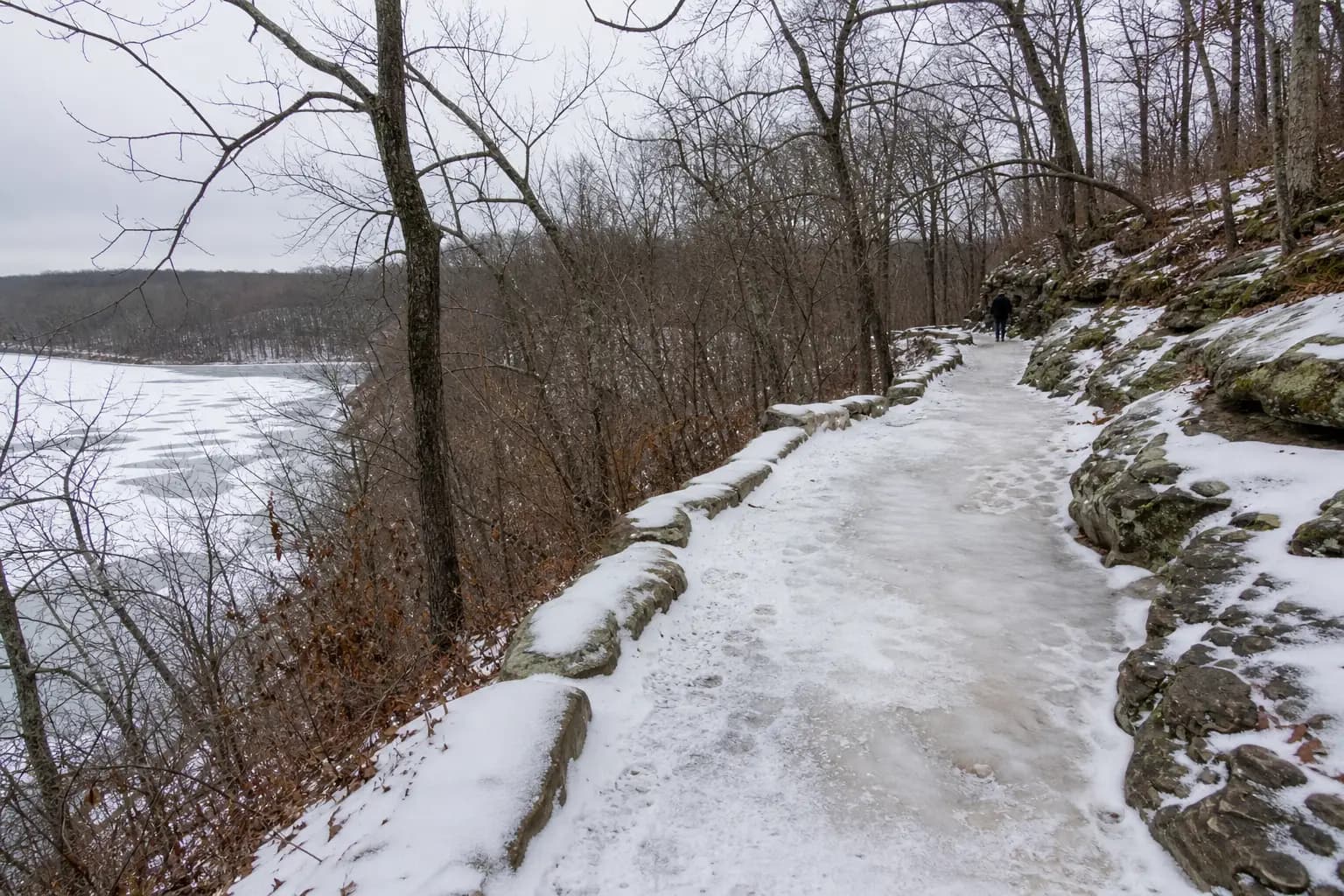
Winter changes the risk profile at Devil's Lake. The park says trails are not maintained for winter use, and surfaces may be snow and ice covered. In thawing or wet conditions, the same paths can also become muddy and slippery.
Ice deserves separate caution because park staff do not monitor it and ice thickness can vary. That means the lake should not be treated as a uniform surface. For a winter visit, use conditions, not summer trail habits, as the basis for decisions.
Frequently asked questions
What is Devil's Lake State Park known for?
It is known for 500 foot quartzite bluffs, a 360 acre lake, beaches, paddling, hiking and climbing. The geology is a big part of the experience, since the quartzite formed 1.6 billion years ago and the lake sits between two glacial plugs.
Can you swim at Devil's Lake?
Yes, the park has two beaches and describes swimming beaches. Lifeguards are not provided, so swimmers should plan for self supervised water time. Paddling is also listed as an opportunity on the lake.
Are boats allowed on Devil's Lake?
Two no fee boat landings are available. Only electric motors are allowed, and life preservers are required.
How much hiking is there at Devil's Lake State Park?
The park lists 29 miles of trails. Named routes include Balanced Rock trail, Tumbled Rocks trail, East Bluff trail and West Bluff trail.
Is Devil's Lake a rock climbing area?
Yes, Travel Wisconsin describes 1,600 established climbing routes and 1,500 bouldering climbs on the east and west sides. The park is clear that climbing areas are not maintained for rock climbing and that climbing is at your own risk.
When is Devil's Lake State Park busiest?
The busy stretch is May through October. The park receives over 2.5 million visitors annually, and parking lots often fill before 9 a.m. during crowded periods.
What should visitors know about winter conditions?
Trails are not maintained for winter use, and they may be snow and ice covered, muddy or slippery. Park staff do not monitor ice, and ice thickness can vary, so winter decisions should be based on conditions.
Sources
Checked against each source on November 24, 2026. Opening hours, prices and event dates change, so check with the venue before you go. The illustrations are AI generated and do not show real places.
- Devil's Lake State Park (Wisconsin Department of Natural Resources)
- Geology: Devil's Lake State Park (Wisconsin Department of Natural Resources)
- Hiking: Devil's Lake State Park (Wisconsin Department of Natural Resources)
- Water Recreation: Devil's Lake State Park (Wisconsin Department of Natural Resources)
- Rock Climbing: Devil's Lake State Park (Wisconsin Department of Natural Resources)
- Travel Tips for Dealing with Crowds: Devil's Lake State Park (Wisconsin Department of Natural Resources)
- Winter Recreation: Devil's Lake State Park (Wisconsin Department of Natural Resources)
- State Natural Areas Visitor Guidelines (Wisconsin Department of Natural Resources)
- Rock Climbing Wisconsin: 4 Great Outdoor Spots Near Madison (Travel Wisconsin / Wisconsin Department of Tourism)
More guides in Wisconsin
Events Oshkosh
What Is EAA AirVenture Oshkosh?Learn what EAA AirVenture Oshkosh is, when it happens, what aircraft and air shows to expect, and how visitors plan a trip.
Outdoors Wisconsin
Ice Age Trail WisconsinLearn where the Ice Age Trail crosses Wisconsin, what glacial landforms to watch for, key segments, seasons, camping and hiking basics.
Food Racine
What Is Racine Kringle?Learn what Racine kringle is, how Danish immigrants shaped the pastry, and why it became Wisconsin's official state pastry.
Events Milwaukee
What Is Summerfest In Milwaukee?Learn what Summerfest in Milwaukee is, how it grew from Henry W. Maier's 1960s idea, and how its 75 acre grounds and 12 stages shape a visit.
Outdoors Wisconsin
The Apostle Islands In WisconsinExplore the Apostle Islands, from Lake Superior sea caves and beaches to hiking trails, kayaking, camping, Madeline Island and winter ice caves.
Sightseeing Milwaukee
What To See At The Harley Davidson Museum In MilwaukeeSee what to expect at the Harley-Davidson Museum in Milwaukee, from Serial Number One to campus walks, tours and riverfront stops.