
The Apostle Islands In Wisconsin
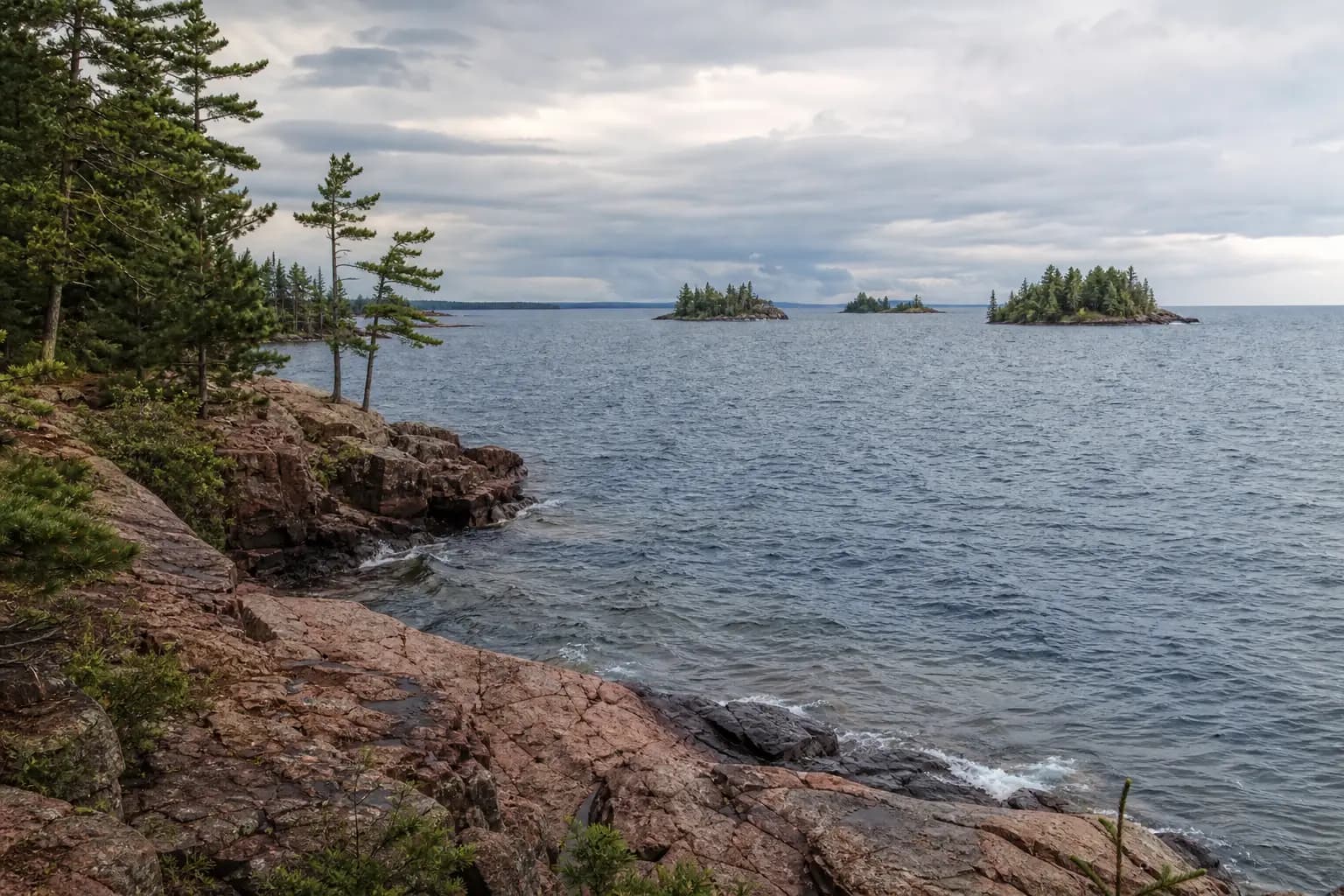
Apostle Islands National Lakeshore protects 21 islands and a scenic 12 mile Lake Superior shoreline at the northern tip of Wisconsin's Bayfield Peninsula. Visitors come for sea caves, sandy beaches, lighthouses, hiking trails, kayaking, boating and remote campsites. A ferry connects Bayfield with Madeline Island, where travelers can visit La Pointe and Big Bay State Park.
Key facts
- Apostle Islands National Lakeshore includes 21 islands and a scenic 12 mile shoreline along Lake Superior.
- The National Lakeshore was established in 1970 and has the largest collection of lighthouses in the National Park system.
- More than fifty miles of maintained trails lead to lighthouses, beaches, campsites and overlooks.
- Camping is available on 18 islands and at three mainland campsites, with no drive up car, tent or RV camping.
Own a house in Wisconsin you are thinking of selling? See how our cash offer works.
Where The Apostle Islands Are
Apostle Islands National Lakeshore protects 21 islands and a scenic 12 mile shoreline at the northern tip of the Bayfield Peninsula. The park is also within the ancestral homeland of the Ojibwe people. Its Lake Superior setting shapes much of the visit, from boat travel between islands to weather that can shift quickly on open water.
The National Lakeshore was established in 1970, and its enduring draws are sea caves, sandy beaches and lighthouses. The park has the largest collection of lighthouses in the National Park system. Visitors often plan around both mainland stops and island access, since beaches, trails, campsites and historic light stations are spread across the Lakeshore.
Sea Caves And Lake Superior Scenery
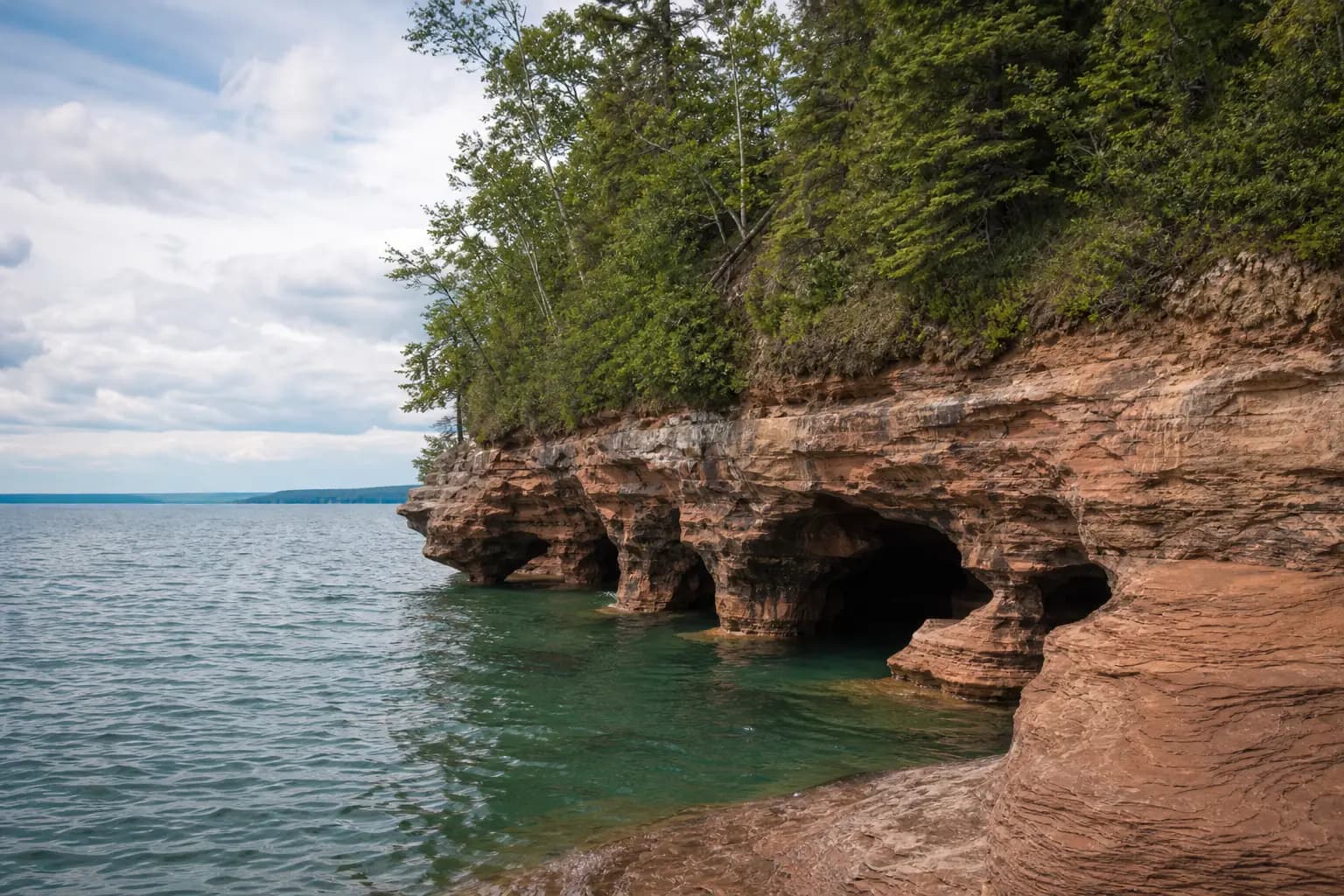
The sea caves are a defining Lake Superior sight here. Centuries of wave action, freezing and thawing have shaped the shorelines of Apostle Islands National Lakeshore. The result includes delicate arches, vaulted chambers and honeycombed passageways in sandstone cliffs.
The main cave areas named by the National Park Service are the north shore of Devils Island, Swallow Point on Sand Island and the mainland near the Lakeshore's western boundary. People visit the sea caves in summer and winter, but the way they see them changes with lake and ice conditions. In calm summer conditions, kayakers can enter deeper recesses, while the caves are generally seen most fully by boat.
Hiking, Beaches And Overlooks
Hikers have more than fifty miles of maintained trails on the islands of the National Lakeshore. Those trails reach lighthouses, abandoned quarries, old farm sites, historic logging camps, beaches, campsites and scenic overlooks. The variety is part of the appeal: one walk may point toward a lighthouse, while another leads toward a beach or a forested view over Lake Superior.
The Lakeshore Trail is a mainland route with views of hardwood forests, Lake Superior and the mainland sea caves. It is also a rugged path with stream crossings and steep slopes, so it is best suited for strong hikers. The park also names many sandy beaches as good places for walking and exploring.
- Mainland beaches include Little Sand Bay and Meyers Beach.
- Island beach areas named by the park include Julian Bay on Stockton Island, Long Island beaches and the Raspberry Island sandspit.
- Other named beach walks include Lighthouse Bay on Sand Island, the South Twin sandspit and the Rocky Island sandspit.
Kayaking, Boating And Cruises
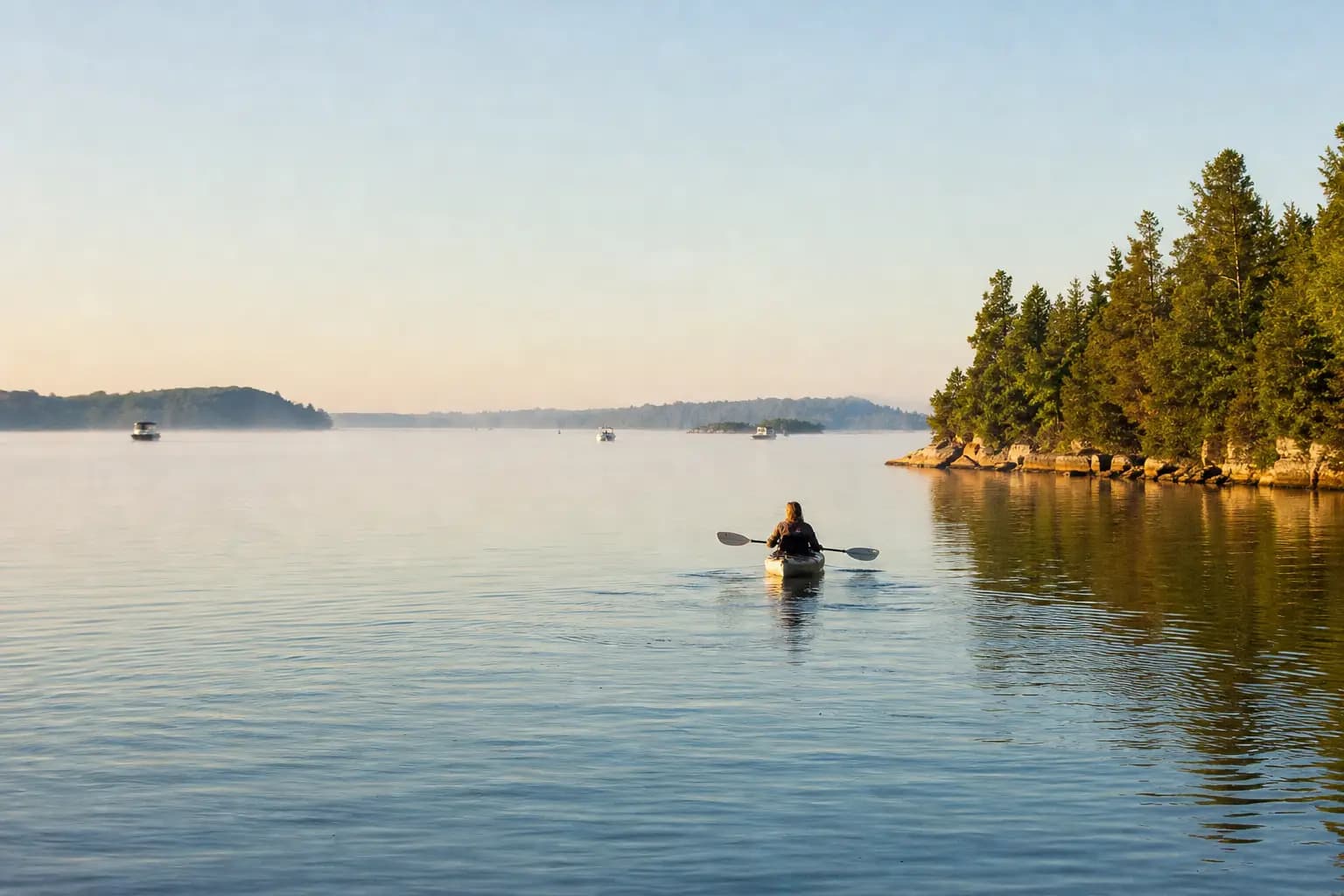
Kayaking on Lake Superior is a classic Apostle Islands experience, but it requires careful preparation. Apostle Islands National Lakeshore does not provide guided kayaking tours, but authorized kayak outfitters offer full and half day guided trips, safety classes and equipment rentals. Two kayak launches are on the mainland section of the park.
Lake Superior is known for cold temperatures, rough seas, fog and sudden squalls. The National Park Service recommends at least a 16 foot sea kayak for travel on Lake Superior. In summer, sea cave formations are especially associated with Devils Island, Sand Island and the mainland near Meyers Beach.
A narrated 55 mile Grand Tour cruise is another way to see the islands from the water. The cruise route passes Raspberry and Devils Island Lighthouses, standing rocks, extensive sea caves and marine wildlife. At Devils Island, Lake Superior waves have etched arches, caves and caverns into reddish brown sandstone cliffs.
Camping And Island Access
Camping is available on 18 of the National Lakeshore's 21 islands and at three mainland campsites. There is no drive up car, tent or RV camping in the Apostle Islands. The islands are accessible only by sea kayak, motorboat, sailboat, shuttle service or water taxi.
Reservations are required for all camping in the National Lakeshore. Individual sites are spread across the islands and often set apart from other sites, with basic amenities such as a picnic table, fire ring, bear resistant food locker and nearby privy. The park describes Apostle Islands camping as remote, which is part of what makes planning for weather, water travel and supplies so important.
Madeline Island And Big Bay State Park
La Pointe is on Madeline Island, and the Wisconsin Historical Society identifies it as Wisconsin's oldest permanent settlement. A short ferry ride from Bayfield to Madeline Island is needed to reach Big Bay State Park. The island adds a settled harbor town and a state park visit to a Lake Superior trip centered on Bayfield.
Big Bay State Park sits on the eastern side of Madeline Island. The park has sandstone bluffs along 4 miles of Lake Superior shoreline, plus a 1 mile boardwalk, sandy swimming beach, hiking trails, a large family campground and a group camp. Its shoreline, boardwalk and beach make it a different kind of stop from the more remote island campsites in the National Lakeshore.
Seasonal Planning And Safety
Weather on Lake Superior can change quickly, so Apostle Islands planning starts with the lake. Lake Superior is known for cold water, rough seas, fog and sudden squalls. Water temperatures remain cold deep into the warm season, which matters for paddlers, boaters and anyone planning beach time.
Apostle Islands National Lakeshore is open year round, but winter island access is not common because lake conditions can be unstable. In some winters, when conditions are right, ice formations can appear at the mainland sea caves. Spiked footwear is highly recommended for ice cave conditions.
| Season | What To Know |
|---|---|
| May and June | Average water temperatures are only in the 40s. |
| Late summer | Surface temperatures rarely exceed 60 degrees, except in protected bays. |
| Winter | The National Lakeshore remains open, but access to the islands can be challenging because lake conditions can be unstable. |
| Ice cave years | Mainland ice cave access is from Meyers Beach when conditions allow. |
Frequently asked questions
Where do visitors start a trip to the Apostle Islands?
Many trips center on Bayfield and the northern tip of the Bayfield Peninsula. A ferry ride from Bayfield is needed to reach Madeline Island and Big Bay State Park, while mainland park areas include places such as Meyers Beach and Little Sand Bay.
Can you drive to campsites in the Apostle Islands?
No. The National Park Service states that there is no drive up car, tent or RV camping in the Apostle Islands. Island access is by sea kayak, motorboat, sailboat, shuttle service or water taxi.
What is the main outdoor attraction at the Apostle Islands?
The sea caves are a major natural feature, especially around Devils Island, Sand Island and the mainland near Meyers Beach. Lake Superior waves, freezing and thawing have carved arches, chambers and passageways into the shorelines.
Is kayaking safe for beginners in the Apostle Islands?
Kayaking on Lake Superior requires careful preparation because the lake is known for cold temperatures, rough seas, fog and sudden squalls. The park does not provide guided kayaking tours, but authorized outfitters offer guided trips, safety classes and equipment rentals.
When can visitors see the ice caves?
Ice cave formations at the mainland sea caves do not happen every year. When weather conditions are just right, access is from Meyers Beach, and spiked footwear is highly recommended.
Sources
Checked against each source on November 20, 2026. Opening hours, prices and event dates change, so check with the venue before you go. The illustrations are AI generated and do not show real places.
- Apostle Islands National Lakeshore (National Park Service)
- Sea Caves, Apostle Islands National Lakeshore (National Park Service)
- Hiking in the Apostle Islands (National Park Service)
- Kayaking, Apostle Islands National Lakeshore (National Park Service)
- Camping in the Apostles (National Park Service)
- Weather, Apostle Islands National Lakeshore (National Park Service)
- Big Bay State Park (Wisconsin Department of Natural Resources)
- The Apostle Islands Grand Tour (Apostle Islands Cruises)
More guides in Wisconsin
Sightseeing Milwaukee
What To See At The Harley Davidson Museum In MilwaukeeSee what to expect at the Harley-Davidson Museum in Milwaukee, from Serial Number One to campus walks, tours and riverfront stops.
Food Milwaukee
Milwaukee Food: Dishes the City Is Known ForLearn the Milwaukee food traditions behind brats, cheese curds, frozen custard, Friday fish fry and Wisconsin State Fair cream puffs.
History Milwaukee
Milwaukee History: A Short GuideTrace Milwaukee history from incorporation and agricultural trade to beer companies, factories, Bronzeville and surviving landmarks.
Food Sheboygan
Sheboygan Brats and Bratwurst TraditionsTrace Sheboygan's bratwurst history from Bratwurst Day in 1953 to Brat Days, local meat markets, and the classic single or double on a hard roll.
Sightseeing Appleton
Things to Do in Appleton, WisconsinFollow College Avenue to Appleton's museums, Edison-era electric landmarks and the City Park Historic District for a day of local history.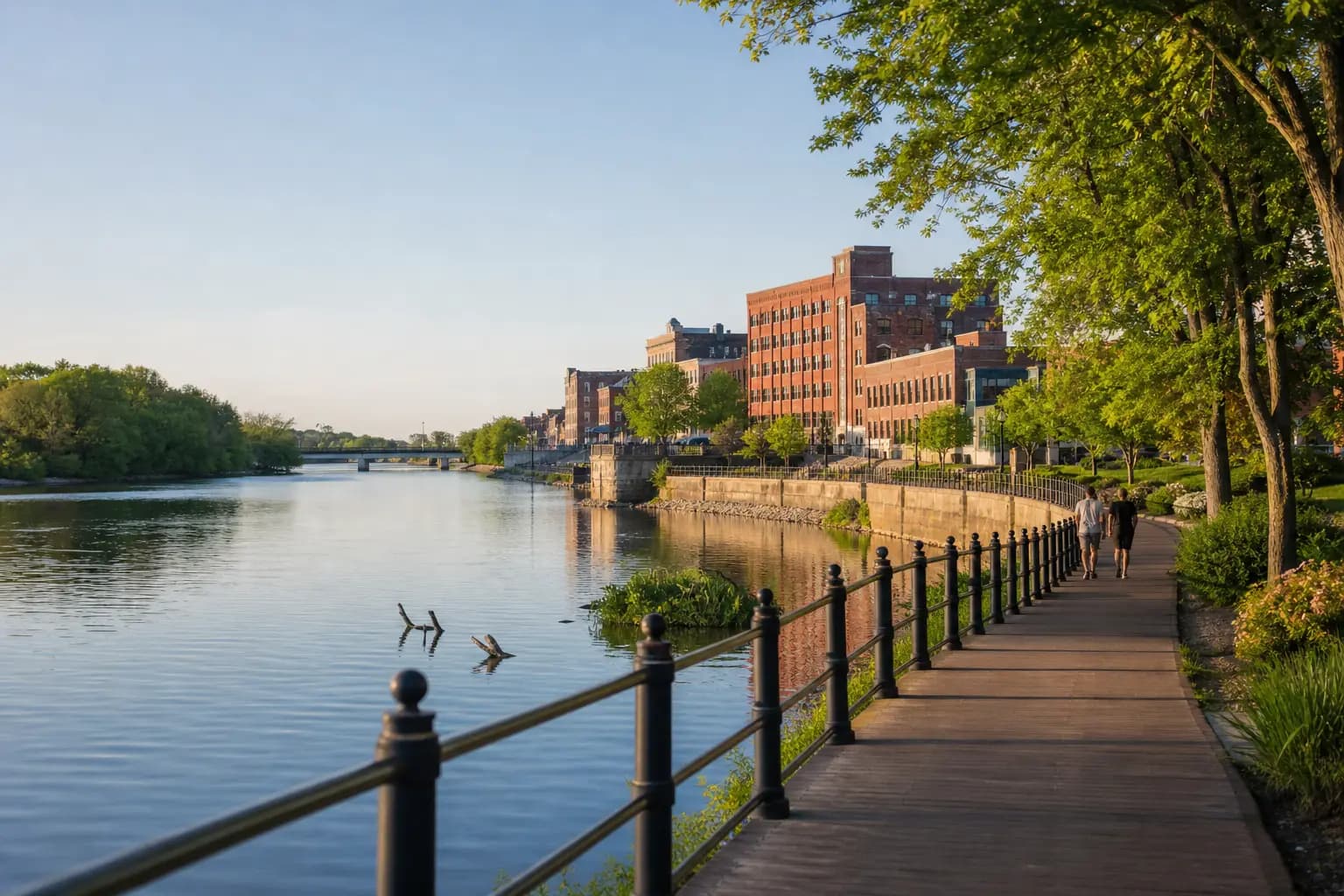
Sightseeing Green Bay
Things to Do in Green Bay, WisconsinPlan things to do in Green Bay with the Fox River, Lambeau Field, historic districts, museums, gardens, wildlife and nearby falls.