
A Short History of Atlanta

Atlanta history begins with railroads. The settlement that grew around the railroad was called Terminus before the name changed to Atlanta on December 26, 1845. Civil War fighting in 1864, the 1868 move of Georgia's capital, Sweet Auburn, Martin Luther King Jr. and the 1996 Olympic Games all shaped the city visitors read in its streets, museums and landmarks today.
Key facts
- The early settlement was called Terminus, and the name changed to Atlanta on December 26, 1845.
- The Civil War battle detail for Atlanta covers May through September 1864 and records 12,140 total casualties.
- Atlanta became Georgia's fifth permanent capital city in 1868.
- The Olympic Games in 1996 ran from July 19 until August 4 and were the largest event in the city's history.
Own a house in Atlanta you are thinking of selling? See how our cash offer works.
Railroad Beginnings and the Zero Mile Post
Atlanta began as a railroad place before it was known by its current name. The settlement that sprang up was called Terminus, a name that keeps the early purpose of the place in view. The name Atlanta arrived on December 26, 1845.
The Zero Mile Post gives visitors a compact way to connect the modern city name with its rail origin. In a city later shaped by government, Black civic life and the Olympics, that early railroad identity still gives the story a clear first chapter.

Civil War Atlanta
Atlanta's Civil War chapter is easiest to understand against its rail origin. The battle detail for Atlanta covers May through September 1864 and records 12,140 total casualties. Those facts make the 1864 fighting one of the sharp dividing lines in Atlanta history.
A simple early timeline places 1864 after the rail origins and before the capital city chapter. The settlement was called Terminus, took its current name in 1845 and then passed through the 1864 fighting recorded for the city. The sequence is short but dramatic: railroad beginnings, city naming, war and the beginning of a New South identity.
A New South Capital City
After the war, Atlanta took on a new public role. In 1868, Atlanta became Georgia's fifth permanent capital city. One concise historical label for postwar Atlanta is "A New South City," a useful phrase for a place whose identity grew beyond its railroad beginning.
The Georgia State Capitol gives that chapter a physical anchor. Construction began in October 1884 and finished in 1889, and the project finished $118.43 under budget. The building's dates place it after the 1868 capital move and before the better known twentieth century chapters of Sweet Auburn, King and the Olympic Games.
Sweet Auburn and Martin Luther King Jr.
Black Atlanta's best known historic street in this short account is Auburn Avenue. Auburn Avenue is identified with the name "Sweet Auburn" and was originally called Wheat Street. It was the center of African American life in Atlanta, "whether for work or play," which makes the street central to understanding public life in the city.
Auburn Avenue also anchors the King story. Martin Luther King Jr. was born on January 15, 1929, in a frame house at 501 Auburn Avenue. The King Center displays artifacts from King's life at Freedom Hall, giving visitors a direct way to connect the street's wider history with King's life.
Downtown Layers: Viaducts and Underground Atlanta
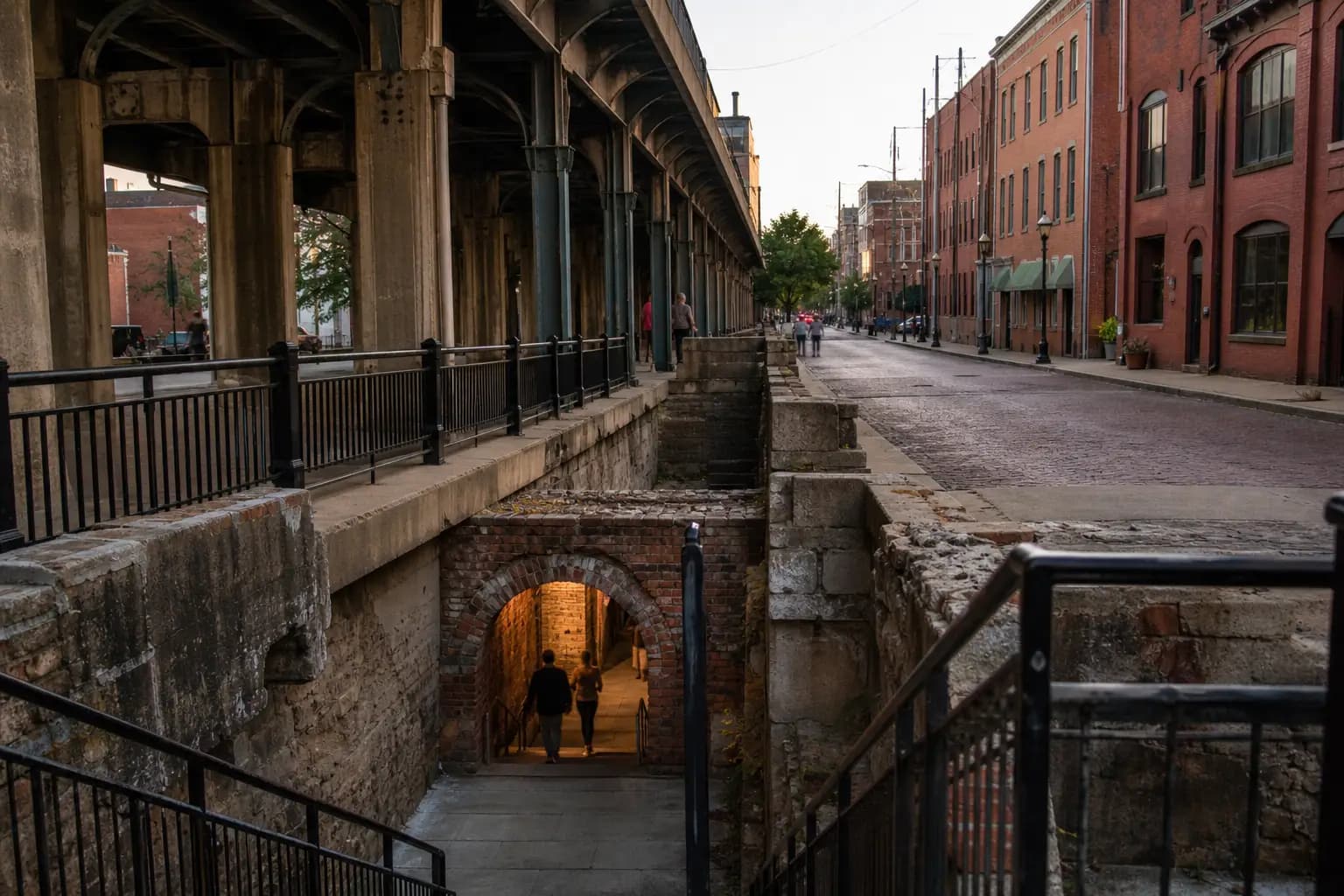
Downtown Atlanta carries a layered modern history. The origins of Underground Atlanta connect to the "twin viaducts" project of 1927 to 1929. That date places part of downtown's visitor story between the Capitol era and the later rise of modern attractions.
Underground Atlanta first opened to the public in 1969. The attraction belongs in Atlanta history because it ties a public place to earlier infrastructure and downtown change. For visitors, it is one of the clearest examples of how an older city can keep visible traces of earlier street patterns and public works.
The 1996 Olympic City
The Olympic Games in 1996 gave Atlanta a late twentieth century milestone. The Games ran from July 19 until August 4, 1996. They were the largest event in the city's history, which helps explain why the Olympics still occupy such a large place in public memory.
The Olympic chapter rounds out Atlanta's longer pattern of reinvention. A settlement called Terminus became Atlanta in 1845, a capital city in 1868, a city identified with Sweet Auburn and King, and finally the host city for the 1996 Games. Those chapters give visitors a sturdy first timeline to carry into museums, markers and historic streets.
Where to See Atlanta History Today
A short history trip in Atlanta works best when each stop carries a date or a named story. The Zero Mile Post ties the city to Terminus and the 1845 name change, while the Georgia State Capitol ties visitors to the 1868 capital move and the 1884 to 1889 construction period. Auburn Avenue connects Sweet Auburn to King's birth house at 501 Auburn Avenue. Underground Atlanta adds a modern downtown layer through the twin viaducts project and its 1969 public opening.
| Place or Story | What it connects to |
|---|---|
| Zero Mile Post | Terminus and the December 26, 1845 name change to Atlanta |
| Georgia State Capitol | Atlanta becoming Georgia's fifth permanent capital city in 1868 and Capitol construction from October 1884 to 1889 |
| Auburn Avenue | Sweet Auburn, originally Wheat Street, and the center of African American life in Atlanta |
| King Center at Freedom Hall | Artifacts from Martin Luther King Jr.'s life |
| Underground Atlanta | The twin viaducts project of 1927 to 1929 and the public opening in 1969 |
| Olympic Games in 1996 | The July 19 to August 4, 1996 event described as the largest event in the city's history |
Frequently asked questions
Why was Atlanta first called Terminus?
The early story is rooted in railroads. The settlement that sprang up was called Terminus.
What happened in Atlanta during the Civil War?
The battle detail for Atlanta covers May through September 1864. It records 12,140 total casualties.
When did Atlanta become Georgia's capital?
Atlanta became Georgia's fifth permanent capital city in 1868. Construction on the Georgia State Capitol began in October 1884 and finished in 1889.
What is Sweet Auburn?
Sweet Auburn is the historic name associated with Auburn Avenue. The street was originally called Wheat Street and was the center of African American life in Atlanta.
Where was Martin Luther King Jr. born in Atlanta?
Martin Luther King Jr. was born on January 15, 1929, in a frame house at 501 Auburn Avenue. The King Center displays artifacts from King's life at Freedom Hall.
Sources
Checked against each source on November 20, 2026. Opening hours, prices and event dates change, so check with the venue before you go. The illustrations are AI generated and do not show real places.
- Atlanta (New Georgia Encyclopedia / Georgia Humanities and University of Georgia Press)
- Zero Mile Post (Georgia Historical Society)
- Battle Detail, Atlanta (National Park Service)
- Georgia: Martin Luther King Jr. National Historic Site (National Park Service)
- Auburn Avenue (New Georgia Encyclopedia / Georgia Humanities and University of Georgia Press)
- Origins of Underground (Georgia State University Library)
- Welcome to the Georgia State Capitol (Georgia Capitol Museum / University of Georgia Libraries)
- Olympic Games in 1996 (New Georgia Encyclopedia / Georgia Humanities and University of Georgia Press)
More guides in Georgia

Events Atlanta
Juneteenth Atlanta: The Annual CelebrationLearn when Juneteenth Atlanta usually takes place, what happens at the parade and music festival, and how Piedmont Park fits the celebration.
Outdoors Georgia
Georgia State Parks Worth KnowingExplore Georgia state parks for waterfalls, canyons, swamp nights, coastal marsh walks, long trail days and seasonal outdoor ideas.
History Savannah
A Short History of Savannah, GeorgiaTrace Savannah history from its 1733 founding and city plan to cotton, preservation, civil rights and places to see today.
Sightseeing Albany
Things to Do in Albany GAExplore things to do in Albany GA, from the Flint River and depot district to Civil Rights landmarks, museums, gardens and trails.
Sightseeing Alpharetta
Things To Do In AlpharettaPlan things to do in Alpharetta, from downtown and local history to Avalon, parks, veterans memorials and nearby river outings.
Sightseeing Athens
Things to Do in Athens GAPlan a visit to Athens with UGA landmarks, historic districts, art stops, the Morton Theatre, gardens and Oconee River trails.