
Georgia State Parks Worth Knowing
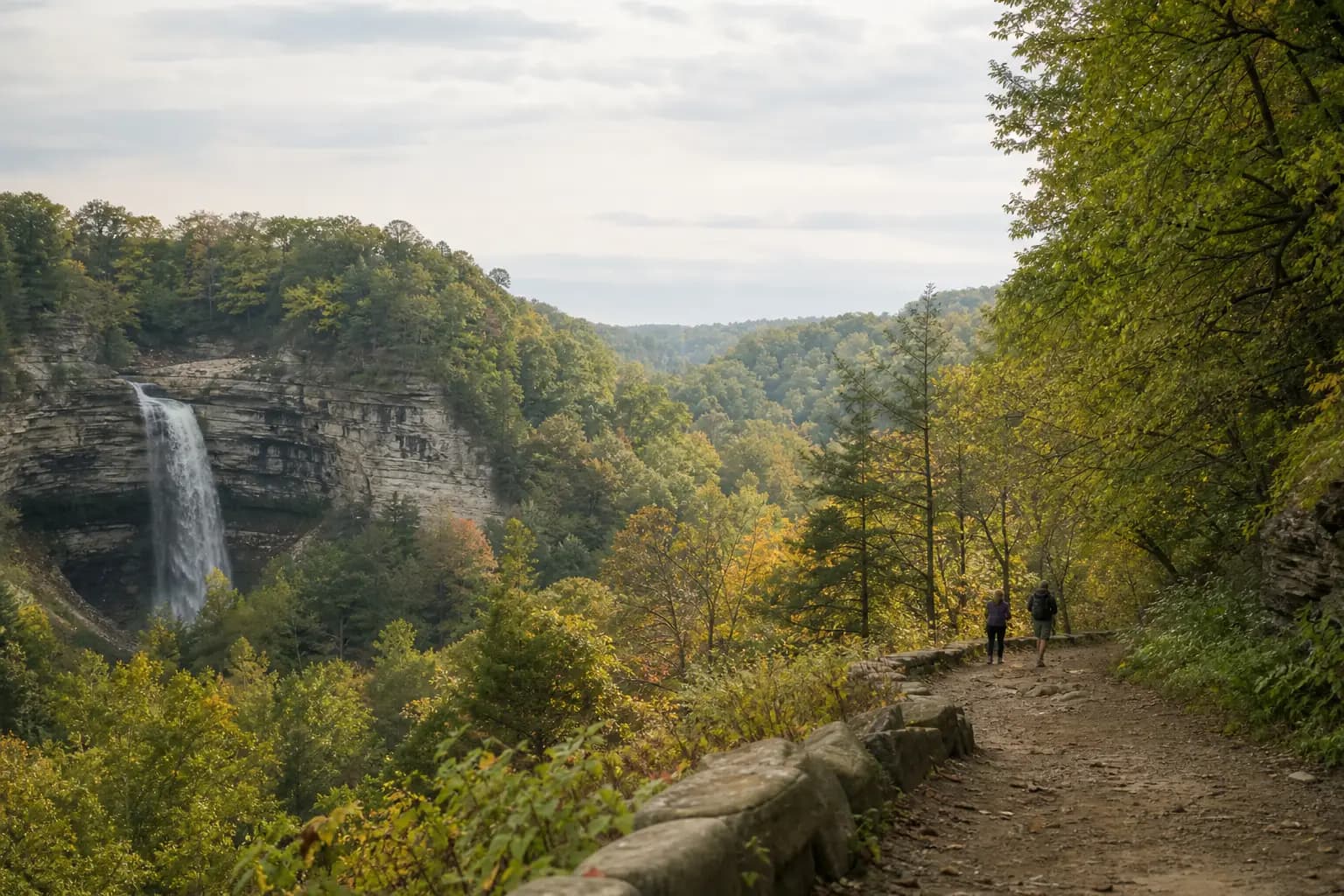
Georgia state parks make a broad outdoor map, with over 600 miles of hiking across the system. A first statewide plan can follow distinctive places rather than a single region: Amicalola Falls for a tall waterfall, Providence Canyon and Tallulah Gorge for dramatic terrain, Okefenokee for swamp and dark skies, Skidaway Island for salt marsh, and F.D. Roosevelt for long trail days. These parks give a practical cross section of the state without turning the trip into a checklist.
Key facts
- Georgia State Parks offers over 600 miles of hiking.
- Amicalola Falls is 729 feet.
- Tallulah Gorge is two miles long and nearly 1,000 feet deep.
- Okefenokee State Park is the largest blackwater wetland in the South.
Own a house in Georgia you are thinking of selling? See how our cash offer works.
Planning Around the State Park System
Georgia's state park system is large enough to plan by activity. The system offers over 600 miles of hiking. For a broader sense of the state before you choose a route, pair this with the Georgia overview.
Some trips need a little structure. Tallulah Gorge permits are limited to 100 per day, so that outing is different from an ordinary trail day. As you choose parks, think in terms of terrain: waterfall, canyon, gorge, swamp, salt marsh or long trail mileage.
Waterfalls and Mountain Park Seasons
Amicalola Falls State Park is a clear waterfall anchor in the Georgia state parks system. The falls are 729 feet. That single feature makes the park easy to remember, especially for visitors building a mountain trip around one major outdoor stop.
Vogel State Park adds an older mountain park to the same trip style. It is one of Georgia's oldest parks and is particularly popular during the fall. The park also says that during summer, visitors can cool off, so it works for travelers thinking about either fall trips or warm weather outdoor time.
Canyons and Gorges With Big Trail Energy
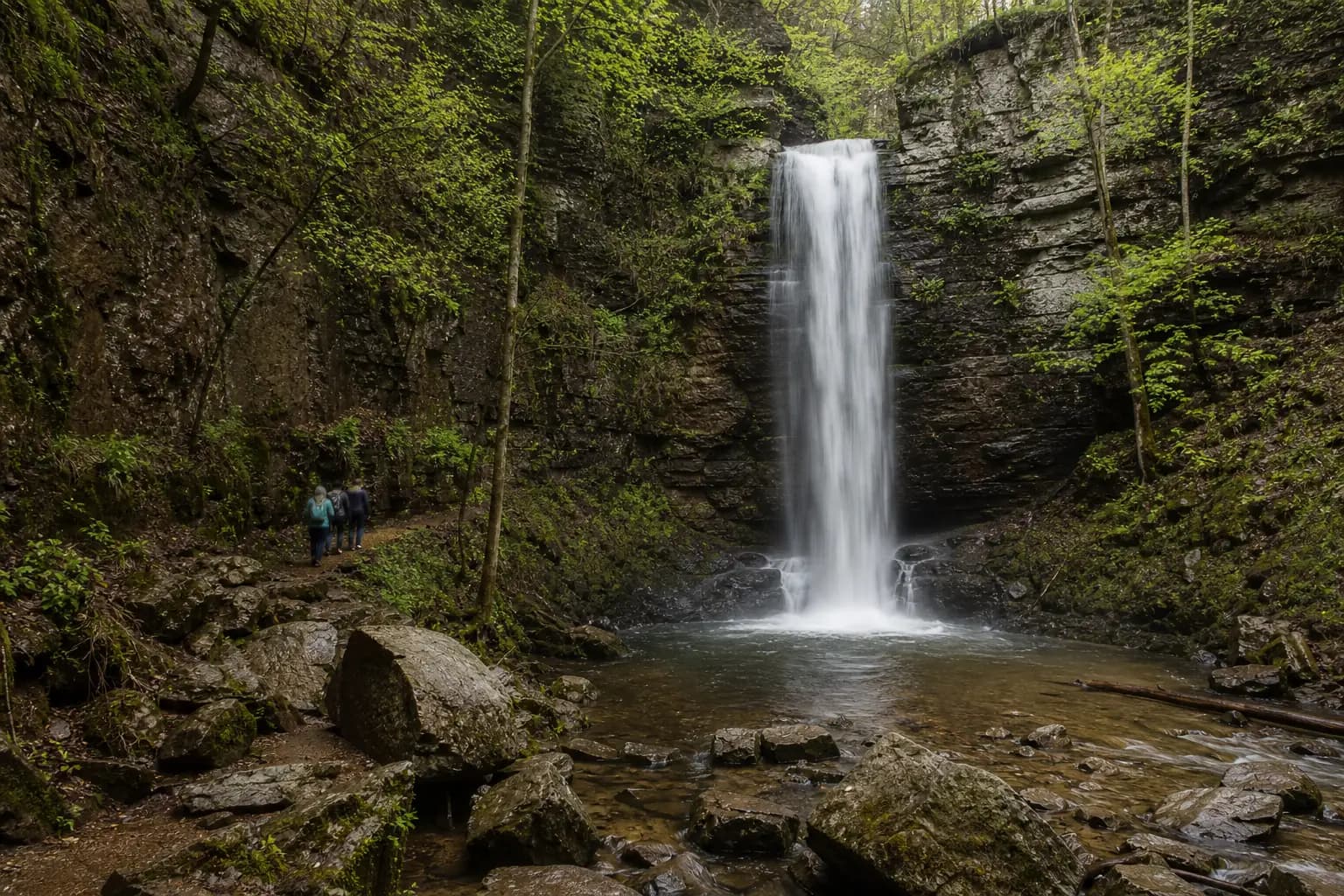
Providence Canyon State Park is called Georgia's Little Grand Canyon. Its gullies reach as deep as 150 feet, giving the park a very different look from Georgia's forested mountain parks. July and August add a seasonal reason to go, when Plumleaf Azalea blooms.
Cloudland Canyon State Park sits on the western edge of Lookout Mountain. The park has water carved canyons and caves, and it has 64 miles of trails. That combination suits hikers who want canyon scenery and enough trail mileage to shape more than one route.
Tallulah Gorge State Park gives Georgia another kind of dramatic terrain. The gorge is two miles long and nearly 1,000 feet deep. Permits are limited to 100 per day, so visitors should think of that part of the park as a limited access outing rather than an ordinary stroll.
Okefenokee for Swamp Country and Dark Skies
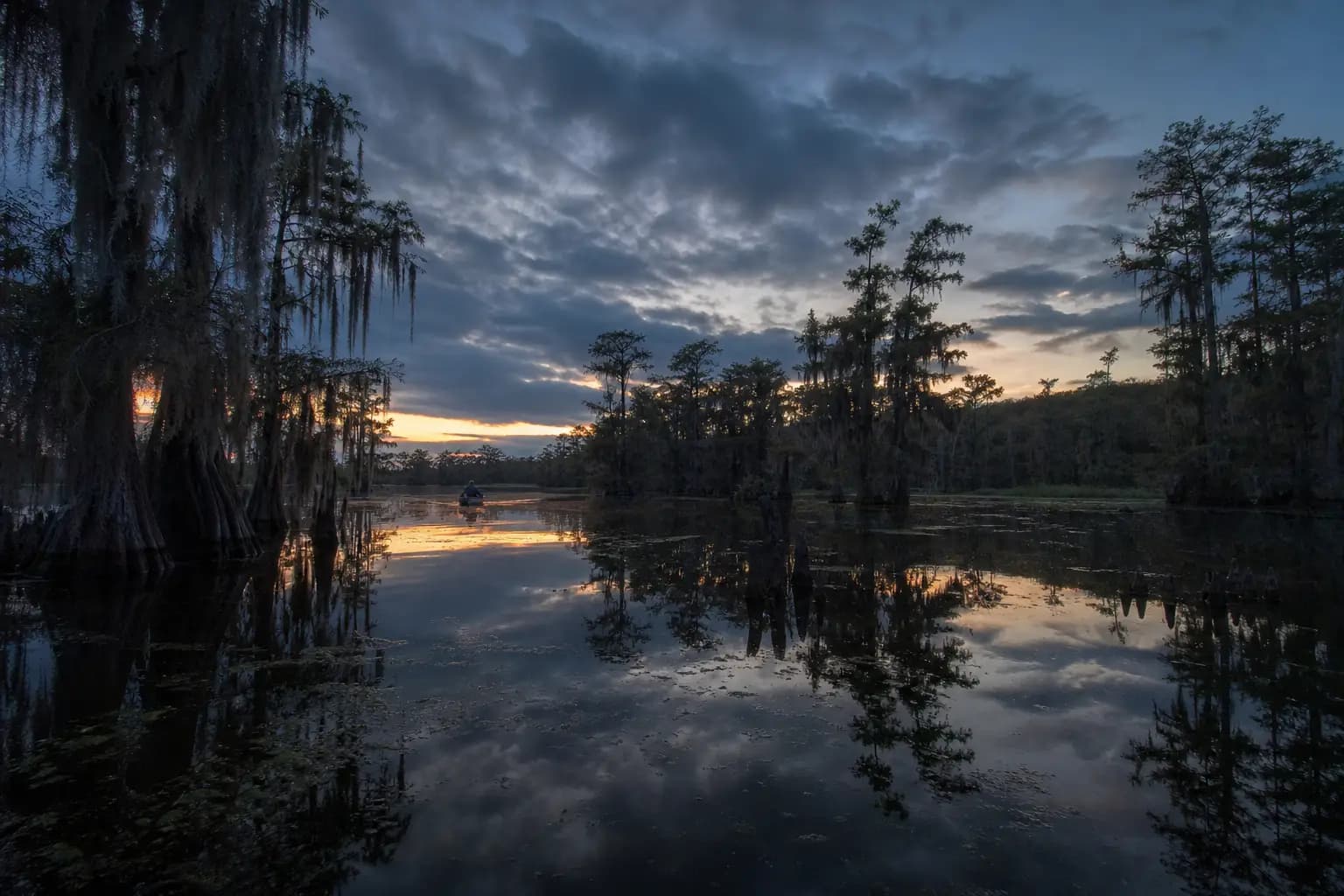
Okefenokee State Park is the swamp park to know in this statewide set. It is the largest blackwater wetland in the South, which gives it a very different identity from the waterfall, canyon and mountain parks. A Georgia state parks trip feels more complete when it includes this low, watery environment as well as the higher elevation parks.
Night sky planning is another reason Okefenokee stands apart. Stargazers will appreciate the particularly dark skies, and summer months are highlighted for dark sky viewing at Okefenokee. That makes it a useful warm season counterpart to fall mountain trips, especially for visitors who plan around the sky after sunset.
Skidaway Island for Coastal Forest and Salt Marsh
Skidaway Island State Park shifts the trip to the coast. The park is part of Georgia's Intracoastal Waterway, with trails that go through maritime forest and past salt marsh. That combination is useful for visitors who want coastal habitat without making the beach the whole point of the day.
Wildlife watching here can be simple and patient. Visitors can watch for deer, and Tybee Island's beaches are less than an hour away. Skidaway works well as a state park day built around forest, marsh and nearby beach time, rather than only sand and surf.
F.D. Roosevelt for Long Trails and Presidential History
F.D. Roosevelt State Park gives the system its biggest park setting. It is Georgia's largest state park, and it has more than 40 miles of trails. That scale makes it a good fit for hikers who want substantial trail mileage based around one park.
The park also keeps a clear presidential connection. A life size sculpture of the president stands there, giving the trail and recreation setting a historical marker. In a statewide parks plan, F.D. Roosevelt belongs with Cloudland Canyon and Tallulah Gorge as a place where hiking distance and a strong identity sit side by side.
Frequently asked questions
Which Georgia state parks are good for canyons and gorges?
Providence Canyon is called Georgia's Little Grand Canyon, with gullies as deep as 150 feet. Cloudland Canyon has water carved canyons and caves on Lookout Mountain. Tallulah Gorge is two miles long and nearly 1,000 feet deep.
Where can I find dark skies in a Georgia state park?
Okefenokee State Park is the name to know for dark skies. Stargazers will appreciate the particularly dark skies there, and summer months are highlighted for dark sky viewing.
Which Georgia state parks have clear seasonal timing?
Providence Canyon has Plumleaf Azalea blooms during July and August. Vogel is particularly popular during fall and says visitors can cool off during summer. Okefenokee is also tied to summer dark sky viewing.
Sources
Checked against each source on November 20, 2026. Opening hours, prices and event dates change, so check with the venue before you go. The illustrations are AI generated and do not show real places.
- Hiking in Georgia State Parks (Georgia Department of Natural Resources Division / Georgia State Parks)
- Amicalola Falls (New Georgia Encyclopedia / Georgia Humanities / University of Georgia Press)
- Providence Canyon State Park (Georgia Department of Natural Resources Division / Georgia State Parks)
- Cloudland Canyon State Park (Georgia Department of Natural Resources Division / Georgia State Parks)
- Tallulah Gorge State Park (Georgia Department of Natural Resources Division / Georgia State Parks)
- Okefenokee State Park (Georgia Department of Natural Resources Division / Georgia State Parks)
- Skidaway Island State Park (Georgia Department of Natural Resources Division / Georgia State Parks)
- F.D. Roosevelt State Park (Georgia Department of Natural Resources Division / Georgia State Parks)
- Vogel State Park (Georgia Department of Natural Resources Division / Georgia State Parks)
More guides in Georgia
History Savannah
A Short History of Savannah, GeorgiaTrace Savannah history from its 1733 founding and city plan to cotton, preservation, civil rights and places to see today.
Sightseeing Alpharetta
Things To Do In AlpharettaPlan things to do in Alpharetta, from downtown and local history to Avalon, parks, veterans memorials and nearby river outings.
Sightseeing Athens
Things to Do in Athens GAPlan a visit to Athens with UGA landmarks, historic districts, art stops, the Morton Theatre, gardens and Oconee River trails.
Sightseeing Columbus
Things To Do In Columbus GAPlan Columbus sightseeing with the Chattahoochee RiverWalk, Broadway historic districts, museums, Black heritage landmarks, gardens and trails.
Sightseeing Savannah
Things to Do in Savannah, GeorgiaPlan things to do in Savannah with a clear look at squares, Forsyth Park, River Street, museums, Bonaventure, Fort Pulaski and Wormsloe.
Food Georgia
What Food Is Georgia Known For?Explore Georgia foods from peaches, peanuts and Vidalia onions to Brunswick stew, coastal shrimp, farmers markets and peach festivals.