
What To See In The Savannah Historic District
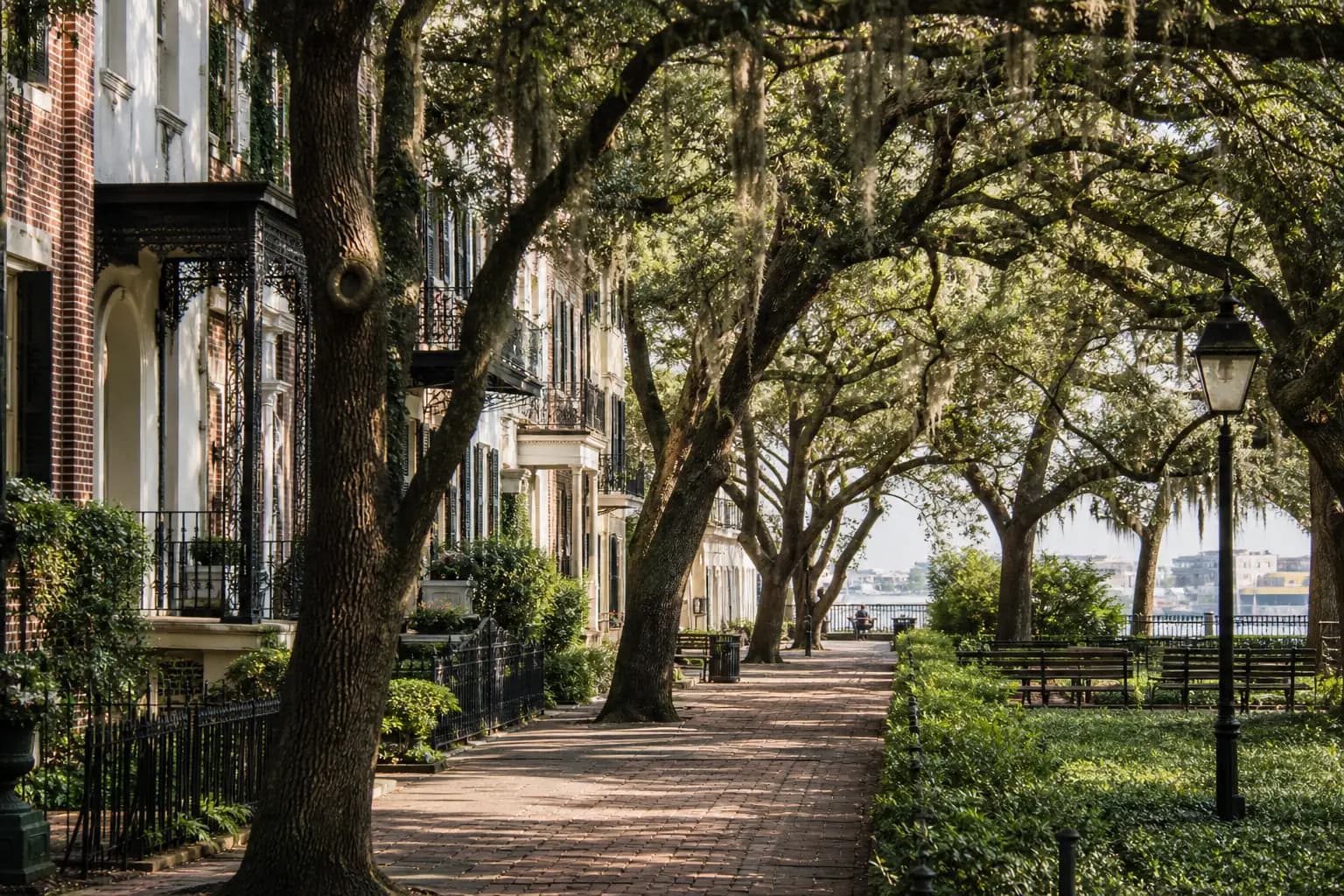
The Savannah Historic District is a planned colonial city shaped by ward squares, historic streets, civic buildings, house museums and the Savannah River. What to see starts with the plan itself: streets and squares set into a grid, house museums, preservation landmarks and Forsyth Park. For deeper background, pair the walk with Savannah history.
Key facts
- The historic core is organized around a ward plan of streets, trustee lots and public squares.
- Oglethorpe directed the design and construction of the settlement, drawing on English city planning principles.
- Historic Savannah Foundation was chartered in 1955 after preservation concerns grew around City Market and the Davenport House.
- In its first half century, Historic Savannah Foundation is credited with directly saving more than 350 buildings in Savannah's historic neighborhoods.
- A comprehensive architectural inventory was completed in 1962, and the Historic Review Board was established in 1973.
Own a house in Savannah you are thinking of selling? See how our cash offer works.
How The District Is Laid Out
The Savannah Historic District is best understood as a planned colonial city, not as a single monument or one main plaza. Its street grid is organized around wards, trustee lots and public squares, a form associated with James Oglethorpe's early plan for the town. That structure makes the district readable on foot: streets lead from square to square, and civic buildings, house museums and churches sit within the larger pattern of blocks.
The Oglethorpe Plan And The Squares
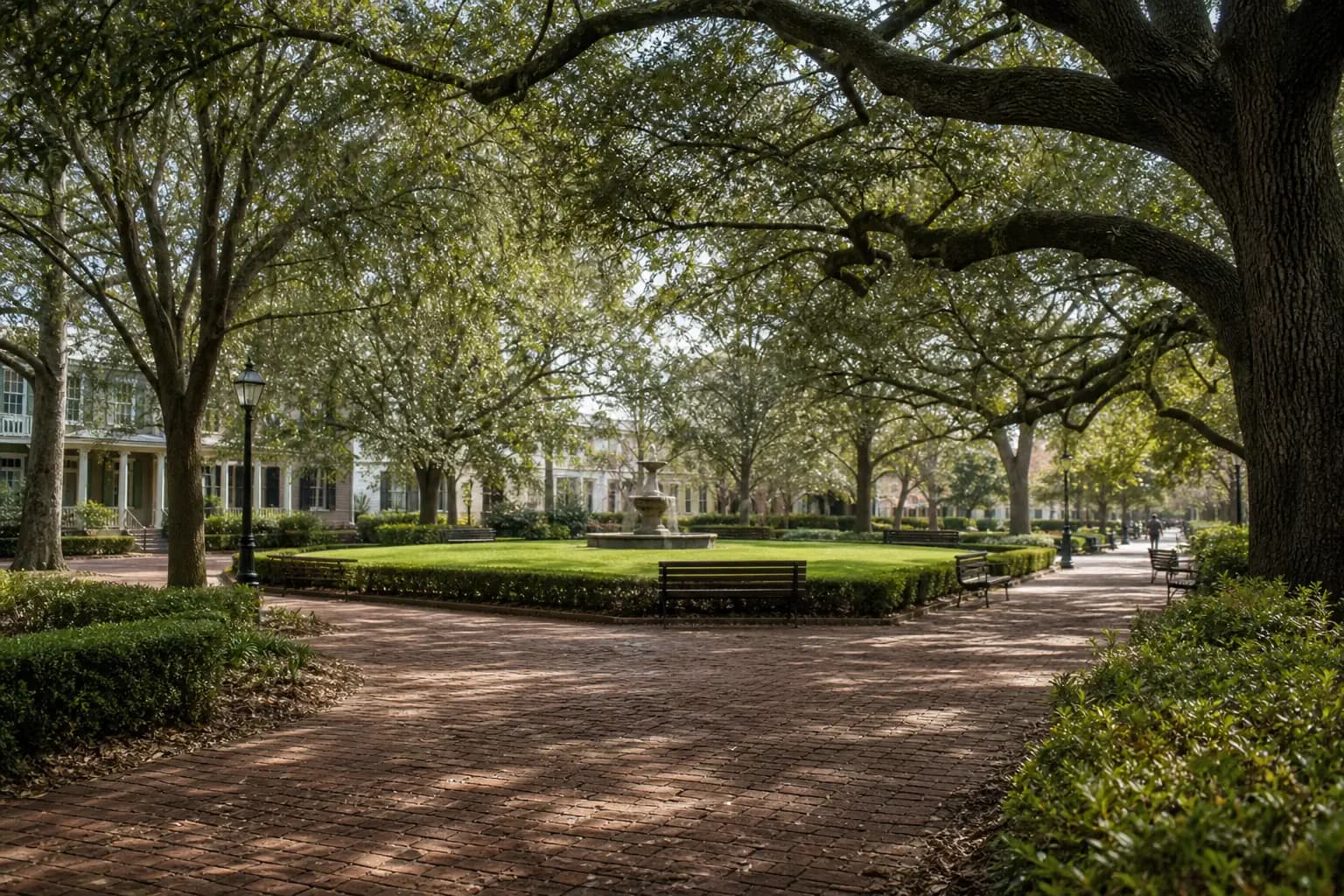
The heart of the district is the Oglethorpe Plan. Oglethorpe directed the design and construction of the settlement, basing it on English city planning principles, and the basic unit was the ward. In that system, streets, wards, trustee lots and park like squares were arranged in a regular grid, with an open square at the center of each ward. The squares remain central to how visitors experience Savannah, because they turn the street plan into a sequence of shaded public spaces and neighborhood landmarks.
Churches, Civic Buildings And House Museums
Churches, civic buildings and house museums are part of the sightseeing in the district. Telfair Academy and the Owens Thomas House & Slave Quarters give visitors places where the city's architecture can be read indoors as well as from the street. Together, these landmarks keep the district from feeling like a street plan alone, since the buildings show how public institutions and private households occupied the same urban grid.
Forsyth Park And The Larger Green Space
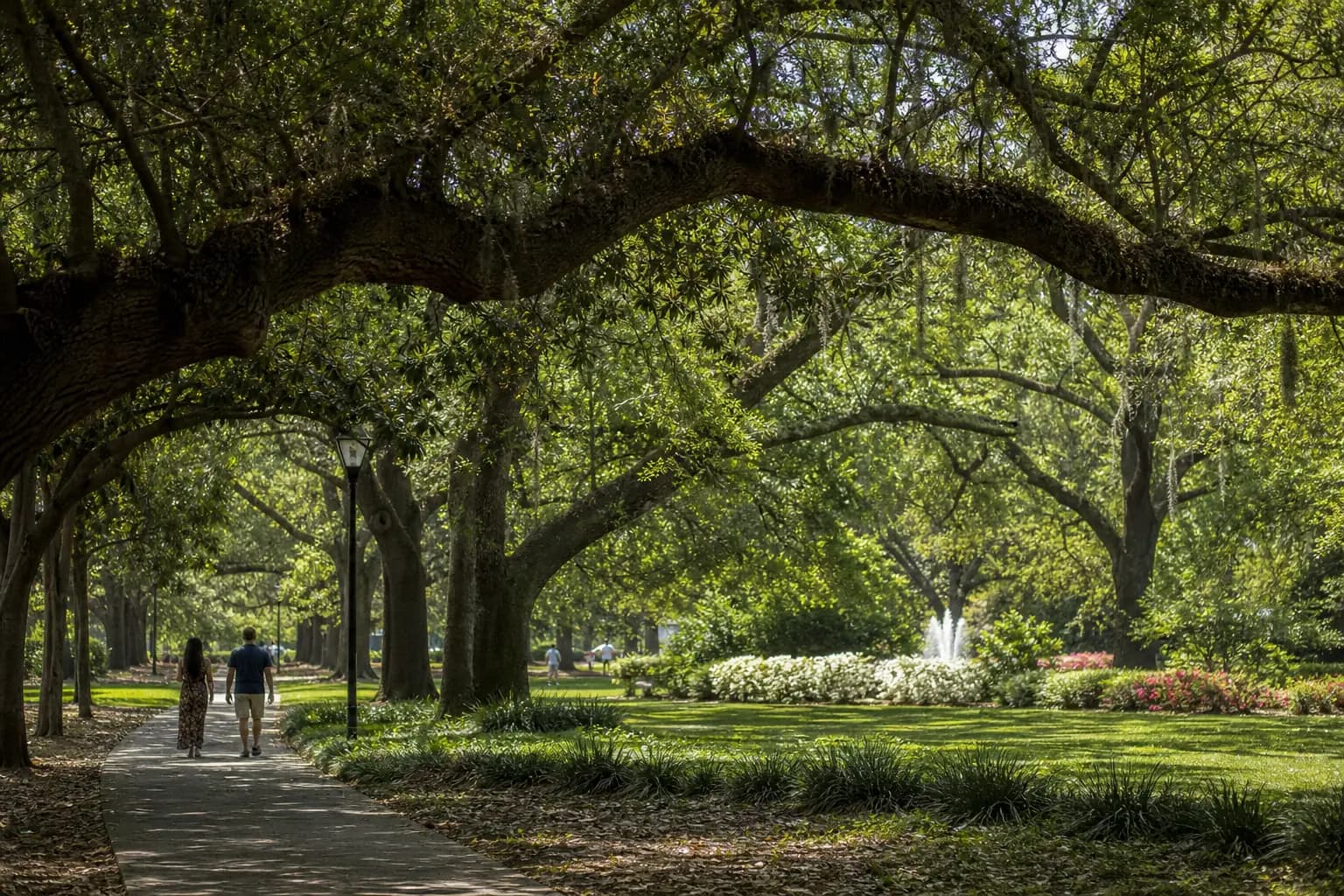
Forsyth Park broadens the scale of a Savannah historic walk. The City of Savannah describes it as one of the city's most well known public spaces, serving residents and visitors. For a visitor moving through the historic district, the park changes the pace from compact squares and house museum blocks to a larger public green space tied to Savannah's civic life.
Why The District Matters To Preservation
Savannah is one of the few surviving colonial city plans in the United States, and the district's importance rests on both the plan and the buildings that remain within it. Local preservation has its own history here. Historic Savannah Foundation was chartered in 1955 to preserve buildings, squares and neighborhoods, after the demolition of the 1870 Italianate City Market and the attempted demolition of the 1821 Federal style Davenport House galvanized seven concerned women. In its first half century, the foundation is credited with directly saving more than 350 buildings in Savannah's historic neighborhoods. A comprehensive architectural inventory was completed in 1962, and the Historic Review Board was established in 1973, bringing regulated development into the historic district.
A Practical Walking Orientation
Start with the plan rather than a checklist. Use the squares as waypoints, because the ward system was built around open public spaces that break up the street grid. Then step into a house museum or civic landmark to connect the outdoor plan with the people and institutions that shaped the district. Forsyth Park makes a natural longer walk when you want the historic district to open into a broader green space. For more ideas beyond the district, see things to do in Savannah.
Frequently asked questions
What is the Savannah Historic District?
It is the planned historic core of Savannah, shaped by Oglethorpe's ward system of streets, trustee lots and public squares.
What is the Oglethorpe Plan?
The Oglethorpe Plan is the ward centered layout used for Savannah. Streets, wards, trustee lots and public squares were arranged in a grid, with an open square at the center of each ward.
What should I see first in the district?
Begin with the squares so the city plan makes sense, then add a house museum or civic landmark. Forsyth Park works well as a longer walk tied to Savannah's public life.
Why does preservation matter here?
Historic Savannah Foundation was chartered in 1955 to preserve buildings, squares and neighborhoods. In its first half century, the foundation is credited with directly saving more than 350 buildings in Savannah's historic neighborhoods.
Why is Forsyth Park included in a historic district walk?
Forsyth Park broadens the scale of the walk from compact squares and house museum blocks to a larger public green space. The City of Savannah describes it as one of the city's most well known public spaces.
Sources
Checked against each source on November 27, 2026. Opening hours, prices and event dates change, so check with the venue before you go. The illustrations are AI generated and do not show real places.
- Savannah, Georgia: The Lasting Legacy of Colonial City Planning (U.S. National Park Service)
- Historic Savannah Foundation (New Georgia Encyclopedia)
More guides in Georgia

Food Savannah
What Are Savannah Pralines?Learn what Savannah pralines are, how pecans shaped the candy, and why River Street became part of the sweet's local story.
History Savannah
A Short History of Savannah, GeorgiaTrace Savannah history from its 1733 founding and city plan to cotton, preservation, civil rights and places to see today.
Events Savannah
Savannah St. Patrick's Day CelebrationLearn about Savannah's St. Patrick's Day parade, the Forsyth Park fountain greening and the February Savannah Irish Festival.
Sightseeing Savannah
Things to Do in Savannah, GeorgiaPlan things to do in Savannah with a clear look at squares, Forsyth Park, River Street, museums, Bonaventure, Fort Pulaski and Wormsloe.
Outdoors Georgia
Providence Canyon State Park in GeorgiaExplore Providence Canyon’s deep gullies, rim overlooks, White Blaze Canyon Loop Trail, and the 7 mile Backcountry Trail in southwest Georgia.
Outdoors Sandy Springs
Chattahoochee River National Recreation Area Near AtlantaPlan river access, trails, paddling, fishing and wildlife stops near Sandy Springs and Atlanta along the Chattahoochee River.