
Indiana Dunes National Park Guide
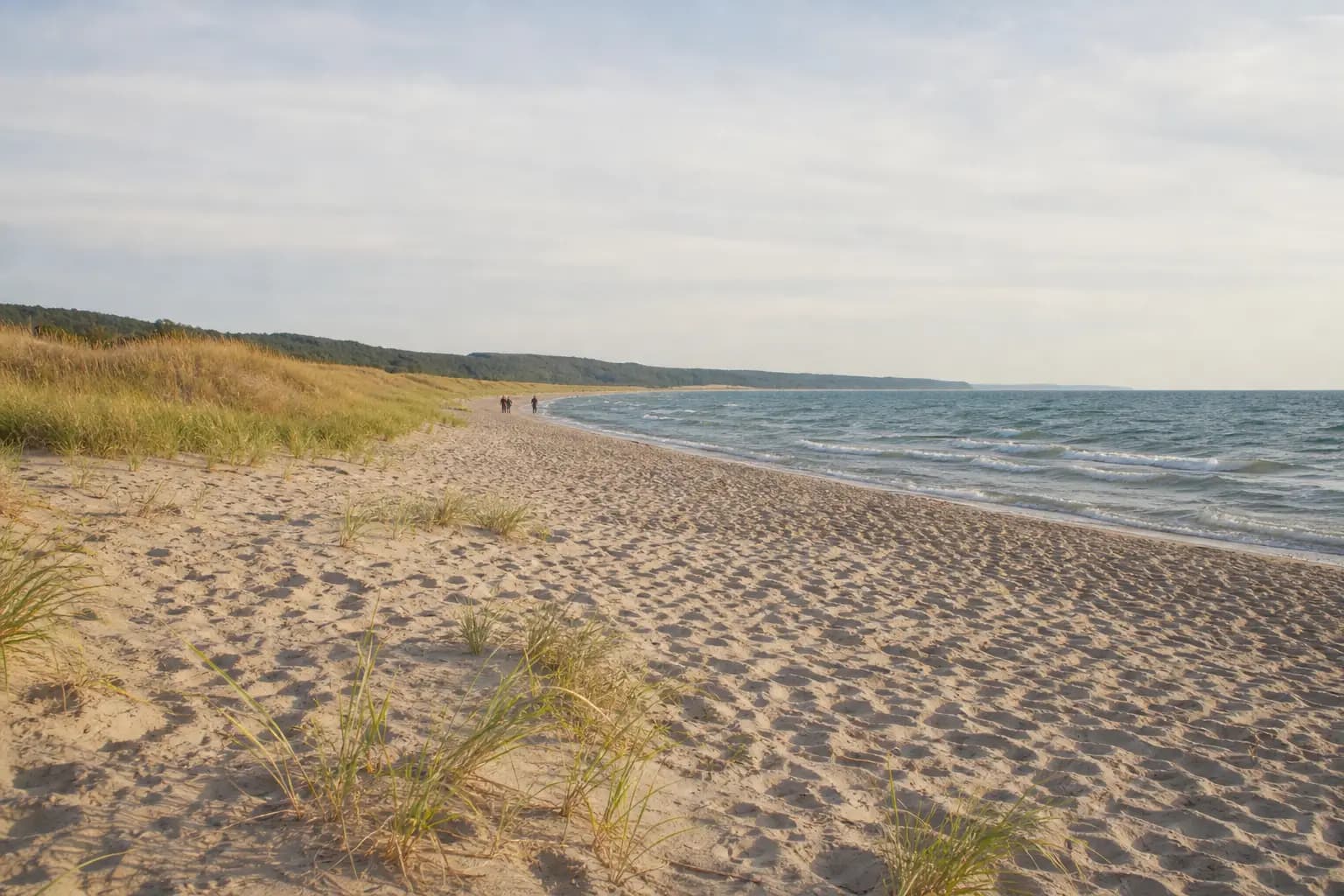
Indiana Dunes National Park is a Lake Michigan park of sandy beaches, rolling dunes, oak savannas, wetlands, forests, rivers and historic sites in northwest Indiana. The park protects more than a beach trip: hikers find more than 50 miles of trails, birders find one of the most biologically diverse national parks, and history visitors find farmsteads, camp buildings and 1933 World's Fair houses. Nearby Indiana Dunes State Park is separate, with its own rules and fees.
Key facts
- Indiana Dunes National Park has fifteen miles of sandy beach along the southern shore of Lake Michigan.
- Hikers can use 15 distinct trail systems covering more than 50 miles of trails.
- The national park covers over 16,000 acres of dunes, oak savannas, swamps, bogs, marshes, prairies, rivers and forests.
- More than 350 bird species have been observed in the park.
- Indiana Dunes State Park and Indiana Dunes National Park are completely independent of one another.
Own a house in Indiana you are thinking of selling? See how our cash offer works.
Beaches and Lake Michigan
Indiana Dunes National Park begins for many visitors at Lake Michigan, where fifteen miles of sandy beach run along the lake's southern shore. The park pairs beach access with dunes, prairies, oak savannas, wetlands and forests close to the water. For many visitors, the lakefront is the starting point for understanding how much more the national park holds beyond sand and waves.
At West Beach, visitors find locker rooms, showers and lifeguards from the Friday of Memorial Day weekend through the Monday of Labor Day weekend. Swimming here deserves the same respect as swimming in any Great Lake. Rip currents pose the most significant drowning threat in Lake Michigan, so beach time should include attention to posted conditions and lake safety.
How the Dunes Work
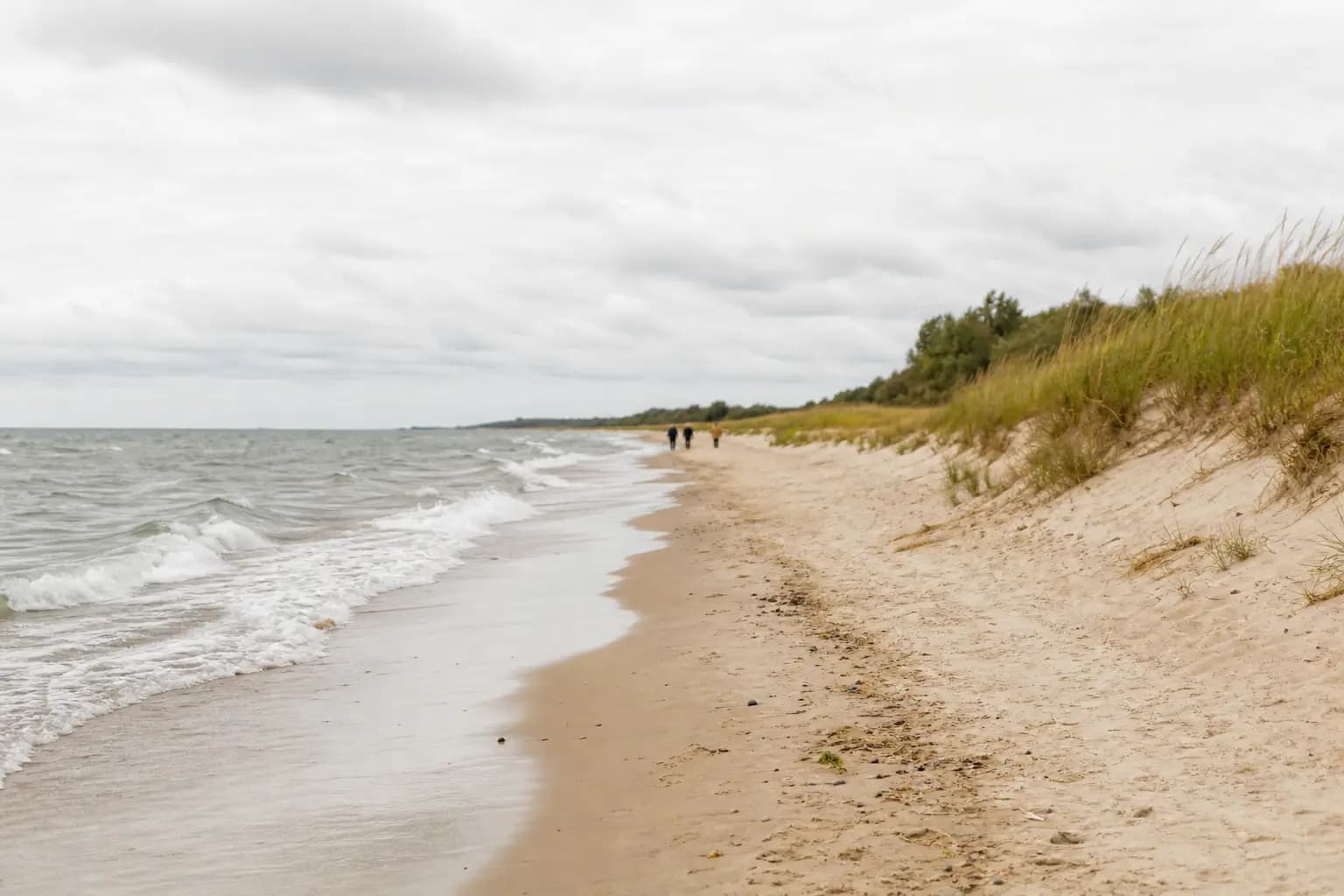
The dunes are part of a changing ecosystem built over thousands of years. Lake Michigan, wind, sand and plant succession all shape what visitors see, from open beach to dunes that gradually support larger plant communities. The National Park Service describes the process as the transformation of bare sand at the beach into a dune covered in oak.
Indiana's dunes, found mainly along the southern shoreline of Lake Michigan, are a unique and dynamic ecosystem. That dynamism is part of why the area became known as the Birthplace of American Ecology. A walk here can feel simple at first, just sand and water, but the park is also a living example of how plant communities take hold and change over time.
Trails Through Dunes, Woods and Wetlands
Hiking is one of the clearest ways to understand the national park beyond the beach. Indiana Dunes National Park has 15 distinct trail systems covering more than 50 miles of trails, so routes range across sand, woods and wet ground. The trail network makes the park feel larger and more varied than a single lakefront stop.
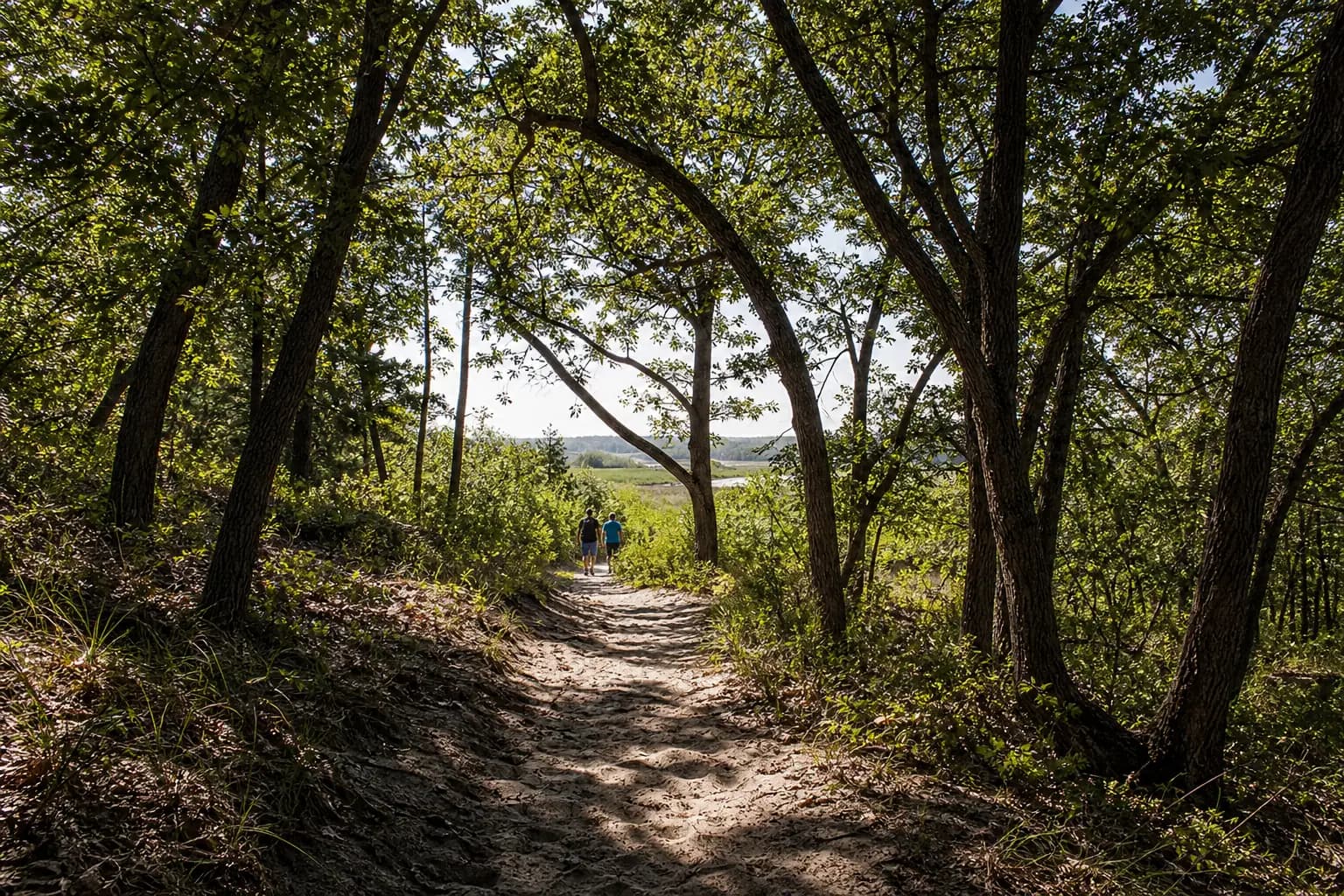
Miller Woods shows that variety especially well, winding through wetlands, globally rare black oak savanna, open dunes and beach. In the neighboring state park, Trail 8 is listed as a rugged 1.5 mile route that goes over the tops of the three highest dunes of the Indiana Dunes. The two parks give hikers different ways to spend time in dune country.
Birds, Plants and Rare Habitats
Indiana Dunes National Park is made up of over 16,000 acres of dunes, oak savannas, swamps, bogs, marshes, prairies, rivers and forests. That range of habitats helps explain the park's unusually high biodiversity. The National Park Service ranks its biological diversity fourth among all national parks.
Bird life is one of the park's signature natural features, with more than 350 species observed here. The habitat list matters because each setting supports different plants and animals, from wetlands and marshes to prairie and forest. For a general visitor, the main point is simple: the Dunes protect far more than a sandy shoreline.
Historic Sites Inside the National Park
Indiana Dunes National Park also preserves historic places. There are over 60 historic structures in the park, including Bailly Homestead, a National Historic Landmark. These places add a human story to a visit that often begins with water, sand and trails.
Other notable historic sites include Camp Good Fellow, Chellberg Farm and five houses from the 1933 Chicago World's Fair. Those names point to different chapters of life along the dunes, from homesteads and farms to recreation and modern design. A day in the park can pair a beach walk or hike with a stop at one of these cultural sites.
National Park and State Park: What Is Different
Indiana Dunes National Park and Indiana Dunes State Park are neighbors, but they are not one combined park. They are completely independent of one another and have different rules, regulations and fees. National park passes are not accepted at the state park or any other non federal location.
The National Park Service recommends visiting both parks for a more complete understanding of the Indiana Dunes. The state park lies at the north end of State Road 49 in Porter County and includes 2,182 acres, with more than three miles of beach along Lake Michigan's southern shore. The national park covers over 16,000 acres and has fifteen miles of sandy beach along Lake Michigan.
| Topic | Indiana Dunes National Park | Indiana Dunes State Park |
|---|---|---|
| Size and setting | Over 16,000 acres with fifteen miles of sandy beach along Lake Michigan. | 2,182 acres at the north end of State Road 49 in Porter County. |
| Rules and passes | Separate rules, regulations and fees from the state park. | National park passes are not accepted here. |
| Trail experience | 15 distinct trail systems covering more than 50 miles. | Trail 8 is a rugged 1.5 mile route over the three highest dunes of the Indiana Dunes. |
Conservation in the Dunes
The Indiana dunes ecosystem faces pressures from residential and commercial expansion as well as invasive species. That context matters in a place where beaches, dunes, wetlands, oak savannas, prairies and forests sit close together. A visitor may arrive for the lake view, but the protected natural story extends into smaller habitat patches away from the water. Conservation in the dunes is tied to the variety of habitats that make the area biologically rich.
Frequently asked questions
Is Indiana Dunes National Park the same as Indiana Dunes State Park?
No. The two parks are completely independent and have different rules, regulations and fees. National park passes are not accepted at the state park.
How much beach is at Indiana Dunes National Park?
Indiana Dunes National Park has fifteen miles of sandy beach along the southern shore of Lake Michigan. Indiana Dunes State Park has more than three miles of beach along Lake Michigan's southern shore.
Are there lifeguards at Indiana Dunes National Park?
At West Beach, lifeguards are listed from the Friday of Memorial Day weekend through the Monday of Labor Day weekend. West Beach also has locker rooms and showers.
What are the main hiking options?
The national park has 15 distinct trail systems covering more than 50 miles. Miller Woods passes through wetlands, globally rare black oak savanna, open dunes and beach, while the state park's Trail 8 is a rugged 1.5 mile dune route.
Why is Indiana Dunes National Park important for nature?
The park includes over 16,000 acres of dunes, oak savannas, swamps, bogs, marshes, prairies, rivers and forests. Its biological diversity is fourth among all national parks, and more than 350 bird species have been observed there.
What historic sites can visitors see in the national park?
The park has over 60 historic structures, including Bailly Homestead, a National Historic Landmark. Other notable sites include Camp Good Fellow, Chellberg Farm and five houses from the 1933 Chicago World's Fair.
What conservation issues affect the dunes?
The Indiana dunes ecosystem faces pressure from residential and commercial expansion and invasive species.
Sources
Checked against each source on November 27, 2026. Opening hours, prices and event dates change, so check with the venue before you go. The illustrations are AI generated and do not show real places.
- Beach Going and Swimming (National Park Service)
- Hiking at Indiana Dunes National Park (National Park Service)
- Nature and Science (National Park Service)
- Plant Succession (National Park Service)
- Historical Sites at Indiana Dunes National Park (National Park Service)
- Frequently Asked Questions (National Park Service)
- Indiana Dunes State Park (Indiana Department of Natural Resources)
- Fish and Wildlife: Dunes (Indiana Department of Natural Resources, Fish and Wildlife)
More guides in Indiana
Outdoors Indianapolis
Monon Trail Indianapolis: Where It Goes And What To SeeFollow the Monon Trail through Indianapolis, from 10th Street to 96th Street, with parks, access points, Broad Ripple and trail links.
Outdoors Indianapolis
White River State Park Indianapolis: Museums, Canal And Green SpaceExplore White River State Park Indianapolis, from the Canal Walk and river trails to public art, lawns, museums, the zoo and venues.
Sightseeing Indianapolis
What To See At Newfields In IndianapolisExplore Newfields Indianapolis: the art museum, Lilly House, gardens, Fairbanks park and seasonal displays worth seeing on a visit.
Outdoors Indianapolis
Eagle Creek Park Indianapolis: Trails, Water And NaturePlan a visit to Eagle Creek Park in Indianapolis with trails, boating, nature centers, birding spots, seasonal pelicans and key rules.
History Indiana
A Short History of IndianaTrace Indiana history from ancient mounds and Vincennes to statehood, Lincoln, abolition, Civil War service and industry.
Outdoors Indiana
Indiana State Parks Worth KnowingExplore Indiana state parks with dunes, ravines, lakes, caves, historic villages, earthworks, trails and seasonal outdoor ideas.