
Indiana State Parks Worth Knowing
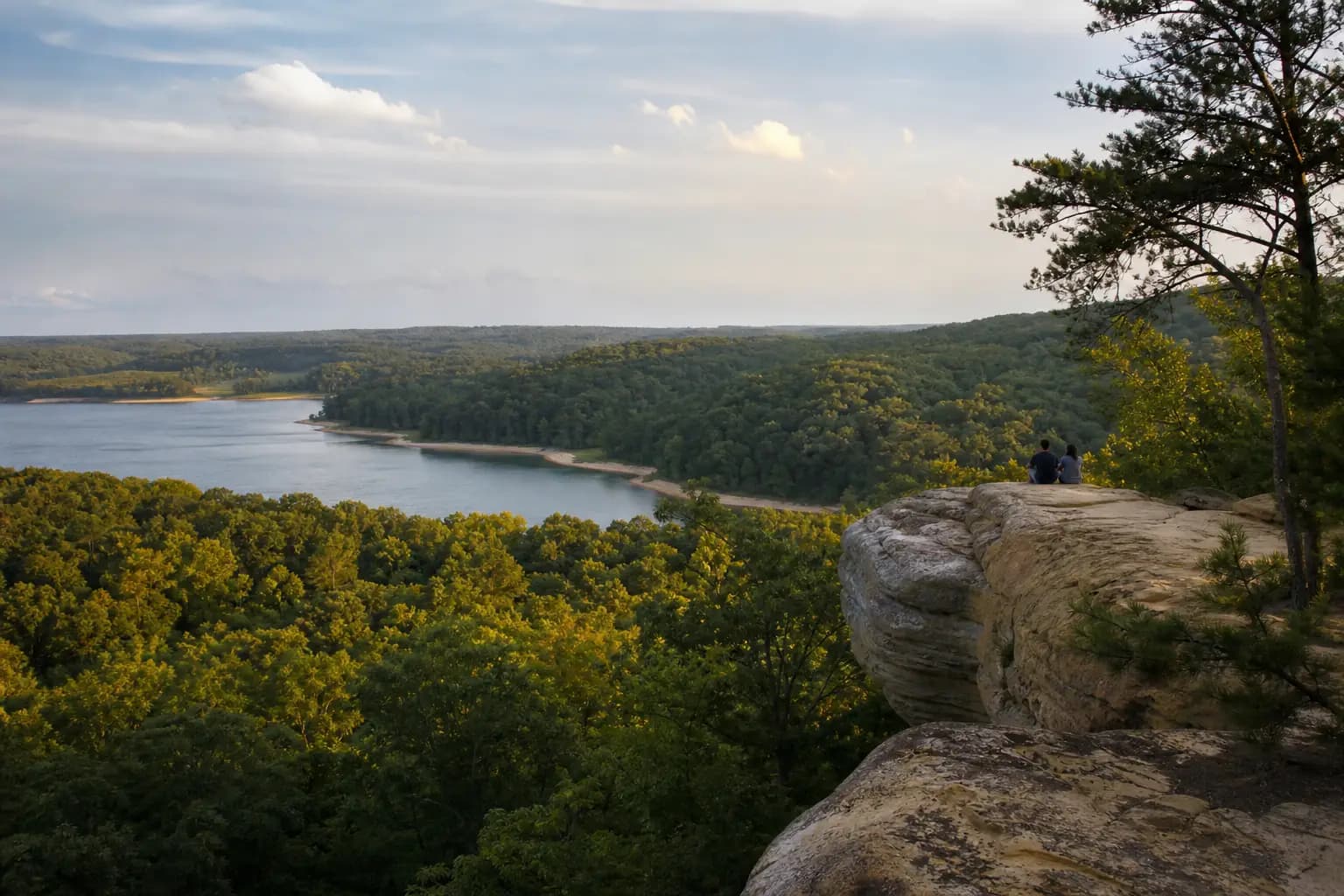
Indiana state parks cover a wide range of Hoosier terrain: Lake Michigan dunes, Brown County hills, sandstone ravines, kettle lakes, cave springs, fossil creek beds, historic villages and ancient earthworks. The state park system manages 24 state parks, along with reservoirs, recreation areas and smaller satellite locations. For a broader look at the state before planning a park trip, start with the Indiana guide.
Key facts
- The Indiana State Parks system manages 24 state parks and seven small satellite locations, plus reservoirs and recreation areas.
- Indiana State Park properties include 700 miles of trails, 15 beaches, 17 marinas, 75 launching ramps and 7,701 campsites.
- Brown County State Park encompasses nearly 16,000 acres of hills, ridges and ravines.
- Indiana Dunes State Park includes more than three miles of beach along Lake Michigan’s southern shore.
- Spring Mill State Park’s restored Pioneer Village was founded in 1814 and includes a limestone gristmill built in 1817.
Own a house in Indiana you are thinking of selling? See how our cash offer works.
How Indiana’s Park System Fits Together
Indiana state parks are not a single kind of place. The Indiana State Parks system manages 24 state parks and seven small satellite locations, eight reservoir properties, two state forest recreation areas and two off road riding areas. Collectively, Indiana State Park properties include more than 2,000 buildings, 700 miles of trails, 17 marinas, 75 launching ramps, 15 beaches, 7,701 campsites, 150 cabins and seven Indiana State Park Inns.
That range is useful when planning a short visit or a longer outdoor trip. A park day can mean walking a dune trail, paddling a chain of kettle lakes, following a creek through a canyon or visiting a restored village built around cave springs. Indiana’s system also includes places where cultural history is part of the outdoor experience, especially at Spring Mill, Mounds and McCormick’s Creek.
Big Terrain: Brown County and Indiana Dunes
Brown County State Park is the Indiana park many travelers connect with broad ridges and deep ravines. Nicknamed the Little Smokies because the area resembles the Great Smoky Mountains, it encompasses nearly 16,000 acres of rugged hills, ridges and ravines. The park’s landform story is tied to the most recent ice ages, when glaciers stopped short of the hills and meltwaters helped form the narrow ridges, steep slopes and deep gullies.
Brown County is also built for repeat outdoor visits. It has large campgrounds, hiking and mountain biking trails, interpretive services, a saddle barn for guided horse rides and a separate horseman campground with 70 miles of horse trails. For named hikes, Ogle Lake Trail is a moderate 1.5 mile wooded loop along Ogle Lake, while Fire Tower Trail is a rugged 2.2 mile route along ridges, ravines and hilltops.
Indiana Dunes State Park shifts the setting to Lake Michigan. The park covers 2,182 acres in Porter County and includes more than three miles of beach along the lake’s southern shore. Large sand dunes beyond the shoreline have taken thousands of years to form and rise nearly 200 feet above Lake Michigan.
Season matters at the dunes. Trail 2 is an easy 3 mile route noted for early spring flowers and ferns, and its climax forest is used for cross country skiing in winter. Trail 8 is a rugged 1.5 mile route over the three highest dunes in the park.
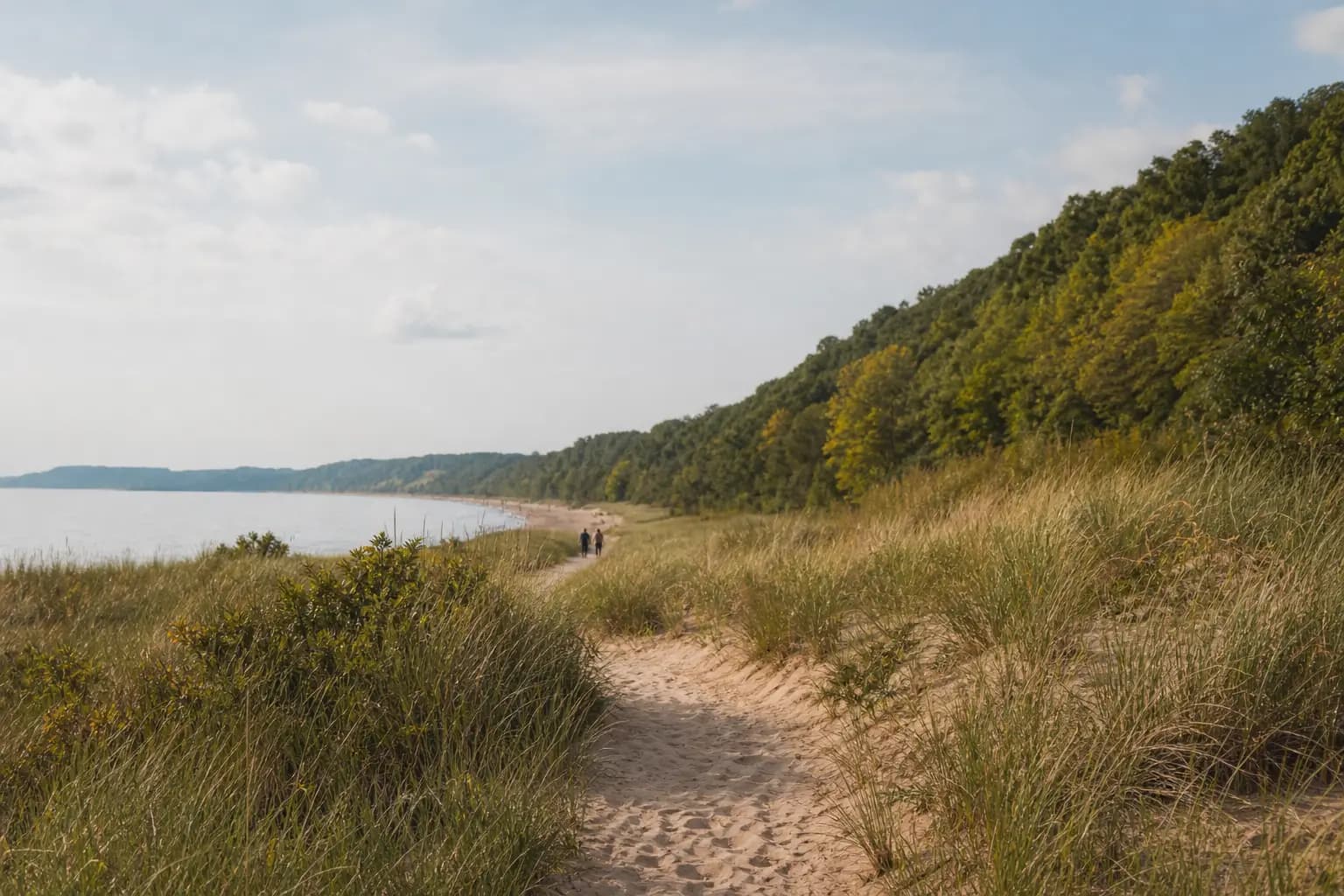
Ravines, Canyons and Waterfalls
Turkey Run State Park, along State Road 47 southwest of Crawfordsville, is known for deep sandstone ravines, aged forests and views along Sugar Creek. The park’s trail system has a particular character because all trails include portions that use ravine streambeds as the walking surface. That makes footing uneven in places, and some sections can become slick.
Trail 3 at Turkey Run is the famous ladders trail, a very rugged 1.7 mile route through Rocky and Bear hollows. The park also has the Colonel Richard Lieber Cabin, which commemorates the father of Indiana’s state park system. Together, the ravines, Sugar Creek and state park history make Turkey Run one of the system’s signature outdoor stops.
Clifty Falls State Park is near Madison, with entrances on state roads 56 and 62. Its waterfalls change with weather and season, ranging from roaring plunges to delicate bridal veil mists to frozen forms. Winter and spring are the highlighted seasons for seeing the falls, while Clifty Canyon provides hiking and scenery through the year.
McCormick’s Creek State Park adds a different kind of canyon country. It is Indiana’s first state park and is known for a limestone canyon, flowing creek and scenic waterfalls. Visitors can also see Civilian Conservation Corps stonework at the stone arch bridge, climb the fire tower and examine the historic Statehouse Quarry, which furnished limestone used for the Indianapolis Statehouse.
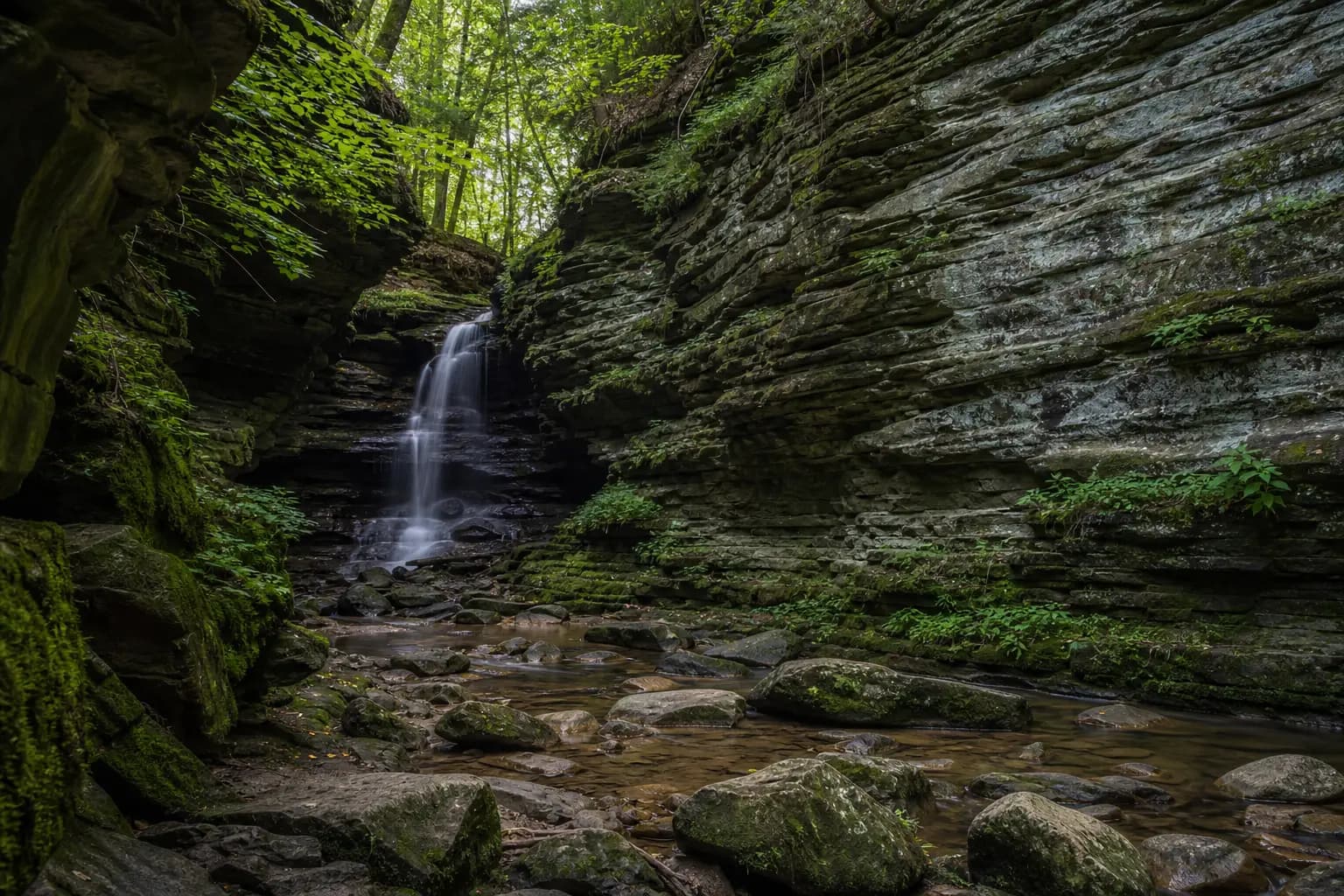
Lake Parks for Paddling, Fishing and Winter Play
Chain O’Lakes State Park is described by Indiana State Parks as lake country and a small boater’s paradise. Nine connecting lakes form the center of the park experience, and visitors can paddle through the chain of kettle lakes. The park also has 29 miles of forested trails, fishing on electric motor only lakes, family cabins on a forested hillside, the historic Stanley Schoolhouse and a nature center.
Fishing and seasonality are part of the appeal at Chain O’Lakes. The park highlights 13 kettle lakes and notes ice fishing as a winter option. Trail 8 is a self guided interpretive route around the glacial kettle lakes, which makes the lake system readable from land as well as from the water.
Pokagon State Park sits near Angola, just off I-69, and was originally proposed in 1925 as Lake James State Park. Natural lakes created by glaciers 10,000 to 15,000 years ago define Steuben County, which has more lakes than any other Indiana county. The park is framed by Lake James and Snow Lake, with boating, swimming, fishing and scenic sunsets.
Pokagon also has a clear cold weather identity. Indiana State Parks calls it the system’s winter wonderland, with ski rental, sledding, ice fishing and a twin track toboggan run. For travelers who usually think of state parks as warm weather places, Pokagon is a reminder that northern Indiana’s glacial lakes are active in winter too.
History Inside the Parks
Spring Mill State Park is where natural water and early Indiana industry meet. Water flowing from several cave springs led to the founding of an industrial village in the early 1800s. The park presents that story through four interpretive facilities: Pioneer Village, Lakeview Activity Center, Grissom Memorial and the Twin Caves Boat Tour.
The restored Pioneer Village was founded in 1814 and includes 20 historic buildings. Its centerpiece is a three story limestone gristmill built in 1817, and the mill still grinds cornmeal today. On the Twin Caves Boat Tour, guides pull boats through a stream passage while pointing out cave formations and looking for cave animals, including the endangered blind cavefish.
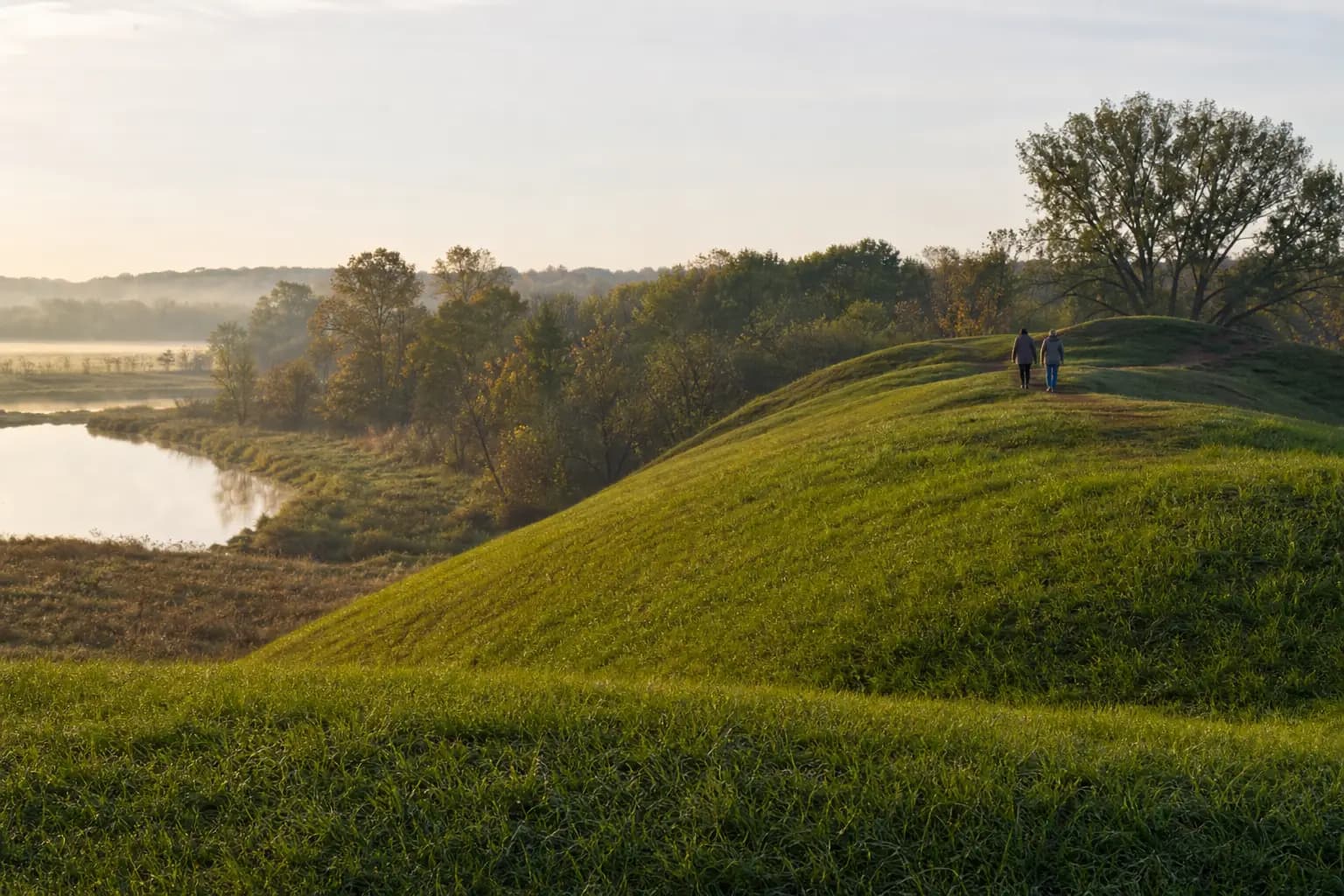
Mounds State Park, off I-69 east of Anderson, brings a much older human story into a river setting. The park features 10 earthworks built by prehistoric people known as the Adena Hopewell people. The largest earthwork, the Great Mound, is believed to have been constructed around 160 B.C.
The mounds were gathering places for religious ceremonies, and astronomical alignments could be viewed from them. Mounds also has a nature center with a wildlife viewing room, animal displays and interactive games. Outdoors, Trail 5 follows along the White River and limestone bluffs, and fishing is available on the White River.
Choosing by Season and Activity
Indiana state parks are easier to choose when the season leads the plan. Clifty Falls is especially tied to winter and spring because those seasons highlight the waterfalls. Indiana Dunes points to early spring flowers and ferns on Trail 2, and the same trail area is used for cross country skiing during winter.
Brown County is described as popular all year because its mix includes hiking, mountain biking, guided horse rides and long horse trails. Chain O’Lakes changes with the water, from paddling the connected lakes to ice fishing in winter. Pokagon is the clearest winter focused park in this group because it combines ski rental, sledding, ice fishing and a twin track toboggan run.
For a first park trip, match the outing to the landform. Choose Indiana Dunes for Lake Michigan beach and high dunes, Turkey Run for sandstone ravines and Sugar Creek, Chain O’Lakes for paddling and kettle lakes, Spring Mill for caves and the restored village, or Mounds for earthworks near the White River.
| Park | Season or setting to note | What it offers |
|---|---|---|
| Brown County | All year | Hiking, mountain biking, guided horse rides and 70 miles of horse trails |
| Indiana Dunes | Early spring and winter | Flowers and ferns on Trail 2, plus winter cross country skiing |
| Clifty Falls | Winter and spring | Waterfalls that vary with weather and season |
| Chain O’Lakes | Lake trips and winter | Paddling, forested trails, fishing and ice fishing |
| Pokagon | Winter | Ski rental, sledding, ice fishing and a twin track toboggan run |
Frequently asked questions
How many Indiana state parks are there?
The Indiana State Parks system manages 24 state parks. It also manages seven small satellite locations, eight reservoir properties, two state forest recreation areas and two off road riding areas.
Which Indiana state park has Lake Michigan beach?
Indiana Dunes State Park includes more than three miles of beach along Lake Michigan’s southern shore. The park also has large dunes that rise nearly 200 feet above the lake.
Which Indiana state parks are known for canyons or ravines?
Turkey Run State Park is known for deep sandstone ravines and trails that use ravine streambeds in places. Clifty Falls has Clifty Canyon and seasonal waterfalls, while McCormick’s Creek features a limestone canyon, flowing creek and scenic waterfalls.
Where can visitors paddle through connected lakes?
Chain O’Lakes State Park is centered on nine connecting lakes. The park highlights paddling through kettle lakes, forested trails and fishing on electric motor only lakes.
Which Indiana state park has a historic village?
Spring Mill State Park has a restored Pioneer Village founded in 1814. The village contains 20 historic buildings, including a limestone gristmill built in 1817 that still grinds cornmeal.
Which Indiana state park is especially known for winter activities?
Pokagon State Park is described by Indiana State Parks as the system’s winter wonderland. Its winter activities include ski rental, sledding, ice fishing and a twin track toboggan run.
What time zone is Indiana Dunes State Park in?
Indiana Dunes State Park is in the Central Time Zone. Indiana State Parks notes that it is one hour behind Eastern Time.
Sources
Checked against each source on November 20, 2026. Opening hours, prices and event dates change, so check with the venue before you go. The illustrations are AI generated and do not show real places.
- State Parks: Indiana State Parks & Lakes (Indiana Department of Natural Resources)
- State Parks: Brown County State Park (Indiana Department of Natural Resources)
- State Parks: Turkey Run State Park (Indiana Department of Natural Resources)
- State Parks: Indiana Dunes State Park (Indiana Department of Natural Resources)
- State Parks: Clifty Falls State Park (Indiana Department of Natural Resources)
- State Parks: Chain O’ Lakes State Park (Indiana Department of Natural Resources)
- State Parks: Spring Mill State Park (Indiana Department of Natural Resources)
- State Parks: Pokagon State Park/Trine State Recreation Area (Indiana Department of Natural Resources)
- State Parks: McCormick’s Creek State Park (Indiana Department of Natural Resources)
- State Parks: Mounds State Park (Indiana Department of Natural Resources)
More guides in Indiana
History Indiana
A Short History of IndianaTrace Indiana history from ancient mounds and Vincennes to statehood, Lincoln, abolition, Civil War service and industry.
History Indianapolis
What Is The Indianapolis Motor Speedway Museum?Learn the Indianapolis Motor Speedway Museum story, from the 1909 track and first 500 to the Hall of Fame, wartime industry and exhibits.
Events Indiana
What Is the Parke County Covered Bridge Festival?A visitor guide to the Parke County Covered Bridge Festival: dates, locations, bridges, food traditions, bus tours and practical tips.
Food Indiana
What Is Sugar Cream Pie In Indiana?Learn what sugar cream pie is, why Indiana calls it Hoosier Pie, how its pantry recipe developed, and where visitors can try it.
Sightseeing Bloomington
Things to Do in Bloomington, IndianaSee Bloomington's 1908 Monroe County Courthouse, Indiana University, Griffy Lake Nature Preserve, and a Buddhist center on 108 acres.
Sightseeing Elkhart
Things To Do In Elkhart, IndianaFind things to do in Elkhart, from riverfront parks and gardens to museums, historic landmarks, and downtown arts stops.