
A Short History of Indiana
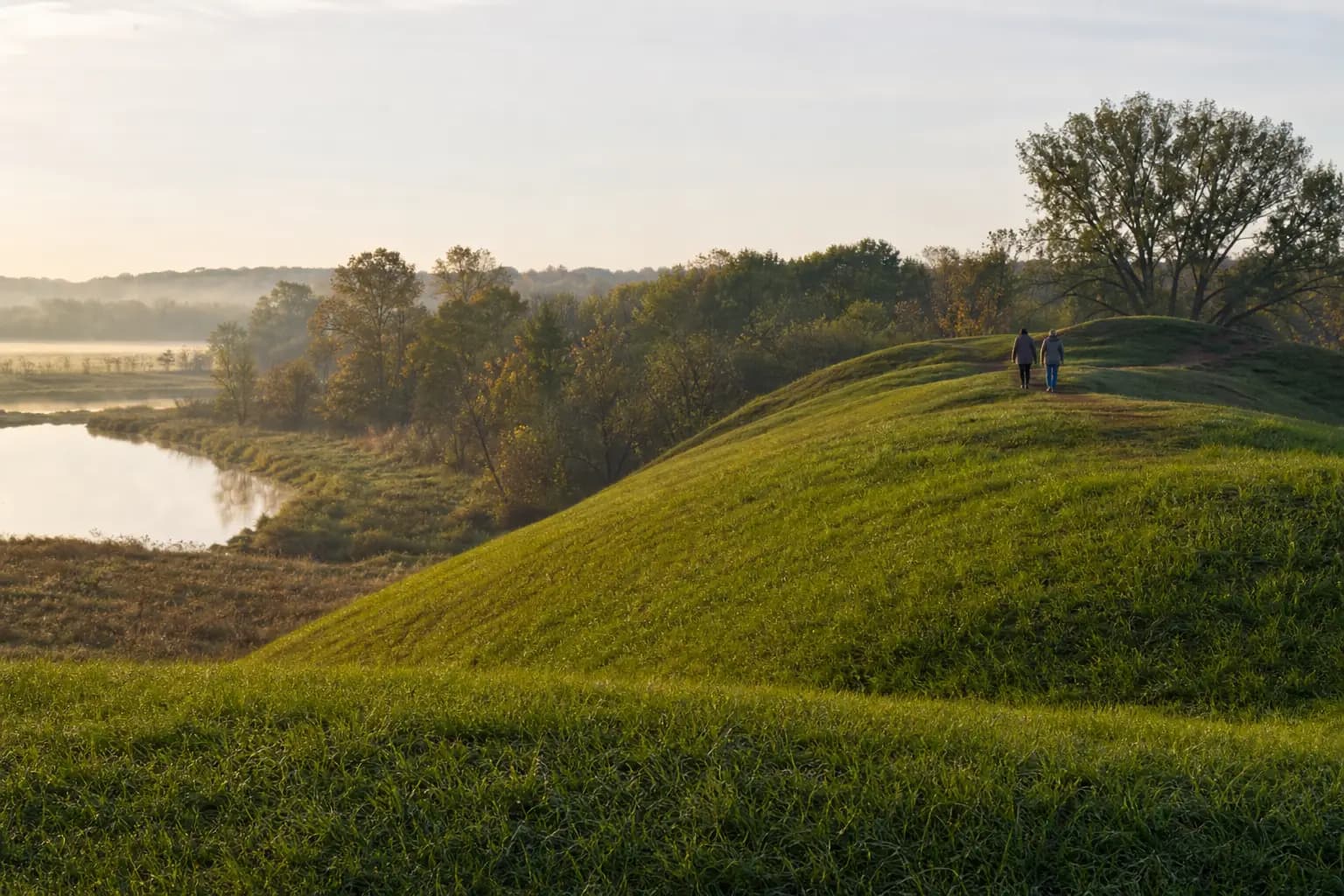
Indiana history begins with Paleoindian occupation and ancient Native communities, then runs through Vincennes, statehood in 1816, Lincoln's youth, abolition work, Civil War service and industrial growth. The story remains visible at Angel Mounds, Vincennes, Corydon, Lincoln Boyhood National Memorial, Fountain City and the State House in Indianapolis. This short statewide timeline gives you the major turns, plus historic places you can add to an Indiana trip.
Key facts
- Angel Mounds had become a powerful city by 1250 A.D. and includes 11 earthen mounds.
- Vincennes was founded in 1732 and is Indiana's oldest city.
- Indiana became a state on December 11, 1816.
- Abraham Lincoln spent 14 formative years in Indiana, from ages 7 to 21.
Own a house in Indiana you are thinking of selling? See how our cash offer works.
First Peoples and Angel Mounds
Indiana's history starts long before territorial capitals and state borders. The Indiana Historical Bureau traces the earliest era to land occupied by Paleoindians, and Angel Mounds shows how deep and organized that past became. By 1250 A.D., Angel Mounds had become a powerful city near Evansville.
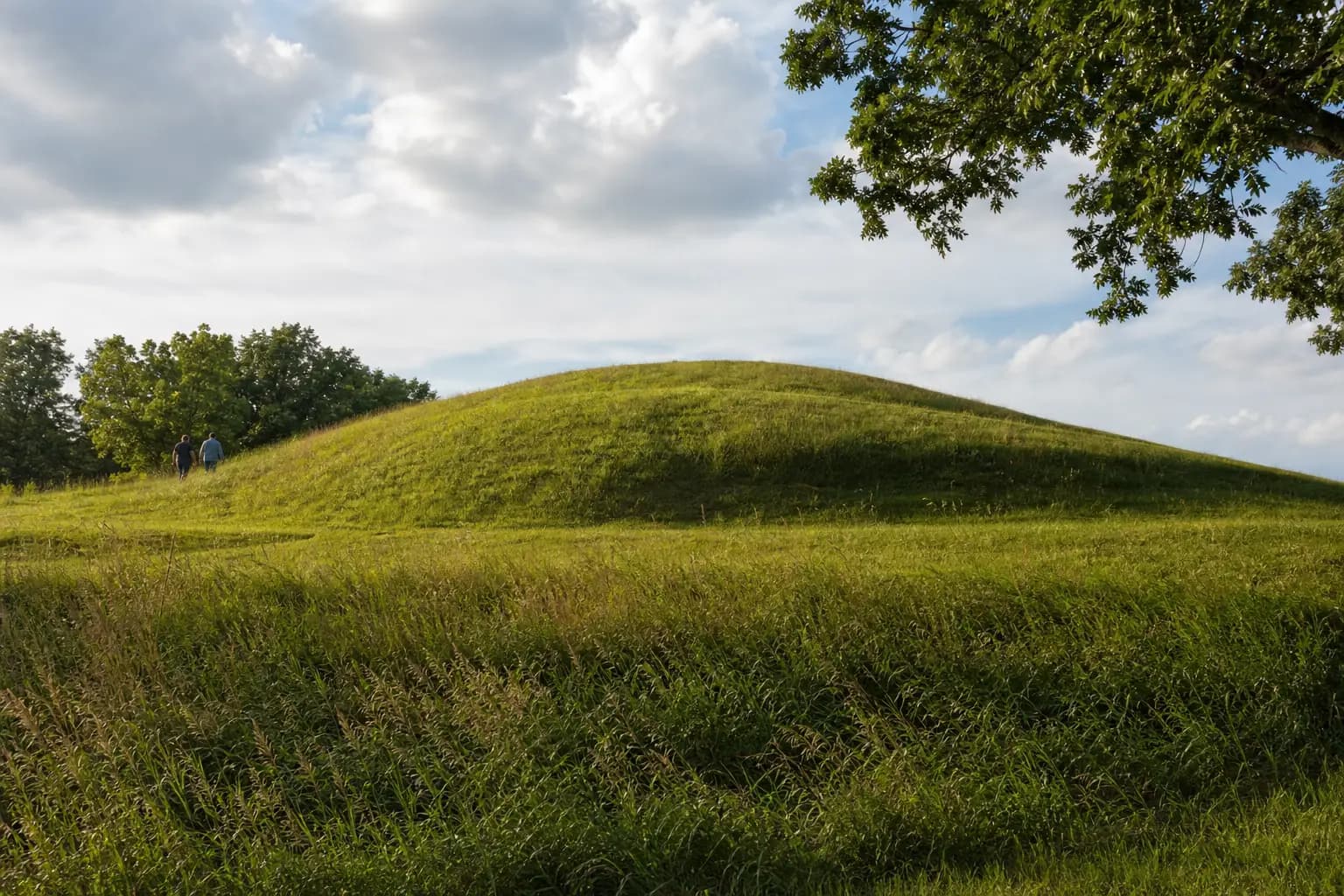
The site includes 11 earthen mounds and a collection tied to 2.5 million artifacts. For a visitor, Angel Mounds gives the early timeline a physical scale: mounds, artifacts and the footprint of a Native city rather than a single roadside marker. It is one of the clearest places to begin before moving into colonial and statehood history.
Native Nations and Removal
The nineteenth century brought federal removal policy, with the Indian Removal Act in 1830 and the Potawatomi Trail of Death in 1838. Those phrases are stark because they describe forced removal, not a simple move from one place to another.
State parks connect this history to places such as Prophetstown, Pokagon State Park, Potato Creek State Park and Indiana Dunes State Park. Read those places alongside the names of Native communities, because parkland and memorial settings are part of a longer human story. One stop cannot carry the whole story, so it helps to read several sites together.
Vincennes and the American Revolution
Vincennes brings colonial and territorial Indiana into focus. The city was founded in 1732 and is described by the Indiana State Museum and Historic Sites as Indiana's oldest city. When Indiana Territory was created, Vincennes was named its capital, and the Vincennes State Historic Sites include the original Territorial Capitol building.
Vincennes also belongs to the Revolutionary War map. George Rogers Clark's campaigns during the American Revolution captured British forts in 1778 and 1779, shaping claims in a region that included Ohio, Illinois, Indiana, Michigan and Wisconsin. Today the George Rogers Clark National Historical Park places that broad regional struggle at a specific Indiana city.
Statehood, Corydon and Indianapolis
Statehood centered first on Corydon. In 1816, 43 delegates met in Corydon to draft the first state constitution, and the Constitution Elm remains part of the site's story. Indiana became a state on December 11, 1816, giving the new state a government rooted in that early capital period.
The capital moved to Indianapolis in 1825, starting the capital city chapter of state government. The present State House was completed in 1888, which gives visitors a later civic landmark in the state's political story. Corydon and Indianapolis together show how Indiana's government moved from its first statehood setting into a more permanent seat.
Lincoln, Abolition and the Civil War
Abraham Lincoln's national story has an Indiana chapter. He moved to Indiana in 1816 and spent 14 formative years there, from the ages of 7 to 21, in what the National Park Service calls life on the frontier. Lincoln Boyhood National Memorial is the place most closely tied to that early period.
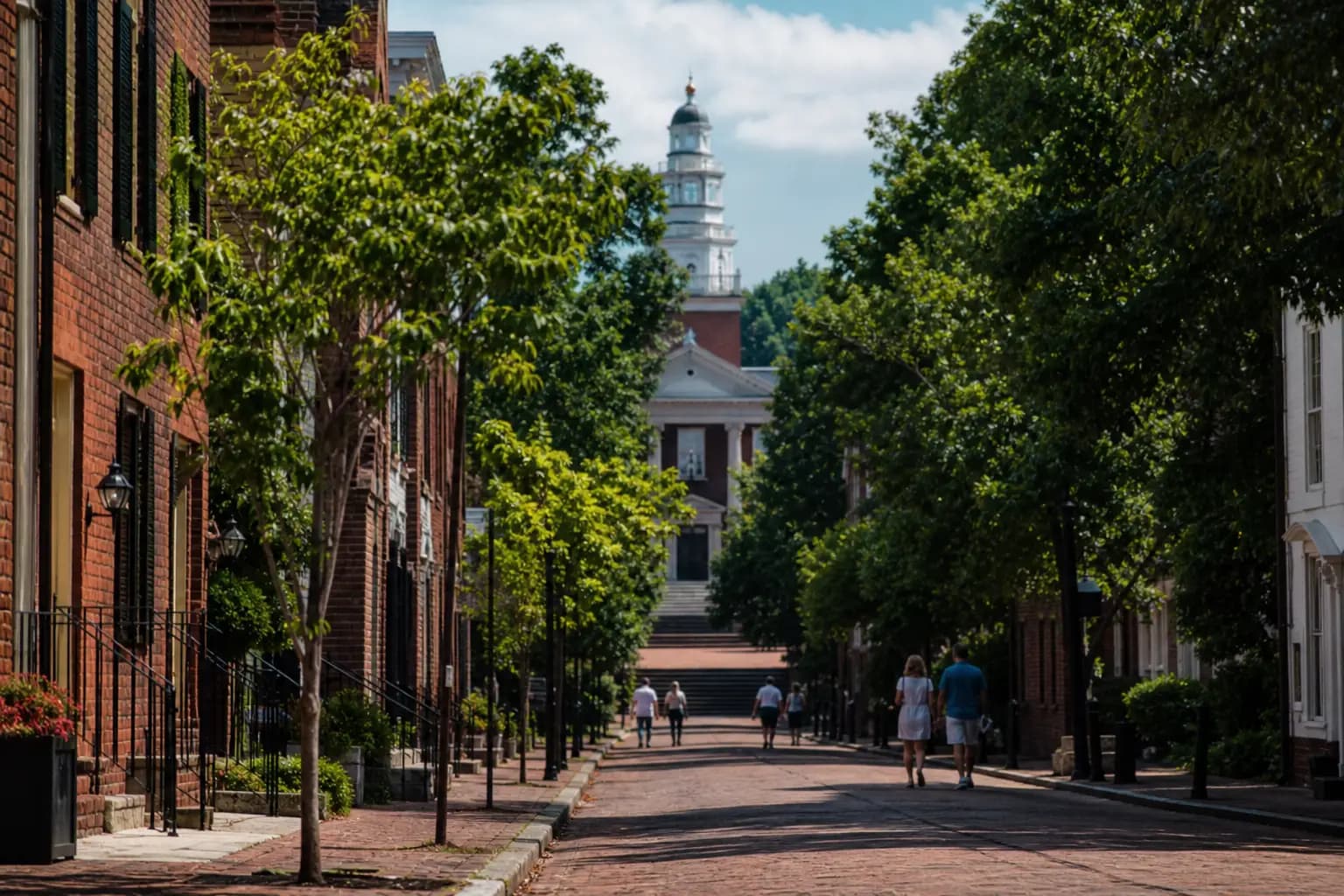
A different kind of moral history is preserved in Fountain City. Levi and Catharine Coffin's Federal style brick home was built in 1839 and served as a safe haven for more than 1,000 freedom seekers on the journey to Canada. The site is remembered as "The Grand Central Station of the Underground Railroad." During the Civil War, 196,363 Hoosier men served, including 1,537 African Americans, linking Indiana communities to the national conflict.
Canals, Industry and the Crossroads Identity
Before the Civil War, Indiana was mostly agriculture, but the state's economy did not stay frozen in that pattern. Canals were built, and industrialization brought rapid growth to Indiana cities. The change helps explain why later Indiana history feels tied to factories, transport routes and expanding urban life.
Indiana University material on industrialization describes the state as a center of automobile production and uses the phrase "Crossroads of America." That identity rests on movement: goods, workers, ideas and travelers crossing the state. For visitors, it gives context to the modern state, where transportation remains one of the clearest historical themes.
Where to See Indiana History Today
Indiana history is spread across the state rather than held in one museum. A practical route can begin with Indigenous history at Angel Mounds, continue to Vincennes and Corydon for territorial and statehood stories, then move to Lincoln Boyhood National Memorial and the Coffin home for nineteenth century life and abolition. Indianapolis adds the State House, completed in 1888, as a civic anchor.
Read the sites as a sequence rather than a checklist. Angel Mounds pushes the timeline back before statehood, Vincennes and Corydon explain government formation, and the Lincoln and Coffin sites bring the nineteenth century close to individual lives. The State House then carries the story into the civic architecture of the late nineteenth century.
| Place | What it helps explain |
|---|---|
| Angel Mounds | A Native city by 1250 A.D. with 11 earthen mounds |
| Vincennes State Historic Sites | Indiana's oldest city and the original Territorial Capitol building |
| George Rogers Clark National Historical Park | The American Revolution campaign that captured British forts in 1778 and 1779 |
| Corydon Capitol State Historic Site | The 1816 constitution and statehood |
| Lincoln Boyhood National Memorial | Lincoln's Indiana years from ages 7 to 21 |
| Levi and Catharine Coffin State Historic Site | An 1839 brick home tied to more than 1,000 freedom seekers |
| Indiana State House | The present State House completed in 1888 |
Frequently asked questions
When did Indiana become a state?
Indiana became a state on December 11, 1816. The statehood story centers on Corydon, where 43 delegates met to draft the first state constitution.
What is Indiana's oldest city?
Vincennes is Indiana's oldest city and was founded in 1732. It was also named capital when Indiana Territory was created.
Where can visitors see early Native history in Indiana?
Angel Mounds is a strong starting point because it had become a powerful city by 1250 A.D. and includes 11 earthen mounds.
Did Abraham Lincoln live in Indiana?
Yes. Lincoln moved to Indiana in 1816 and spent 14 formative years in the state, from the ages of 7 to 21.
What was Indiana's role in the Underground Railroad?
The Levi and Catharine Coffin home in Fountain City was built in 1839 and served as a safe haven for more than 1,000 freedom seekers. The site is remembered as "The Grand Central Station of the Underground Railroad."
How did Indiana change after the Civil War?
Before the Civil War, Indiana was mostly agriculture. Industrialization brought canals, rapid growth in Indiana cities, automobile production and the transportation identity summed up as "Crossroads of America."
Sources
Checked against each source on November 20, 2026. Opening hours, prices and event dates change, so check with the venue before you go. The illustrations are AI generated and do not show real places.
- State Parks: Indigenous Peoples in Indiana (Indiana Department of Natural Resources / Indiana State Parks)
- Angel Mounds (Indiana State Museum and Historic Sites)
- Vincennes State Historic Sites (Indiana State Museum and Historic Sites)
- George Rogers Clark National Historical Park (National Park Service)
- Introducing Indiana: Past and Present (Indiana Historical Bureau)
- Corydon Capitol State Historic Site in Corydon, IN (Indiana State Museum and Historic Sites)
- Lincoln Boyhood National Memorial: Forging Greatness during Lincoln's Youth (National Park Service)
- Levi and Catharine Coffin State Historic Site (Indiana State Museum and Historic Sites)
- Hoosier Soldiers in the Civil War (Indiana Historical Bureau)
- Unit 3, Industrialization (Indiana University, Center on Representative Government)
More guides in Indiana
History Indianapolis
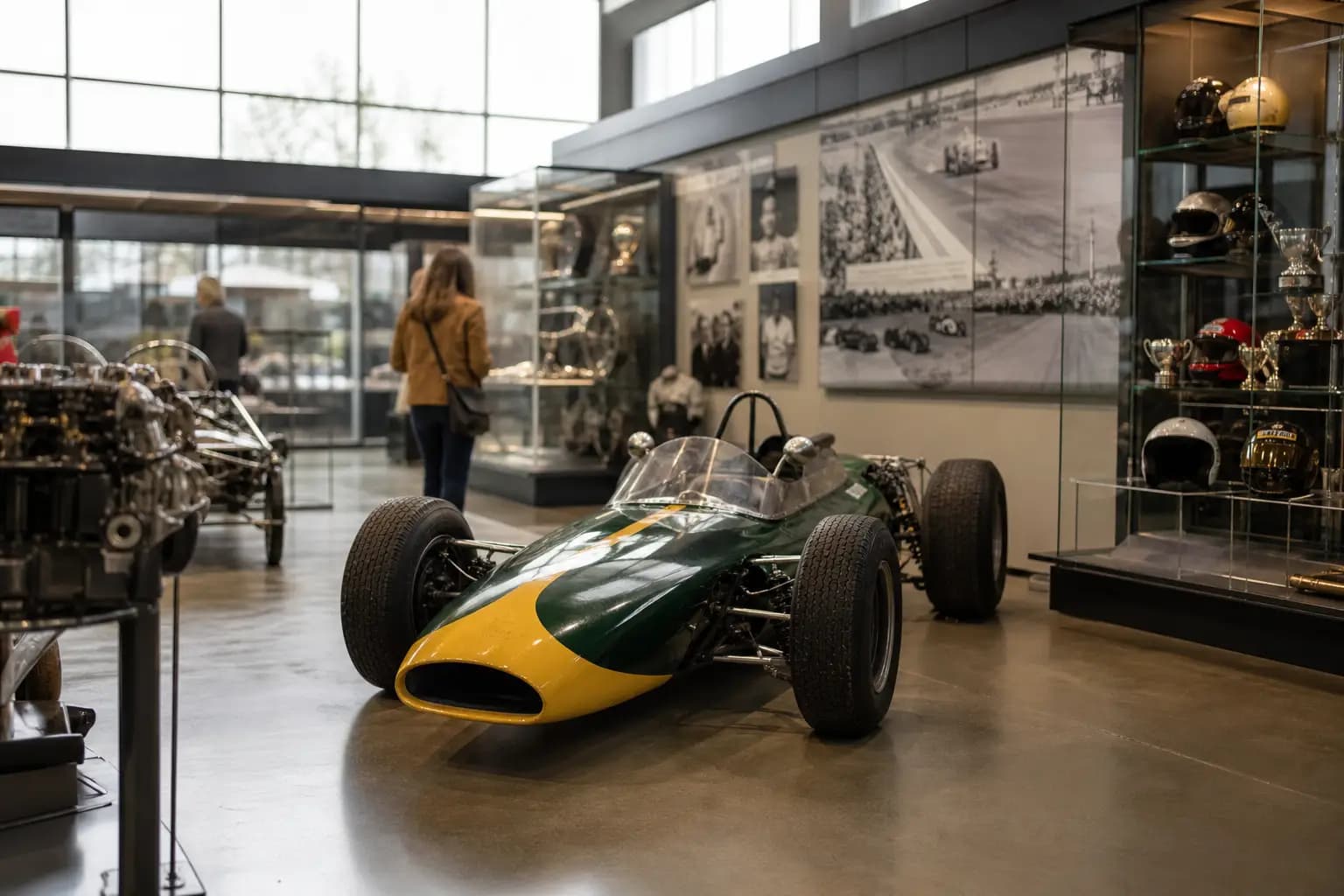
What Is The Indianapolis Motor Speedway Museum?Learn the Indianapolis Motor Speedway Museum story, from the 1909 track and first 500 to the Hall of Fame, wartime industry and exhibits.
Events Indiana
What Is the Parke County Covered Bridge Festival?A visitor guide to the Parke County Covered Bridge Festival: dates, locations, bridges, food traditions, bus tours and practical tips.
Food Indiana
What Is Sugar Cream Pie In Indiana?Learn what sugar cream pie is, why Indiana calls it Hoosier Pie, how its pantry recipe developed, and where visitors can try it.
Sightseeing Bloomington
Things to Do in Bloomington, IndianaSee Bloomington's 1908 Monroe County Courthouse, Indiana University, Griffy Lake Nature Preserve, and a Buddhist center on 108 acres.
Sightseeing Lafayette
Things to Do in Lafayette, IndianaExplore Lafayette, Indiana sights, from the courthouse and riverfront to Columbian Park, trails, museums, Prophetstown and Fort Ouiatenon.
Sightseeing South Bend
Things to Do in South BendFind things to do in South Bend, from River Lights and Notre Dame to Studebaker history, historic districts and Potato Creek.