
What Is The West Side Market In Cleveland?
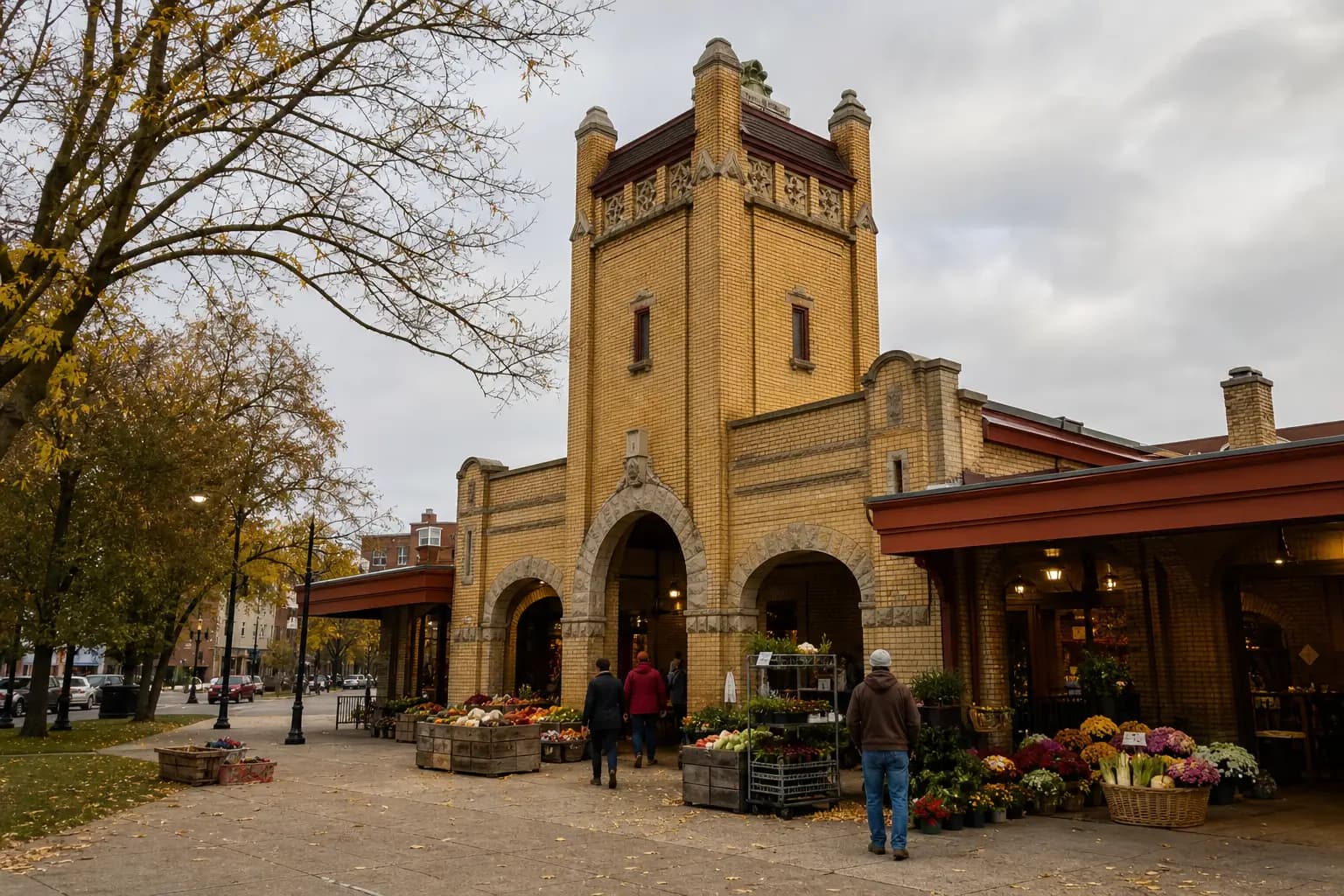
West Side Market is Cleveland's historic public market in Ohio City, a yellow brick market house opened in 1912 on a public market site with roots in 1840. It is known for ordinary food shopping as much as sightseeing: produce, meats, seafood, baked goods, cheese, flowers, prepared foods, candy and nuts share space with family businesses and immigrant food traditions. For a wider taste of the state, pair it with our Ohio food guide.
Key facts
- West Side Market opened in 1912 and is the largest and oldest public market in Cleveland.
- The market site traces back to 1840, when Josiah Barber and Richard Lord gave Ohio City land for a public market.
- The 1912 hall was designed by Hubbell and Benes, with a yellow brick exterior, an interior concourse and a large clock tower.
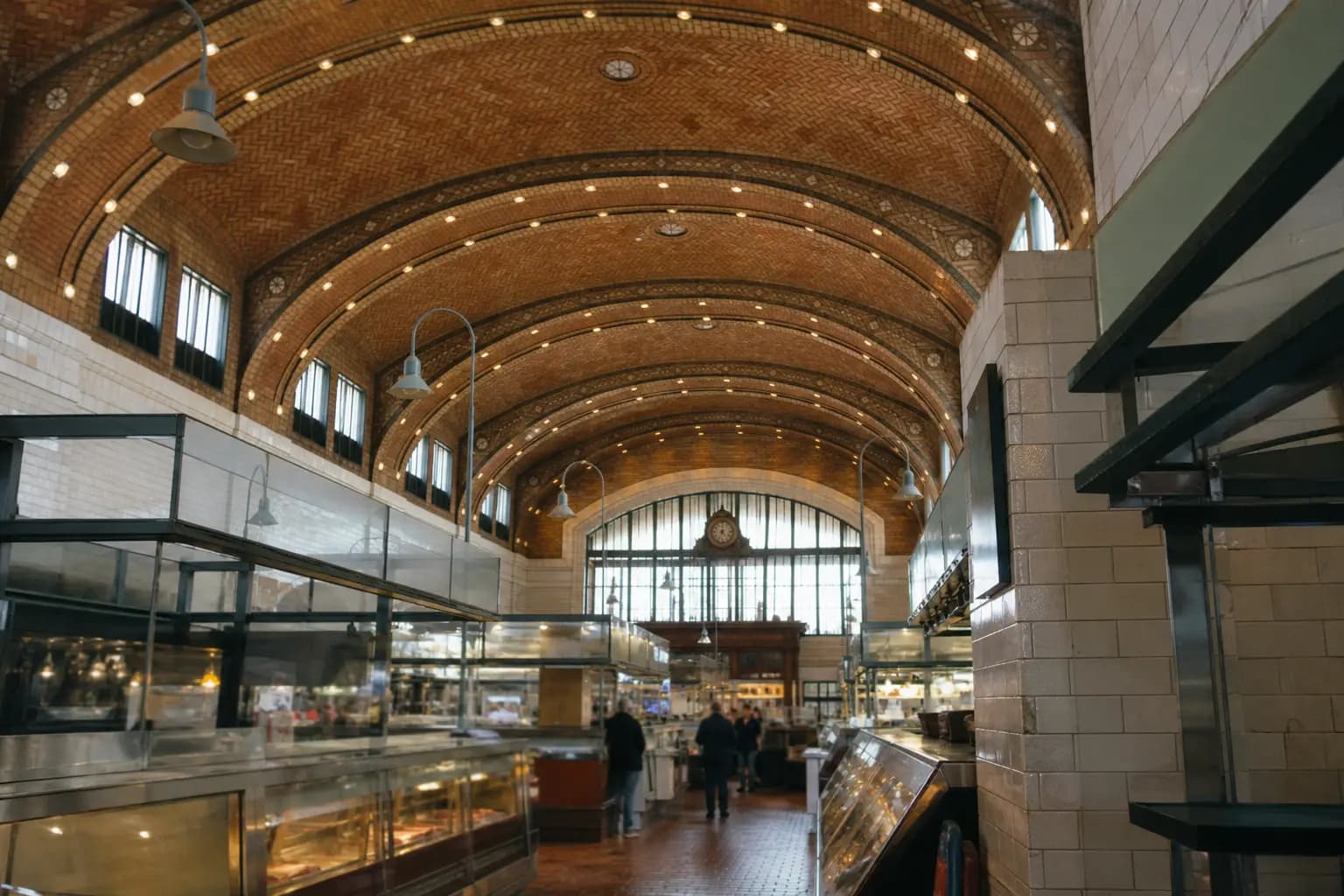
- The main structure has a 44 foot high Guastavino tile vaulted ceiling and a 137 foot clock tower.
- The City of Cleveland owns the land and facilities, while Cleveland Public Market Corporation manages operations.
Own a house in Cleveland you are thinking of selling? See how our cash offer works.
Why West Side Market Matters
West Side Market matters because it is both old and active. Opened in 1912, it has served Northeast Ohio for more than a century and is described by the market as the largest and oldest public market in Cleveland. It anchors Ohio City's food culture in a practical way: people go there to shop, meet vendors and carry home ingredients rather than only to look at a landmark.
That public role is part of the pleasure. The market has been described as a third space, a place where people from many walks of life can visit, shop and do business. Inside, small businesses sell fresh produce, meats, seafood, baked goods, prepared foods and more, with some stands run by new operators and others passed through family generations.
From Pearl Street To The 1912 Hall
West Side Market's story begins before the 1912 building. In 1840, Josiah Barber and Richard Lord gave Ohio City land at Pearl, now West 25th, and Lorain streets, with the stipulation that it remain a public market site. A wooden one story Pearl Street Market went up there in 1868, and population growth eventually made that building too small.
In 1902 the city bought a new site across the street. The Hubbell and Benes firm designed a $680,000 yellow brick markethouse with an interior concourse, room for 100 stalls, an outdoor arcade with 85 stands and a large clock tower. The present West Side Market opened to shoppers on November 2, 1912, replacing Pearl Street Market and joining Broadway Market and Central Market as one of the three public markets that served Cleveland's immigrant population in the early twentieth century.
The Clock Tower And Guastavino Ceiling
The building still tells you it was designed as civic architecture. The main structure measures 241 by 124 feet, and its 44 foot high Guastavino tile vaulted ceiling lifts the market hall above the working stalls. The 137 foot clock tower is part of the same grand design, with a clock historically designed and manufactured by Seth Thomas Clock Company.
Those details explain why visitors often treat the building itself as part of the meal. It is a place to buy sausage, bread or produce, but also a place to look up at tile vaults, yellow brick and a landmark tower. The building's historical and architectural significance was recognized in 1973, when it was designated a National Historic Landmark.
Immigrant Food Traditions In The Aisles
Food at the market has always followed the people of Cleveland. In 1900, around 75 percent of the city's population was either foreign born or first generation descendants, and more than 40 languages could be heard on the streets. By 1912, German and Hungarian immigrants had roots in the market, reflected in the sausages sold there.
The original hall had 109 stands selling meats, dairy products, bread, groceries and ethnic specialty foods. Produce began outside, sold from curb stands until outdoor produce aisles were erected a few years later. Another older food practice lasted surprisingly long: live birds were sold across the street until 2001, sometimes wrapped in newspaper and sometimes even on a leash.
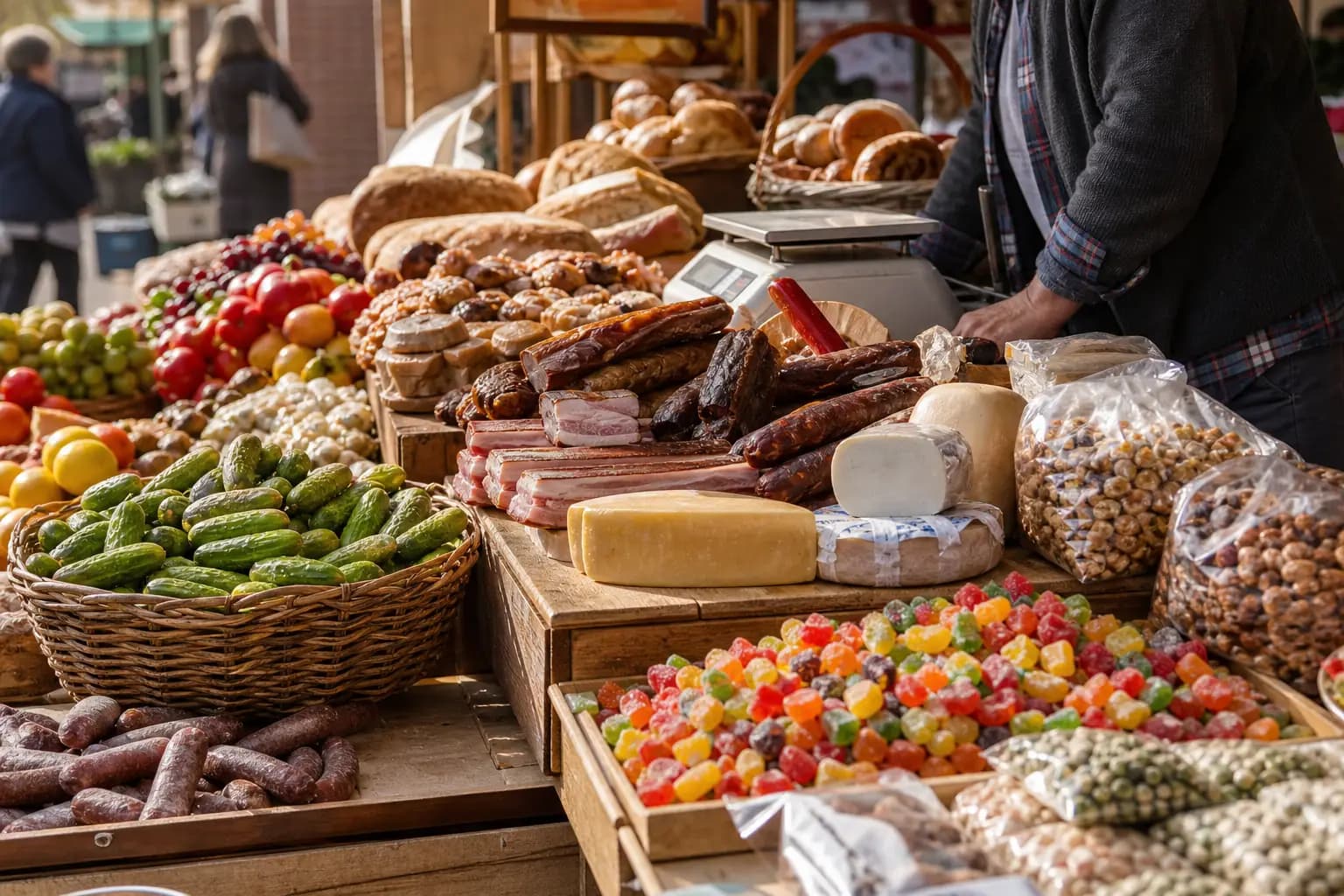
Today, the food mix still ranges widely. Vendors sell fresh produce, meats, seafood, baked goods and prepared food, along with dairy and cheese products, flowers, herbs, candy and nuts. For Cleveland visitors, that means the market can be a grocery run and edible history in one stop.
Family Vendors And Everyday Shopping
Individual stands give those traditions names and faces. Pierogi Palace has been a family owned business at West Side Market since 1995, and second generation family members operate the stand. Its menu includes pierogi, stuffed cabbages, potato pancakes and four kinds of cabbage and noodles, showing how prepared foods sit alongside raw ingredients.
Frank's Bratwurst is another longtime stand with a documented start date: Frank and Johanna Ratschki opened it at the market on October 31, 1970. Three generations later, Frank's daughter, Ilse, and her sons continue the family tradition by serving bratwurst sandwiches. The market's own history also gives space to the West Side Market Café, which has served hot meals for more than 80 years in a room originally occupied by four vendor stalls.
Everyday shopping has always shaped the market's rhythm. Central Market and Broadway Market once operated on alternating days with West Side Market so they would not compete for customers. That old coordination is a reminder that this was part of a citywide public market system, not an isolated food hall.
Food Celebrations And Stewardship
The market has also been a stage for food celebrations. One year before the grand opening, the nearly complete but still empty market hosted a neighborhood celebration for one festive week, with local businesses using vacant stands to promote themselves. In the third week of June 1915, a jamboree promoted the new market house with a pageant, a street fair and even a wedding.
Anniversary events leaned into Cleveland food spectacle. The market's 50th birthday spanned an entire month, with mayoral appearances, fashion shows, comedy events, cultural highlights and a dance competition. For the 60th anniversary in 1972, the market built a 70 foot sub sandwich using market ingredients, and in 1974 it followed with what organizers claimed was the biggest salad in Cleveland.
Stewardship changed in 2024, when management and operation transferred from the City of Cleveland to Cleveland Public Market Corporation. The city retains ownership of the market's land and facilities, while the independent nonprofit manages market operations. That arrangement keeps the building publicly owned while giving a dedicated organization responsibility for the market's daily work.
Frequently asked questions
What is West Side Market known for?
West Side Market is known as Cleveland's oldest and largest public market, with roots in an Ohio City market site that began in 1840. Visitors know it for the 1912 market hall, the clock tower, the Guastavino tile ceiling and food stands selling produce, meats, seafood, baked goods, prepared foods and more.
When did West Side Market open?
The current West Side Market opened to shoppers on November 2, 1912. Its dedication ceremony was held on October 31, 1912, after a longer public market history on the same corner that began in 1840.
Where is West Side Market in Cleveland?
West Side Market is in Cleveland's Ohio City neighborhood at West 25th, formerly Pearl, and Lorain streets. The current hall was built across the street from the earlier Pearl Street Market site.
What foods can you find at West Side Market?
The market's food mix includes fresh produce, meats, seafood, baked goods, prepared food, dairy and cheese products, flowers, herbs, candy and nuts. Vendor examples include Pierogi Palace, with pierogi, stuffed cabbages and potato pancakes, and Frank's Bratwurst, known at the market for bratwurst sandwiches.
Is the West Side Market building historic?
Yes. The building's historical and architectural significance was recognized in 1973, when it was designated a National Historic Landmark. Its notable features include a 44 foot high Guastavino tile vaulted ceiling and a 137 foot clock tower.
Who manages West Side Market?
The City of Cleveland transferred management and operation of West Side Market to Cleveland Public Market Corporation in 2024. The city retains ownership of the market's land and facilities, while the independent nonprofit manages operations.
Sources
Checked against each source on November 19, 2026. Opening hours, prices and event dates change, so check with the venue before you go. The illustrations are AI generated and do not show real places.
- Public Market in Cleveland, OH | West Side Market (West Side Market)
- About the westside market Cleveland (West Side Market)
- History of the Westside Market (West Side Market)
- In the Neighborhood, Cleveland's West Side Market (West Side Market)
- Special Events, Cleveland's West Side Market (West Side Market)
- Pierogi Palace, Cleveland's West Side Market (West Side Market)
- Frank's Bratwurst, Cleveland's West Side Market (West Side Market)
- WEST SIDE MARKET | Encyclopedia of Cleveland History | Case Western Reserve University (Encyclopedia of Cleveland History, Case Western Reserve University)
- Cleveland Public Market Corporation Assumes Operation of West Side Market, Names Staff (City of Cleveland)
More guides in Ohio
Food Cleveland
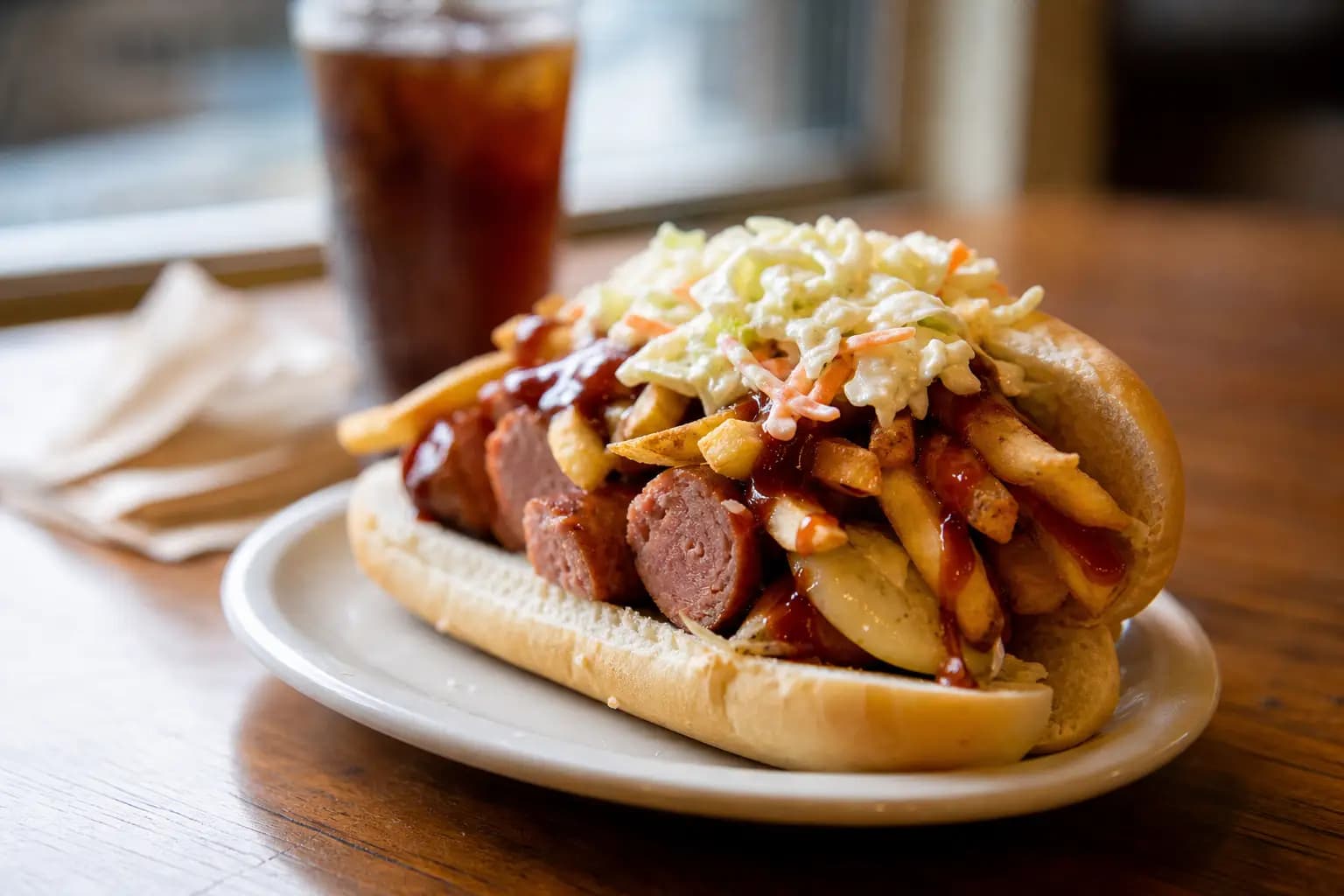
What Is The Polish Boy In Cleveland?Learn what goes into Cleveland's Polish Boy, the Polish neighborhood context around kielbasa, and where its food story continues.
Sightseeing Cleveland
What Is Cleveland Known For?Explore what Cleveland is known for, from Lake Erie and the Cuyahoga River to downtown landmarks, museums, markets, parks and walks.
Food Cincinnati
What Food Is Cincinnati Known For?Learn what food Cincinnati is known for, from chili over spaghetti and goetta to Findlay Market, Graeter's and food festivals.
Food Cincinnati
What Is Findlay Market in Cincinnati Known For?Learn Findlay Market history, its 1850s market house, weekend Farmers Market, and the foods and merchants visitors find today.
Food Columbus
What Is North Market Columbus Known For?Learn North Market Columbus history, from its 1876 roots to today's prepared foods, produce, sweets, Somali dishes and ice cream.
Events Columbus
What to Know About the Ohio State Fair in ColumbusLearn the Ohio State Fair story in Columbus, from its 1850 beginning to the butter cow, rides, concerts and planning basics.