
National Museum Of The US Air Force In Dayton
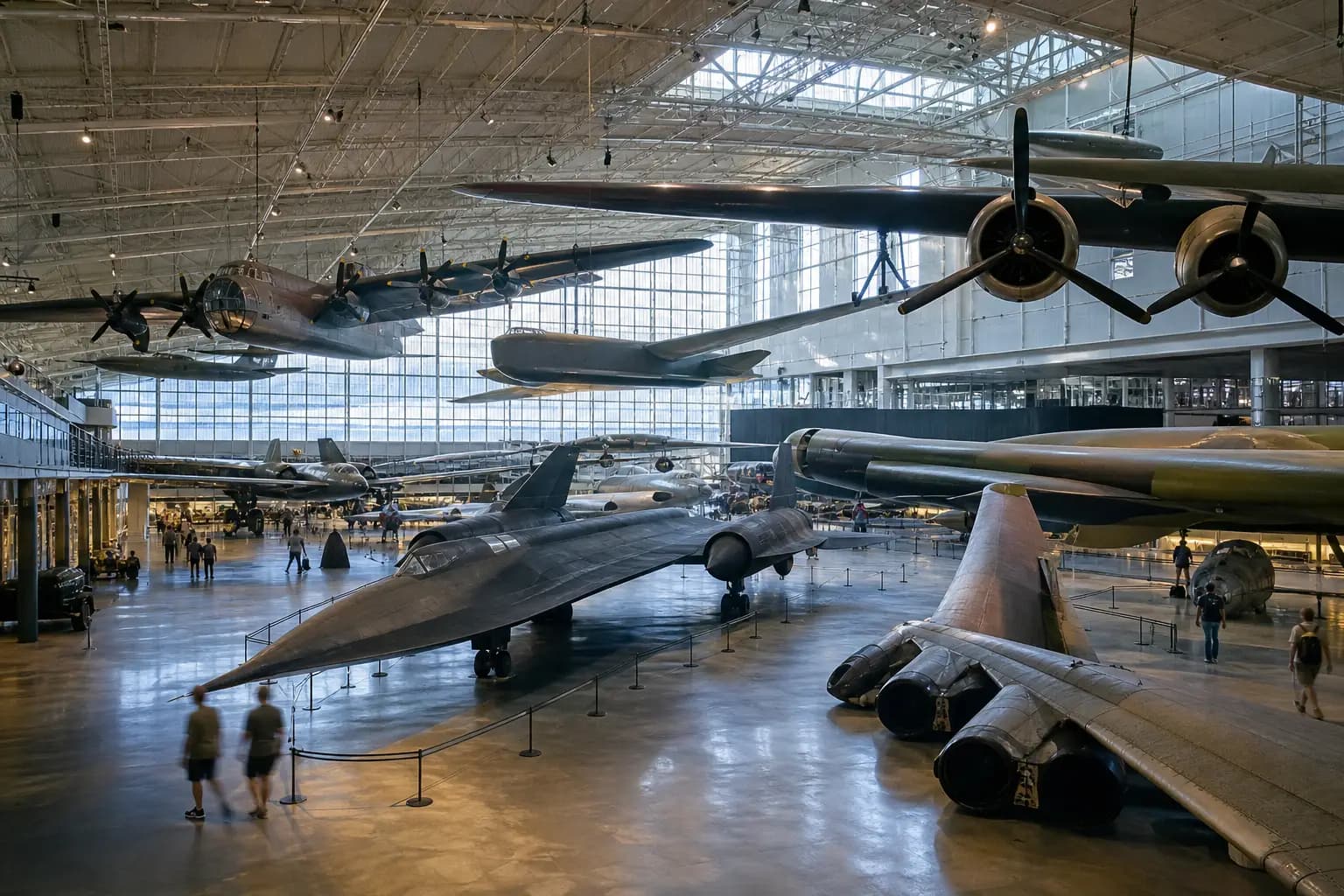
The National Museum of the U.S. Air Force is a major aviation museum on Wright-Patterson Air Force Base northeast of downtown Dayton. The National Park Service describes it as "the largest and oldest military aviation museum in the entire world," with more than 360 aerospace vehicles and missiles. A visit moves through military flight chronologically, from Early Years and World War II galleries to presidential aircraft, space displays, Memorial Park and the National Aviation Hall of Fame.
Key facts
- The museum is on Wright-Patterson Air Force Base northeast of downtown Dayton.
- The National Park Service describes it as "the largest and oldest military aviation museum in the entire world."
- Indoor exhibits cover 19 acres and feature more than 360 aerospace vehicles and missiles.
Own a house in Dayton you are thinking of selling? See how our cash offer works.
A Dayton Aviation Landmark
Set northeast of downtown Dayton, the museum sits on Wright-Patterson Air Force Base, a place with a broad Air Force role beyond the galleries. The base is 8 miles northeast of Dayton and serves as headquarters for worldwide logistics systems and a major Air Force research and development center.
The museum's public history reaches back to Wright Field. The first museum building at Wright Field, now Area B of Wright-Patterson AFB, opened to the public in 1936.
That setting matters because the museum is part of the same local aviation story that includes the National Aviation Heritage Area and other Dayton institutions. Montgomery County and Dayton are home to the National Aviation Heritage Area, the National Museum of the U.S. Air Force, Carillon Historical Park, the Dayton Metro Library, the Aviation Trail Parachute Museum and the Wright Company Factory; for a broader city overview, see Dayton history and the Wright brothers.
The National Aviation Hall of Fame is also on the museum grounds. It has more than 14,000 square feet of interpretive displays, flight simulators and interactive exhibits honoring Hall of Fame enshrinees, and it points visitors toward aviation pioneers such as the Wright brothers, Neil Armstrong, Buzz Aldrin, Bessie Coleman and Patty Wagstaff.
The aviation context continues across Wright-Patterson Air Force Base. Huffman Prairie Flying Field, a unit of Dayton Aviation Heritage National Historical Park, sits within the heart of the base adjacent to active runways, and the Huffman Prairie Flying Field Interpretive Center and the Wright Memorial are also on the base; for more ideas nearby, see things to do in Dayton.
How The Indoor Galleries Unfold
Inside, the museum is built for a long chronological walk. Exhibits are arranged chronologically, and the gallery list runs through Early Years, WWII, Korean War, SEA War, Cold War, Missile, Research and Development, Global Reach, Space, and Presidential Galleries.
The scale is part of the experience, with 19 acres of indoor exhibits and more than 360 aerospace vehicles and missiles.
The chronological layout helps visitors choose a shorter route without losing the larger story. A person drawn to early flight can start near the beginning, while another visitor can make a direct path to Cold War aircraft, missiles, presidential transports, or space displays.
Landmark Aircraft With Wartime Stories
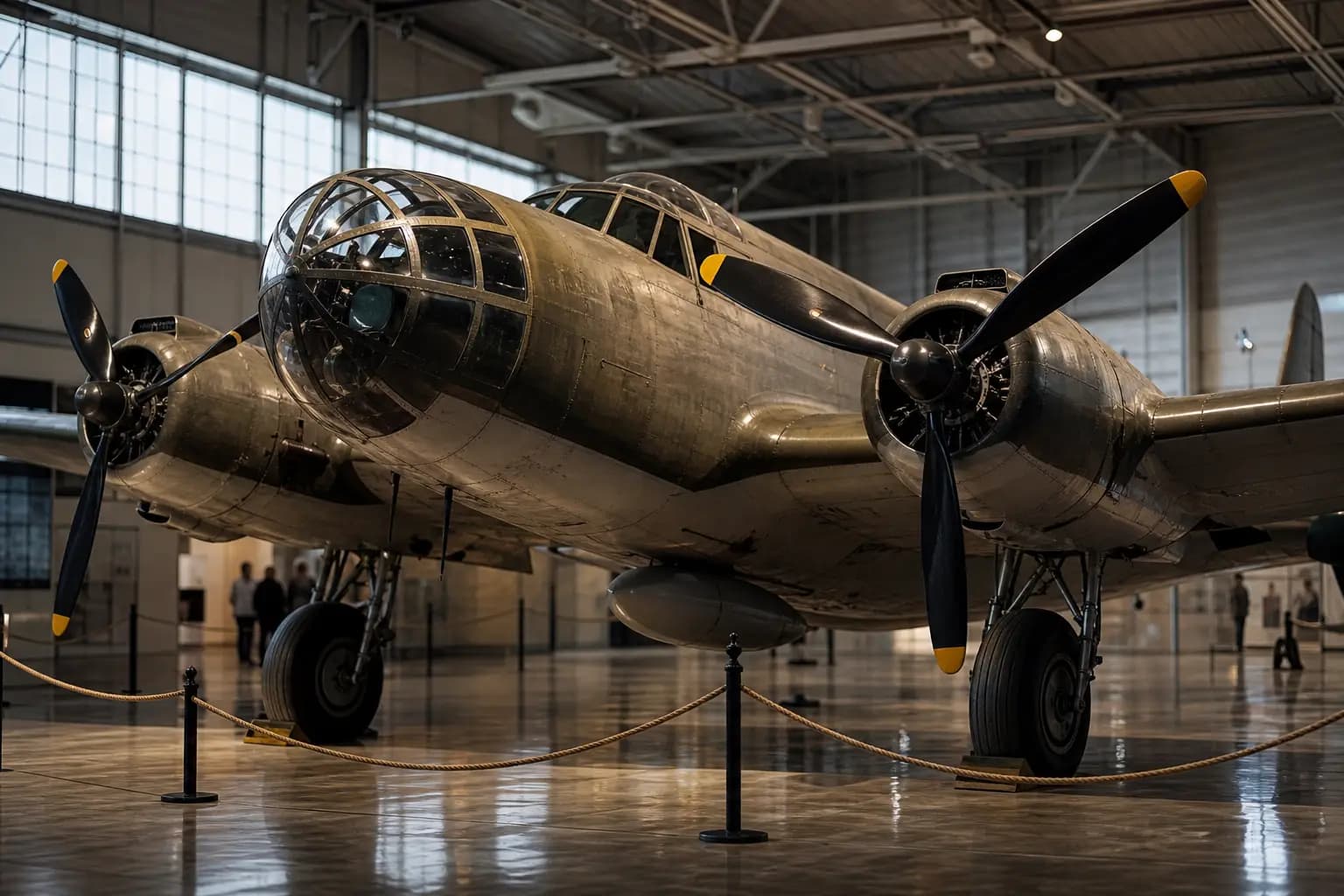
World War II material gives the museum some of its most direct wartime storytelling. Visitors can see the iconic Memphis Belle and, in wording used by Destination Dayton, "the world’s only permanent public display of a B-2 stealth bomber."
Wright Field also grew dramatically during the war. In 1940 the federal government allocated $300 million to improve Wright Field and build up the Army Air Corps, and by 1944 the airfield had expanded to more than 300 structures after having only forty buildings in 1941.
Research at Wright Field during World War II focused on engine horsepower, airplane range and maneuverability, crew safety features and weapons. Workers there helped design and construct aircraft including the C-47 Skytrain, C-54 Skymaster, Curtiss C-46 Commando, Curtiss-Wright P-40 Warhawk, B-24 Liberator and B-29 Superfortress.
Presidential Aircraft And Space Hardware
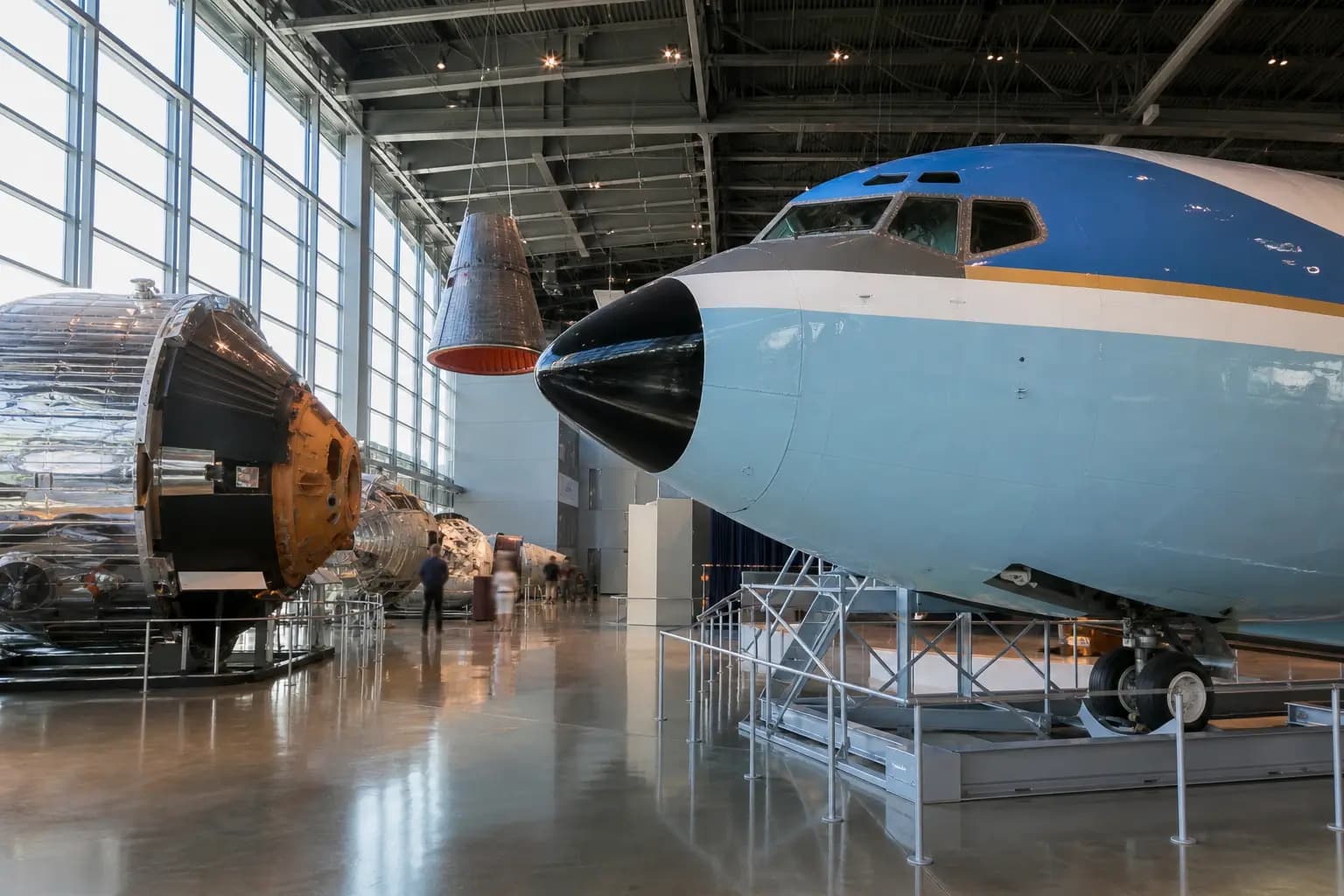
The William E. Boeing Presidential Gallery brings the museum's aircraft story inside the White House travel story. Destination Dayton describes a historic collection of presidential aircraft and says visitors can take a walk through tour of four of them, including Boeing VC-137C SAM 26000, which flew J.F.K.'s body back from Dallas.
The same gallery includes aircraft used by presidents from Roosevelt through Clinton. The appeal is physical and immediate: visitors step onto the aircraft rather than only reading about them from the floor.
The Space Gallery shifts the mood from airfields to orbit. Its Space Shuttle Exhibit features NASA's first Crew Compartment Trainer.
Frequently asked questions
Where is the National Museum of the U.S. Air Force?
The museum is on Wright-Patterson Air Force Base northeast of downtown Dayton. The base is 8 miles northeast of Dayton.
How large is the museum collection?
The museum features more than 360 aerospace vehicles and missiles. Its indoor exhibit space covers 19 acres.
What galleries are inside the museum?
The galleries are arranged chronologically. They include Early Years, WWII, Korean War, SEA War, Cold War, Missile, Research and Development, Global Reach, Space, and Presidential Galleries.
Can visitors go inside any aircraft?
The Presidential Gallery gives visitors a walk through tour of four presidential aircraft, including Boeing VC-137C SAM 26000.
What space exhibits are at the museum?
The Space Gallery includes the Space Shuttle Exhibit with NASA's first Crew Compartment Trainer.
What else is on the museum grounds?
The National Aviation Hall of Fame is on the grounds, with interpretive displays, flight simulators and interactive exhibits.
How does the museum connect to Dayton's Wright brothers history?
The museum is part of Dayton's larger aviation setting, which also includes the National Aviation Heritage Area and the Wright Company Factory. Huffman Prairie Flying Field, a unit of Dayton Aviation Heritage National Historical Park, is on Wright-Patterson Air Force Base near active runways.
Sources
Checked against each source on November 20, 2026. Opening hours, prices and event dates change, so check with the venue before you go. The illustrations are AI generated and do not show real places.
- Nearby Attractions, Dayton Aviation Heritage National Historical Park (National Park Service)
- Partners, Dayton Aviation Heritage National Historical Park (National Park Service)
- Montgomery County (Dayton), Ohio (National Park Service)
- National Museum of the U.S. Air Force™ (Destination Dayton)
- Wright Field museum building (Wright State University Libraries, Special Collections and Archives)
More guides in Ohio

History Dayton
Dayton History: The Wright Brothers And MoreExplore Dayton history through the Wright brothers, Paul Laurence Dunbar, industry, the 1913 flood and the Dayton Accords.
Sightseeing Dayton
Things to Do in Dayton, OhioPlan sightseeing in Dayton, from aviation landmarks and downtown architecture to museums, art, prehistoric sites and cemetery walks.
History Ohio
Cedar Point HistoryExplore cedar point history from the 1870 beach and steamboat era to Hotel Breakers, record coasters, the lighthouse and Sandusky museum.
History Cincinnati
A Short History Of Cincinnati, OhioTrace Cincinnati history from Indigenous Ohio River Valley communities and Losantiville to canals, German immigration, abolition and public markets.
Food Cleveland
What Is The Polish Boy In Cleveland?Learn what goes into Cleveland's Polish Boy, the Polish neighborhood context around kielbasa, and where its food story continues.
Sightseeing Akron
Things To Do In Akron, OhioSee Akron through its canal route, downtown arts venues, historic houses, and a train ride from Akron Northside Station and museum stops.