
A Short History of Nashville
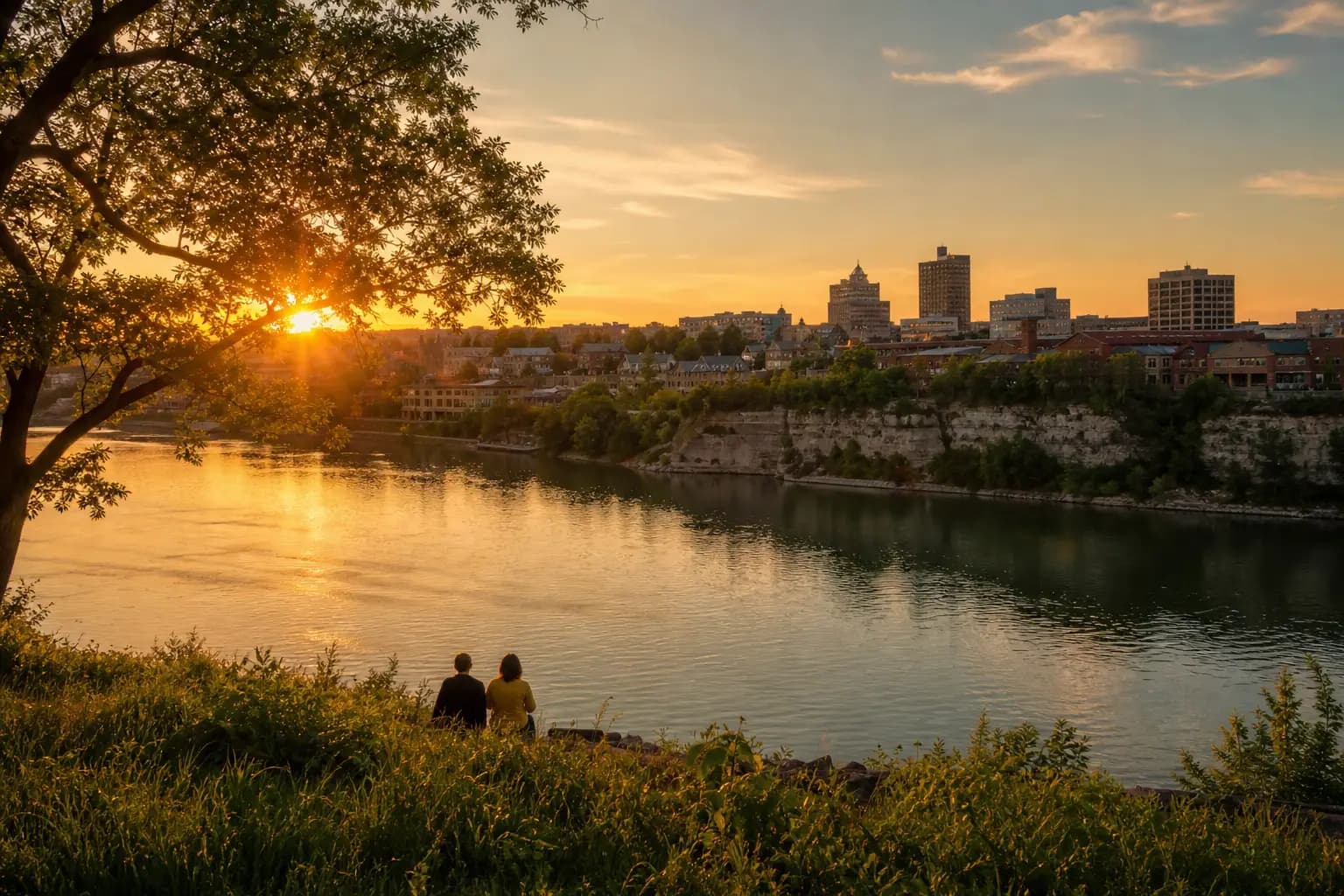
Nashville history begins on the Cumberland River. James Robertson founded Nashville on January 1, 1780, and the city later grew through the Tennessee State Capitol, Civil War sites, Fisk University, music landmarks and civil rights history. Many of those layers are still tied to places visitors can see, from Riverfront Park and Fort Negley to the Ryman Auditorium and the Civil Rights Room.
Key facts
- James Robertson founded Nashville on January 1, 1780, and the early fort was called Nashborough.
- Fort Negley was the largest inland stone fortification built during the Civil War and used more than 2,700 conscript laborers.
- The Battle of Nashville campaign belongs to 1864, and the National Park Service lists estimated casualties at 9,561 total.
- The Fisk Jubilee Singers set out from Nashville on October 6, 1871.
- The Tennessee Centennial Exposition was held in 1897, and Centennial Park was established in 1902.
Own a house in Nashville you are thinking of selling? See how our cash offer works.
The River Before the Name
The Cumberland River gives Nashville's founding chapters a physical center rather than a vague origin tale. On January 1, 1780, James Robertson founded Nashville, and the men built a fort here called Nashborough. The early site is tied to Fort Nashborough in Riverfront Park, downtown Nashville, a compact place to begin a history visit. Starting there keeps the city's first chapter close to the riverbank, where downtown Nashville still gathers around the water.
From River City to State Capitol
After the founding period, Nashville's downtown story stayed anchored by the Cumberland River and by public buildings on the hill above it. The Tennessee State Capitol fixed a major layer of the city's history in stone, giving the capital a landmark that still shapes the view of the center city. For a visitor, the Capitol pairs naturally with the riverfront because the two places show how Nashville grew from a fort site into a seat of state government. The building remains one of the clearest places to read nineteenth century Nashville in the present day city.
Civil War Ground
Fort Negley gives Nashville's Civil War story a scale that is hard to miss. It was the largest inland stone fortification built during the Civil War, and more than 2,700 conscript laborers worked on it. Today, Fort Negley offers interpretive panels and accessible walkways. The site turns a military structure into a place for reading the human labor behind it.
The Battle of Nashville campaign belongs to 1864. The National Park Service lists the Battle of Nashville dates as September to December 1864 and estimated casualties at 9,561 total. Hood reached the outskirts of Nashville on December 2, placing the city itself in the path of the campaign.
Fisk, the Jubilee Singers and Centennial Park
Fisk University gives the city an education story that still has visible places. Fisk's institutional history includes the Fisk School in Nashville, and the Fisk Jubilee Singers set out from Nashville on October 6, 1871. The campus story also includes Jubilee Hall, identified in the university history as the South's first permanent structure. Together, those names make education and performance part of the same Nashville chapter.
The city's public image also took shape through the Tennessee Centennial Exposition. The exposition was held in 1897, and approximately 1.8 million people attended the Centennial. Centennial Park was established in 1902, leaving visitors a place where the fair era remains part of the city map.
Ryman Auditorium and RCA Studio B
Ryman Auditorium carries one of Nashville's best known music chapters. The building's history places it at the center of the city's performance story, where the room itself became part of the way Nashville is remembered. RCA Studio B adds the recording side of that story, with a studio setting tied to the city's country music legacy. Taken together, the Ryman and Studio B help explain why Nashville's music history is told through rooms as much as through names.
The Civil Rights Era
The Civil Rights Room at Nashville Public Library gives this chapter of the city's history a dedicated public place. It keeps Nashville's civil rights story close to downtown, in a library setting where visitors can slow down and take in the meaning of civic life. This chapter matters because it broadens the way Nashville history is usually introduced. In a city often described through music, the Civil Rights Room adds another voice to the story of public gathering, discipline and change.
Where to See the Layers Now
A focused history visit can connect these chapters without treating them as separate stories. Start with Fort Nashborough at Riverfront Park for the founding, then use Fort Negley for Civil War interpretation. Add the Tennessee State Capitol for civic architecture and the Ryman Auditorium or RCA Studio B for music history.
For education and exposition history, pair Fisk's Jubilee Hall with Centennial Park and the Parthenon. For civil rights history, the Civil Rights Room at Nashville Public Library gives that chapter a downtown place to visit. Nashville's past is easiest to grasp when these places are read together, as a river city, a capital, a battlefield, a school city, a recording city and a city shaped by civic life.
Frequently asked questions
When was Nashville founded?
James Robertson founded Nashville on January 1, 1780. The early fort was called Nashborough. The Fort Nashborough site is in Riverfront Park, downtown Nashville.
Why is the Tennessee State Capitol important to Nashville history?
The Tennessee State Capitol marks Nashville's nineteenth century civic story. It is a major public landmark connected to the city's role as Tennessee's capital. A visit there pairs well with the riverfront for a look at how the city grew from its early fort site into a center of state government.
What Civil War history can visitors see in Nashville?
Fort Negley is a major Civil War site in Nashville. It was the largest inland stone fortification built during the Civil War, and more than 2,700 conscript laborers worked on it. The site offers interpretive panels and accessible walkways.
How did music become part of Nashville history?
Ryman Auditorium is one of the city's best known performance landmarks. RCA Studio B adds the recording studio side of the story. Together, they give visitors two public places connected to Nashville's music history.
Where can visitors learn about Nashville's civil rights history?
The Civil Rights Room at Nashville Public Library is dedicated to Nashville's civil rights history. It gives visitors a downtown place to learn about that chapter of the city. The room broadens a Nashville history visit beyond the city's music landmarks.
Sources
Checked against each source on November 20, 2026. Opening hours, prices and event dates change, so check with the venue before you go. The illustrations are AI generated and do not show real places.
- Fort Nashborough (Metropolitan Government of Nashville and Davidson County / Nashville.gov)
- Fort Negley’s History (Metropolitan Government of Nashville and Davidson County / Nashville.gov)
- Battle Detail, Nashville (National Park Service)
- Fisk University History (Fisk University)
- Mission & History (The Parthenon)
More guides in Tennessee

Food Nashville
What Is a Goo Goo Cluster?Learn what a Goo Goo Cluster is, why it is tied to Nashville, and where visitors can design a custom version downtown.
History Chattanooga
A Short History of ChattanoogaExplore Chattanooga history from Moccasin Bend and Ross's Landing to railroads, Civil War sites, TVA, air cleanup and riverfront renewal.
History Memphis
Civil Rights Museum Memphis: What To KnowLearn the story behind Memphis's National Civil Rights Museum, from the Lorraine Motel and 1968 sanitation strike to the exhibits visitors see.
Events Chattanooga
What Is Riverbend Festival In Chattanooga?Learn Riverbend Festival's June tradition, Ross's Landing setting, riverfront history and practical notes for a Chattanooga visit.
History Tennessee
A Short History of TennesseeA clear Tennessee history timeline, from Shiloh's mounds and Cherokee Removal to the Civil War, women's suffrage and TVA.
Sightseeing Franklin
Things to Do in Franklin TNPlan things to do in Franklin TN with the Franklin Historic District, Civil War sites, house museums and the Double Arch Bridge near town.