
Shipshewana and Indiana Amish Country
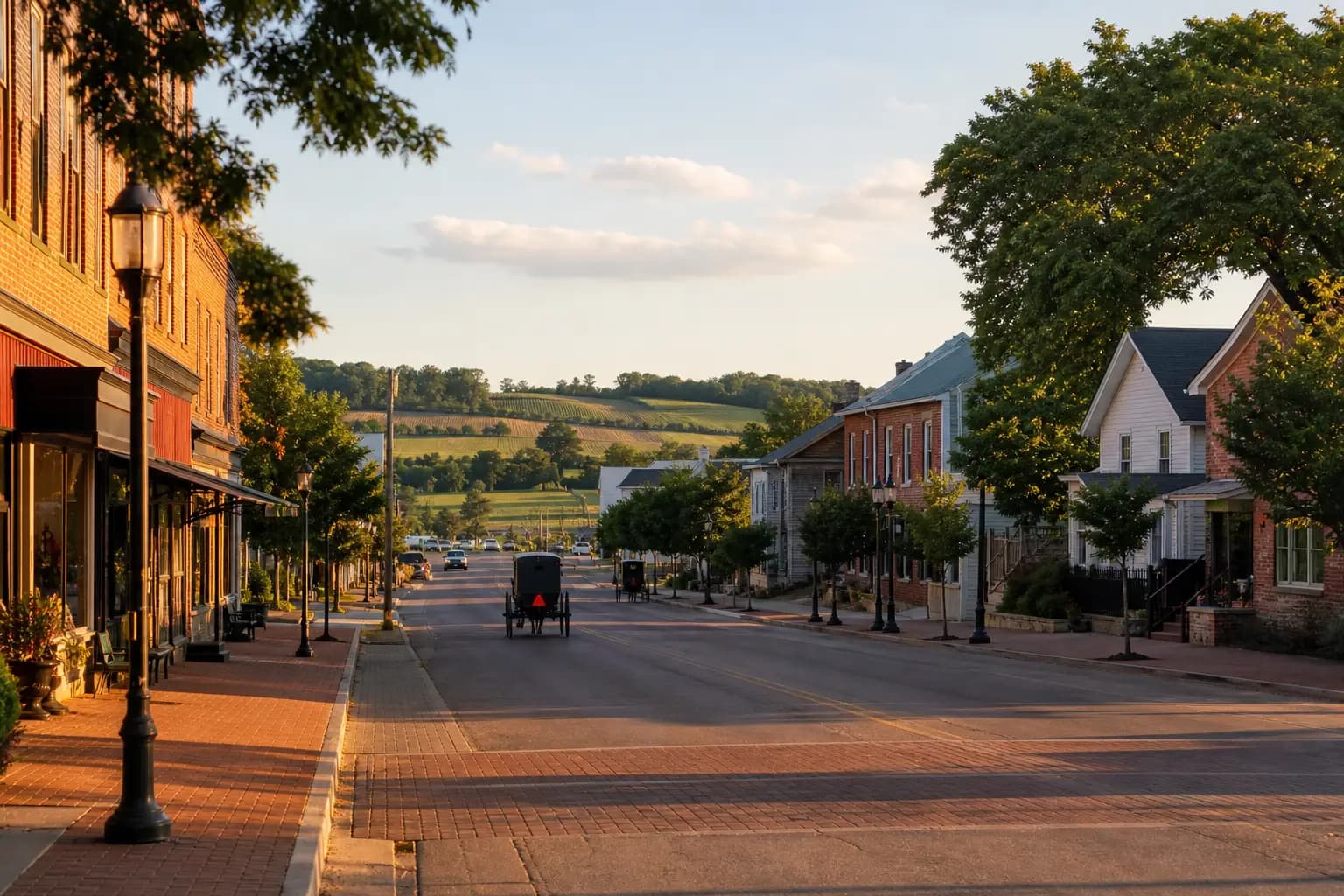
Shipshewana is a well known visitor base for northern Indiana Amish country, set in the heart of one of the world's largest Amish communities. A visit usually mixes Amish and Mennonite history at Menno-Hof, a downtown walk through Davis Mercantile, the Shipshewana Flea Market, country drives, and outdoor time at Pigeon River Fish & Wildlife Area. Nearby Middlebury adds Krider Nurseries World's Fair Garden, a small park with a World's Fair story.
Key facts
- Shipshewana is located in the heart of the third largest Amish community in the world.
- Menno-Hof tells the history and heritage of the Amish, Mennonites, and Hutterites.
- Davis Mercantile opened in 1891 as a hotel by the train depot and now has 20 shops on four floors.
- Shipshewana Flea Market is a 700 space outdoor flea market.
Own a house in Indiana you are thinking of selling? See how our cash offer works.
Why Shipshewana Is the Hub of Indiana Amish Country
Shipshewana sits in northern Indiana Amish country, in the heart of the third largest Amish community in the world. In a 2026 Young Center listing, the Elkhart/LaGrange Counties area is counted at 246 districts and 30,795 people. That scale helps explain why the town can serve as a starting point for visitors who want to understand Amish country through museums, markets, roads, trails, and small towns. Shipshewana is compact enough for a simple downtown walk, but its strongest sights also lead outward into LaGrange and Elkhart County.
Menno-Hof and Amish, Mennonite, and Hutterite History
Menno-Hof stands at 510 South Van Buren, also State Road 5, in Shipshewana. The interpretive center introduces the history and heritage of the Amish, Mennonites, and Hutterites. Its story reaches across five centuries, beginning with origins in Switzerland and continuing to their arrival in America.
Inside, the visit is designed as an interactive walk through history rather than a room of static labels. Visitors explore a 17th century sailing ship and replicas of a 19th century print shop and meeting house. The experience also includes a tornado simulation, with wind and a shaking theater, and the tour lasts approximately one hour and 15 minutes.
Downtown Shipshewana: Davis Mercantile, Carousel, Shops, and Local Memory
A downtown Shipshewana walk naturally centers on Davis Mercantile, a landmark with a layered local story. The building first went up in 1891 as a hotel by the train depot, and the Mercantile now holds 20 shops on four floors. Its top floor has a 1906 Dentzel carousel with hand carved farm animals, still operating on its original working parts.
The present building also carries a more recent community memory. In February 2004, the Mercantile burned to the ground along with the rest of the block, and that August the Amish community helped raise it back up.
Shipshewana Flea Market and Trading Culture
Shipshewana Flea Market and Auction is the town's big trading landmark. It is the sort of place where the sightseeing is the browsing itself, with rows of vendors and a strong sense of regional buying and selling.
Official market material calls the flea market a 700 space outdoor market. The grounds include four restaurants, with one full service option and three concession locations, along with food trucks and food vendors. Vendor materials also note seven different locations throughout the market, which hints at the scale visitors encounter when they arrive.
Pumpkinvine Trail, Pigeon River, and Outdoor Country Scenery
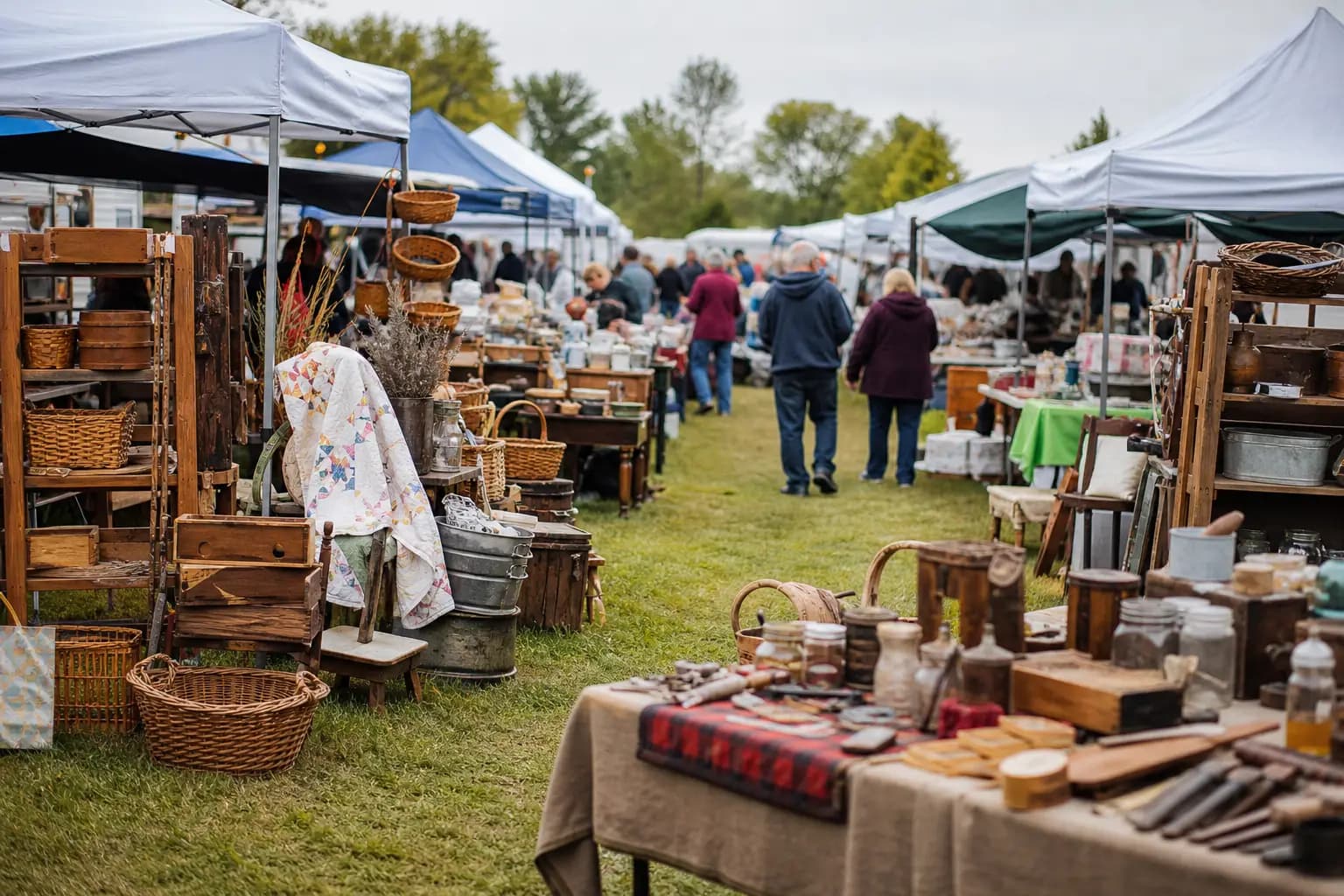
The Pumpkinvine Nature Trail gives the region a quiet outdoor spine. North of the trail towns, Pigeon River Fish & Wildlife Area adds a larger nature stop, with 11,794 acres of land, 529 acres of lakes and impoundments, and 17 miles of free flowing river.
Pigeon River Fish & Wildlife Area contains hardwoods, wetlands, and upland fields, and it is home to endangered plant and animal species. Hunting, fishing, and bird watching are among its popular activities. The area was established in 1956, when the Mongo, Nasby, and Ontario reservoirs in the Pigeon River Valley were given to the state.
Nearby Middlebury: Krider Nurseries World's Fair Garden
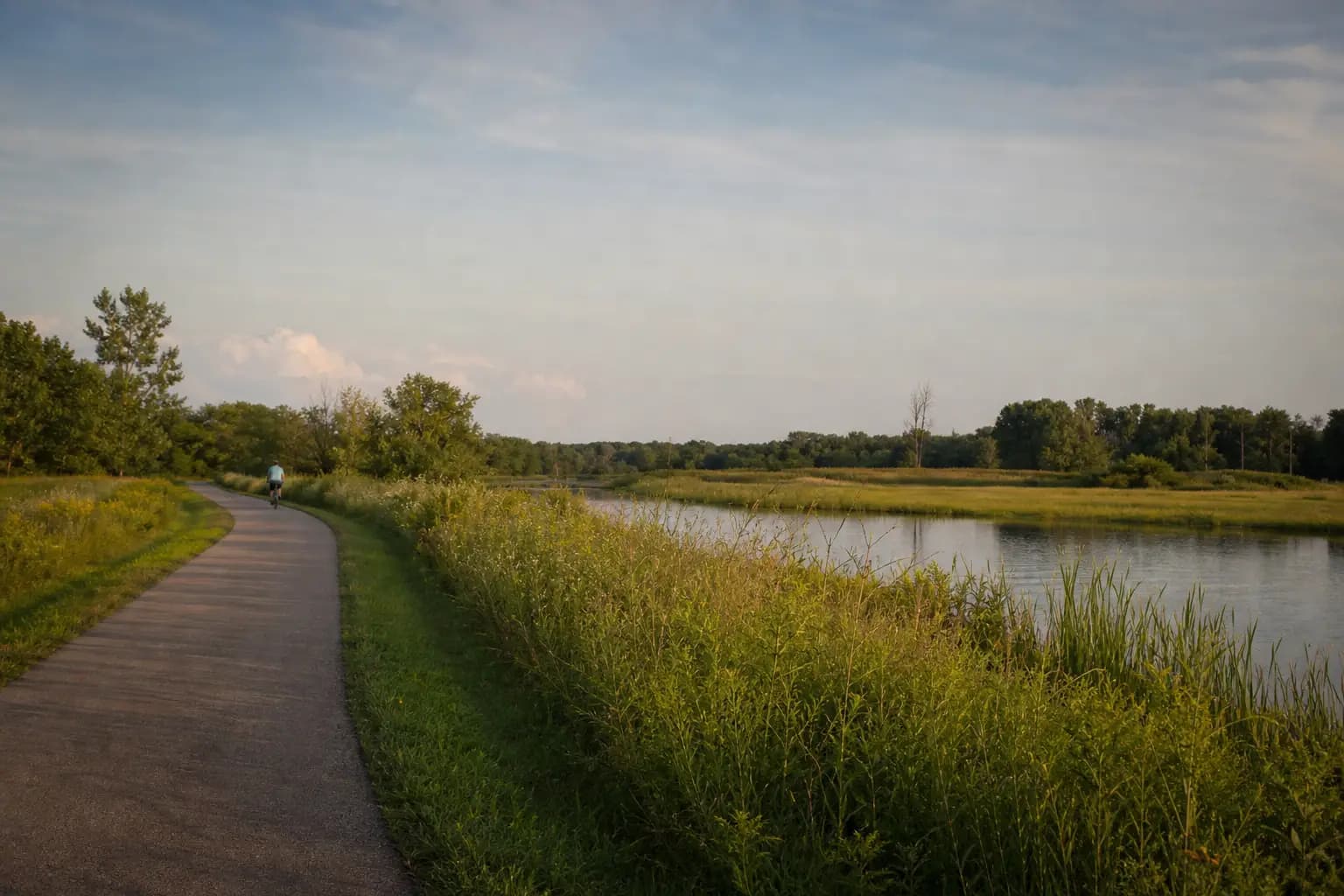
Middlebury adds a garden with a World's Fair connection. Krider Nurseries constructed and exhibited Krider's Diversified Garden at the Century of Progress International Exposition in Chicago in 1933 and 1934, then some plants and structures returned to Middlebury and the garden was reconstructed there in 1935. After falling into decay, the garden was restored by the community in 1995.
The Krider Nurseries story also reaches into Middlebury industry. The nursery was founded in 1896 by Vernon Krider and produced its first catalog in 1906. It also bought the patent to produce and sell the first thornless rose, a small detail that makes the garden more than a pretty stop.
Frequently asked questions
What is Shipshewana known for?
Shipshewana is known as a visitor hub in Indiana Amish country. Its main sights include Menno-Hof, Davis Mercantile, Shipshewana Flea Market, Pigeon River Fish & Wildlife Area, and nearby Krider Nurseries World's Fair Garden in Middlebury.
Is Shipshewana in Amish country?
Yes. Menno-Hof describes Shipshewana as located in the heart of the third largest Amish community in the world. The wider Elkhart/LaGrange Counties area is also listed among the largest Amish settlements.
How long does Menno-Hof take?
The Menno-Hof tour lasts approximately one hour and 15 minutes. It is an interactive walk through Amish, Mennonite, and Hutterite history.
What can you see in downtown Shipshewana?
Downtown visitors can walk through Davis Mercantile, which has 20 shops on four floors. The building also has a 1906 Dentzel carousel with hand carved farm animals on its original working parts.
What nearby town is worth adding to a Shipshewana visit?
Middlebury is worth adding for Krider Nurseries World's Fair Garden, which traces its story to the 1933 and 1934 Century of Progress International Exposition in Chicago.
Sources
Checked against each source on November 20, 2026. Opening hours, prices and event dates change, so check with the venue before you go. The illustrations are AI generated and do not show real places.
- Twelve Largest Amish Settlements, 2026 (Young Center for Anabaptist and Pietist Studies, Elizabethtown College)
- Plan Your Visit. (Menno-Hof / Mennonite-Anabaptist Information Center Inc.)
- 2027 Shipshewana Flea Market Vendor Rules & Regulations (Shipshewana Trading Place / Shipshewana Auction, Inc.)
- Davis Mercantile | Shipshewana, Indiana (Davis Mercantile / Hezekiah Davis Corp.)
- Fish and Wildlife: Pigeon River Fish & Wildlife Area (Indiana Department of Natural Resources, Division of Fish & Wildlife)
- IHB: Krider Nurseries World's Fair Garden (Indiana Historical Bureau)
More guides in Indiana
History Indiana
A Short History of IndianaTrace Indiana history from ancient mounds and Vincennes to statehood, Lincoln, abolition, Civil War service and industry.
Outdoors Indiana
Indiana State Parks Worth KnowingExplore Indiana state parks with dunes, ravines, lakes, caves, historic villages, earthworks, trails and seasonal outdoor ideas.
History Indianapolis
What Is The Indianapolis Motor Speedway Museum?Learn the Indianapolis Motor Speedway Museum story, from the 1909 track and first 500 to the Hall of Fame, wartime industry and exhibits.
Events Indiana
What Is the Parke County Covered Bridge Festival?A visitor guide to the Parke County Covered Bridge Festival: dates, locations, bridges, food traditions, bus tours and practical tips.
Food Indiana
What Is Sugar Cream Pie In Indiana?Learn what sugar cream pie is, why Indiana calls it Hoosier Pie, how its pantry recipe developed, and where visitors can try it.
Sightseeing Bloomington
Things to Do in Bloomington, IndianaSee Bloomington's 1908 Monroe County Courthouse, Indiana University, Griffy Lake Nature Preserve, and a Buddhist center on 108 acres.